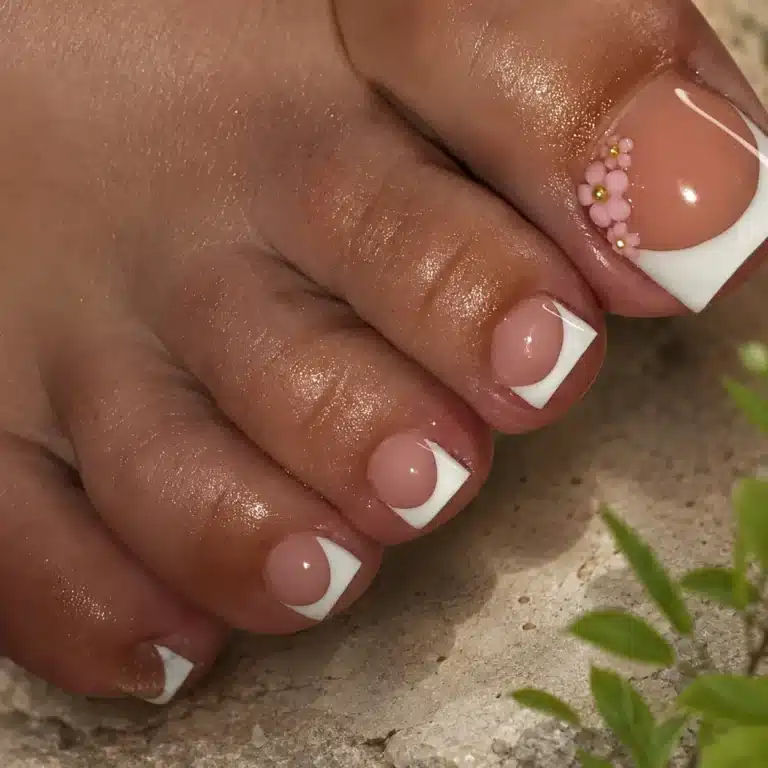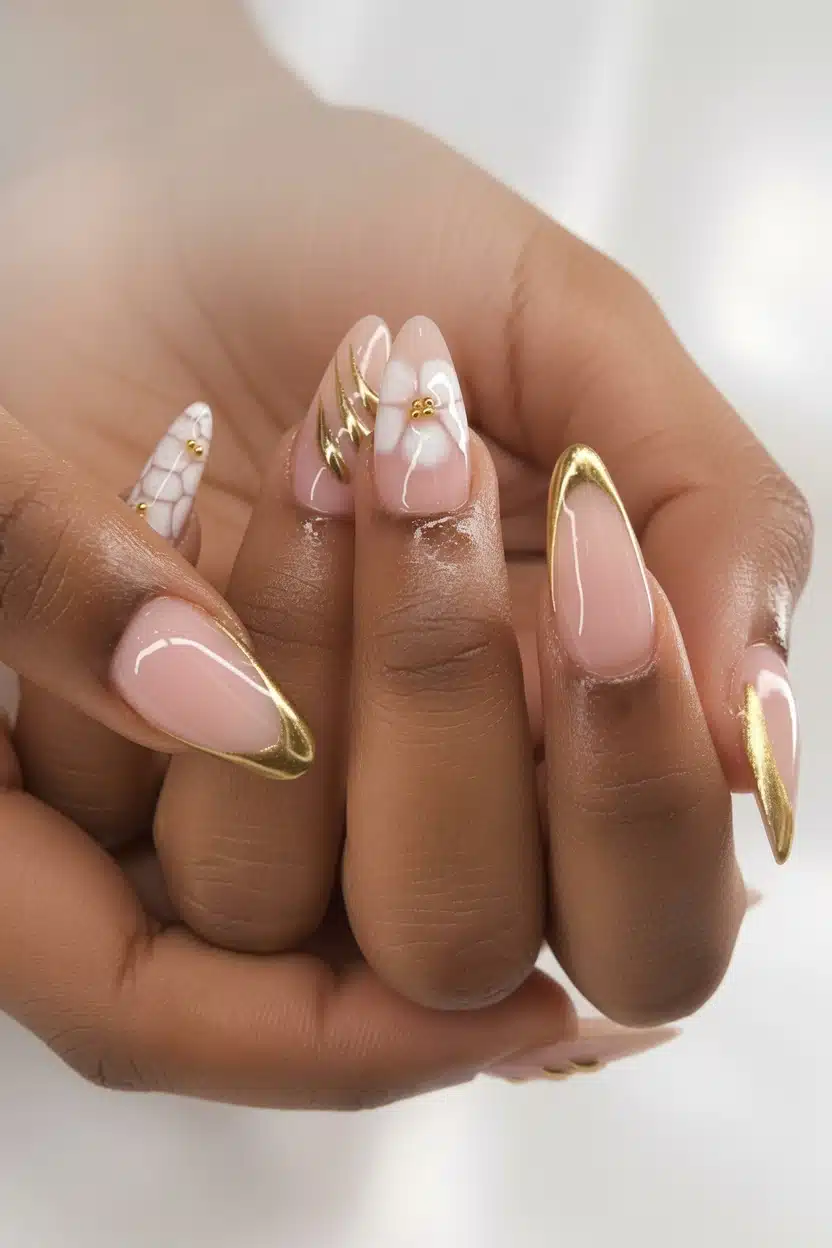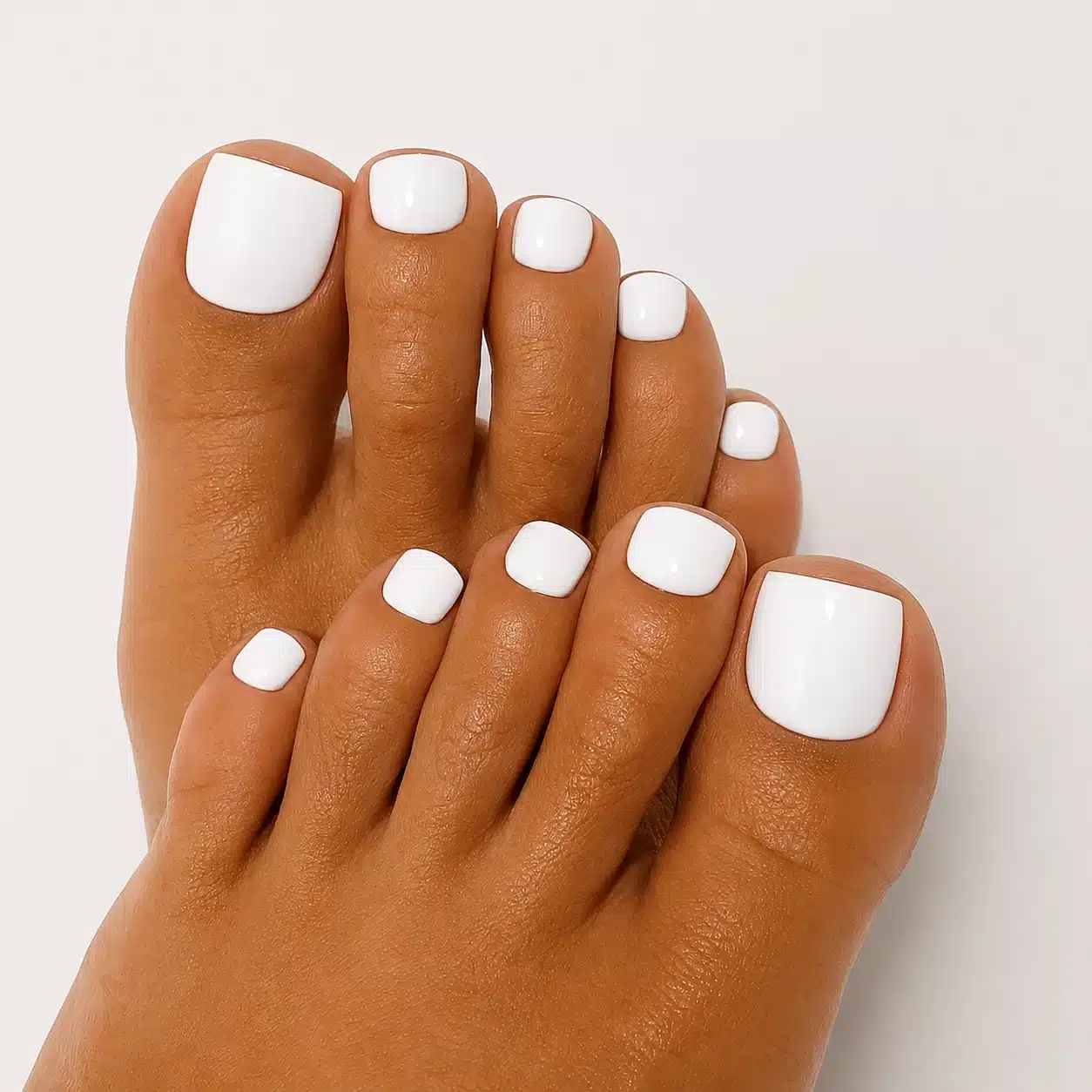
Milky white acrylic toes combine the strength and shaping control of an acrylic overlay or extension with a soft, translucent white finish. Unlike a flat bright-white pedicure, the color looks creamy and luminous, while the enhancement can refine uneven length, rebuild a damaged corner, or create a short square silhouette.
This guide focuses specifically on acrylic technique and styling, not the broader milky-white color trend. You will see ten practical looks, what distinguishes an overlay from an extension, what to ask for at the salon, and how to keep the result neat without hiding pain, lifting, or unexplained nail changes.
Key Takeaways
- Ask for a short, thin acrylic overlay or carefully sculpted extension in a semi-sheer milky white—not bulky opaque white.
- Acrylic should never be used to cover pain, lifting, suspected infection, or an unexplained natural nail change.
- The cleanest finish comes from controlled product placement, balanced shaping, and a high-gloss seal.
What Are Milky White Acrylic Toes?
Milky white acrylic toes are toenails enhanced with acrylic powder and liquid monomer, then shaped and finished in a cloudy white tone. An overlay sits on the natural nail for structure, while an extension adds length beyond the free edge. This technique-led intent is different from our broad milky white pedicure guide, which compares polish colors and general toe styling.
The final white may come from a milky acrylic powder, a translucent color layer over a clear or natural acrylic base, or a compatible polish applied after shaping. One method is not automatically better: the technician should select a system that suits the natural nail, desired length, and safe removal plan.
Because acrylic is rigid, length and thickness matter on toes. A short enhancement that follows the natural nail is easier to accommodate in footwear than a long or bulky extension. The American Academy of Dermatology notes that artificial-nail preparation and removal can weaken natural nails, so its guidance for reducing artificial-nail damage is a useful safety reference before choosing the service.
10 Milky White Acrylic Toe Ideas and How to Get Them
1. Short Square Milky White Acrylic Toes
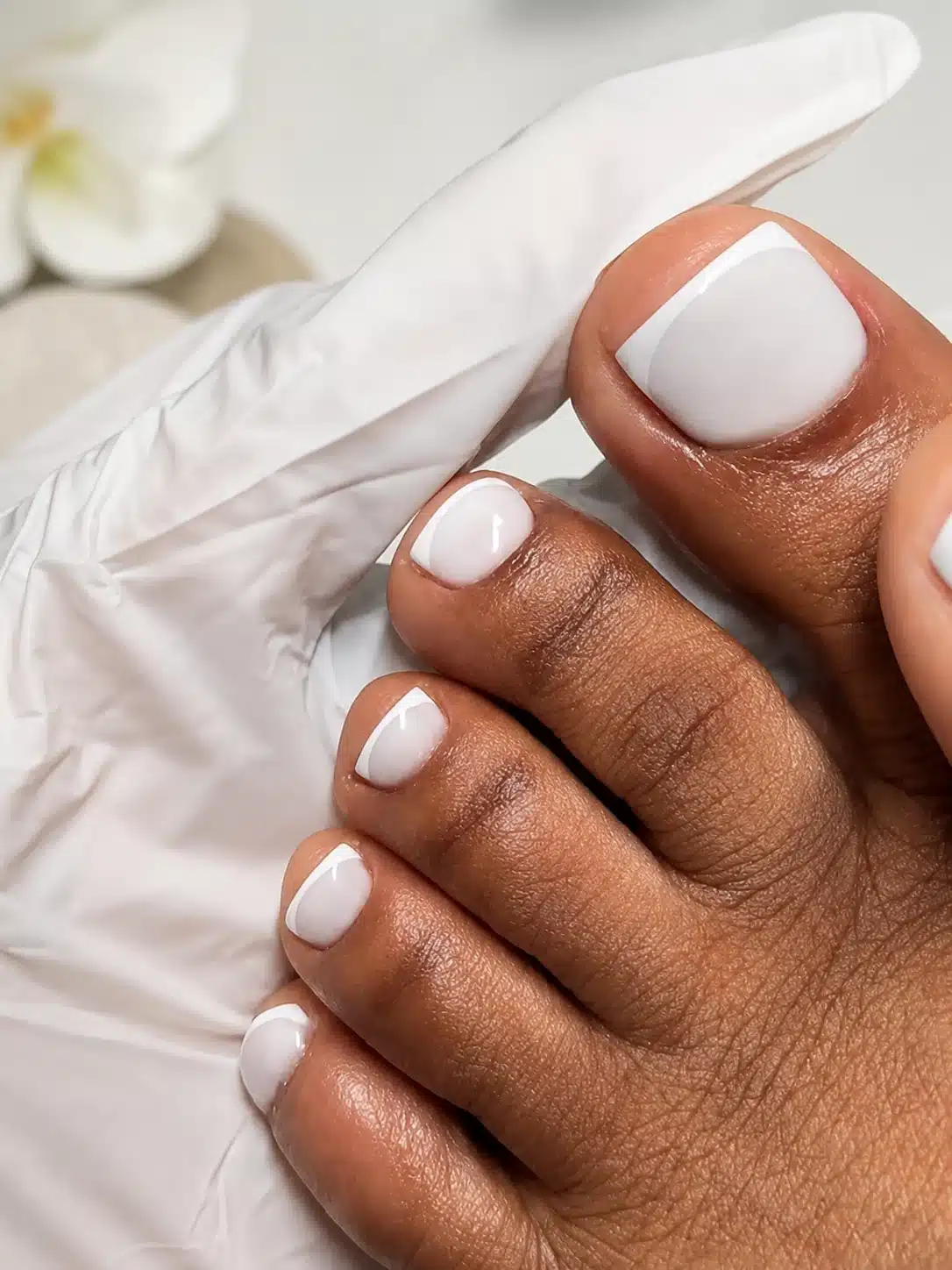
This is the most wearable version: a neat square big toe, softened corners, and smaller nails kept close to their natural length. The cloudy white brightens the feet without the correction-fluid effect of a dense white cream.
Steps: Ask for a thin acrylic overlay rather than added length unless a corner genuinely needs rebuilding. The technician should control the bead near the cuticle, refine the sidewalls, file the free edge straight, soften the corners, and finish with an even milky layer and gloss.
2. Natural Milky Acrylic Overlay
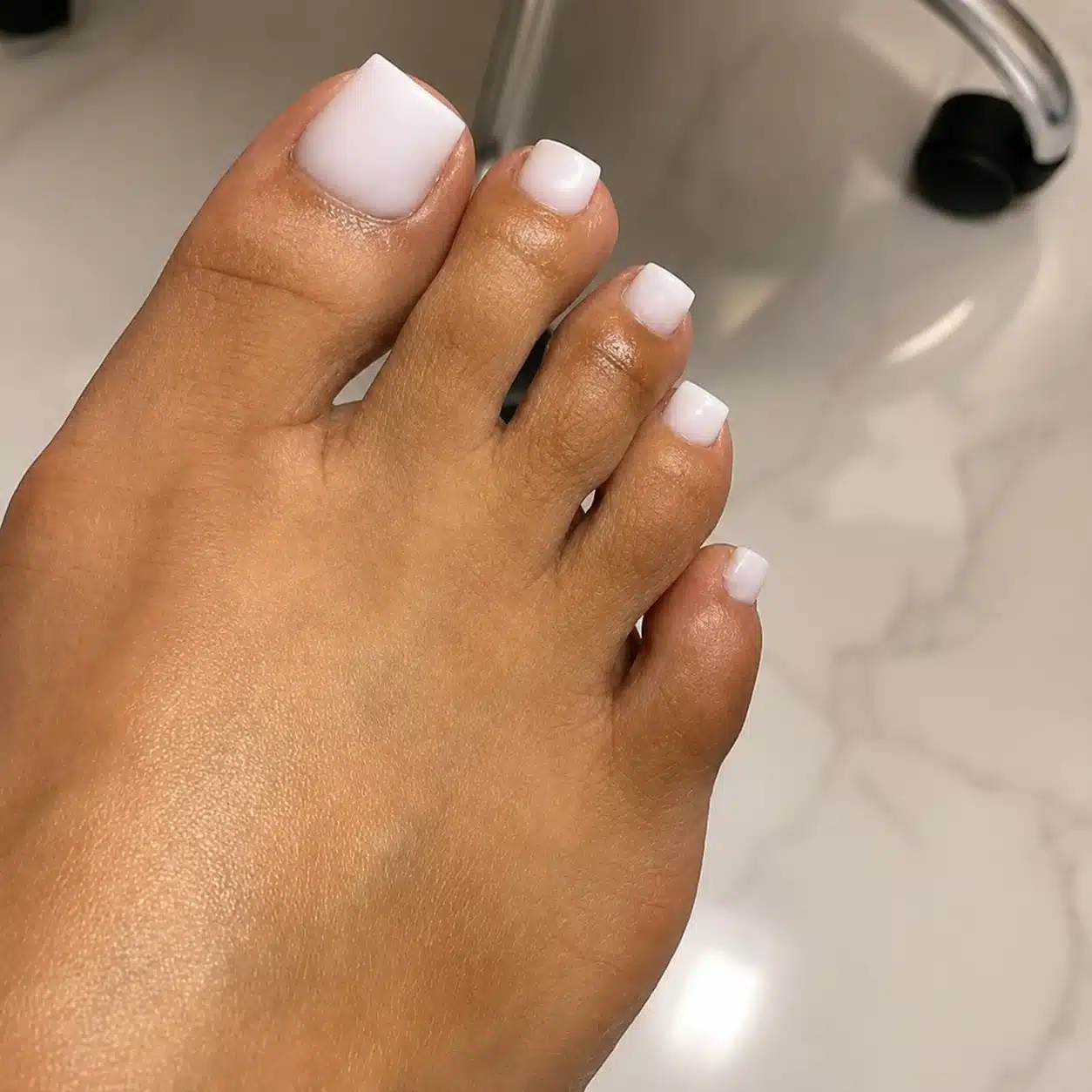
An overlay is ideal when the natural toenails already have enough length but need a smoother, more uniform surface. The translucent color keeps visible depth and makes regrowth less abrupt than fully opaque white.
Steps: Keep the natural outline, use minimal product, and build only the structure needed for a smooth surface. After shaping, apply a sheer milk-white finish in controlled layers. If you only want the color without enhancement, choose the lighter method described in our milky pink toes inspiration instead of adding unnecessary acrylic.
3. Milky White Acrylic Toes on Deep Skin
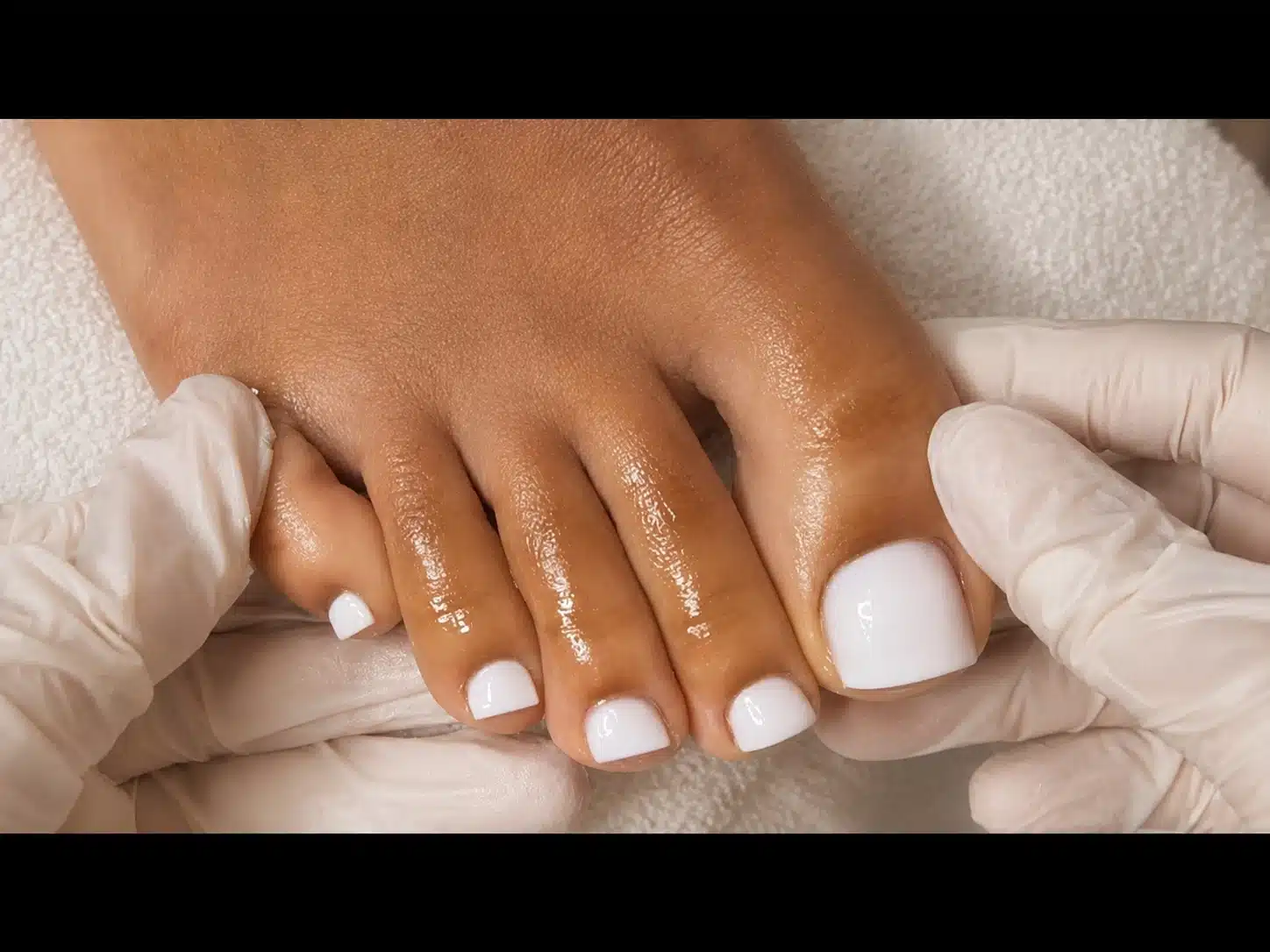
Creamy white creates clear contrast on deep skin, while a slightly warm or neutral milk shade avoids looking icy. A glossy square shape makes the color visible without needing extra decoration.
Steps: Swatch the white after the acrylic structure is shaped. Compare neutral, pink-leaning, and cool milk before completing every toe. Build the color gradually so it stays luminous, clean the perimeter carefully, and seal the surface without flooding the cuticle area.
4. White Acrylic Toes With a Soft French Edge
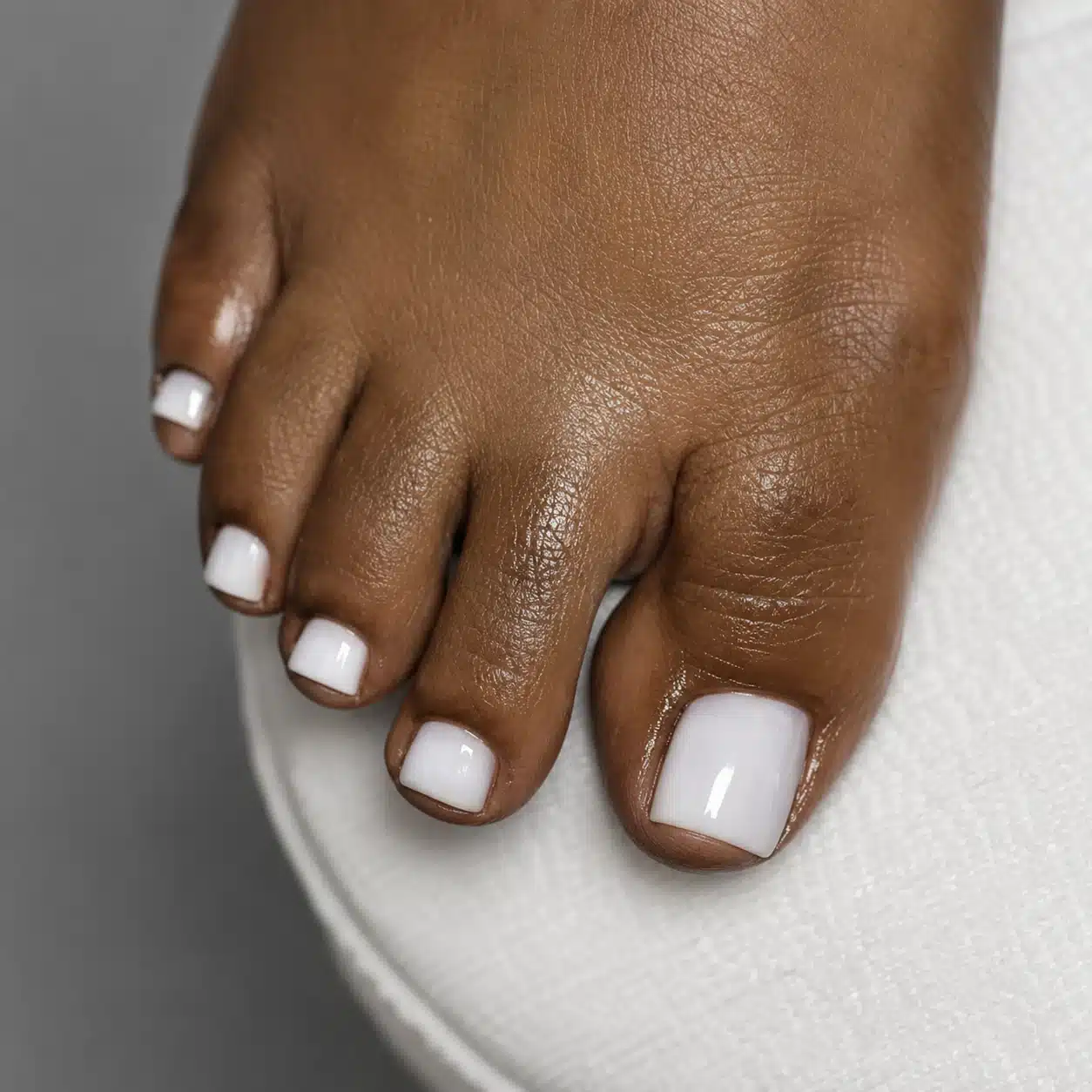
This style pairs a cloudy acrylic base with a narrow, more opaque white edge. The contrast is gentler than a classic nude-and-white French pedicure, so it remains soft even when the big toe has a clearly defined smile line.
Steps: Shape the overlay first, then keep the base semi-sheer. Paint or sculpt a slim edge that follows the natural free edge, correct the smile line before sealing, and keep the tips on smaller toes very narrow. For more defined color placement, compare the existing milky white French tip toes before choosing this hybrid.
5. Full-Coverage Soft White Acrylic Toes
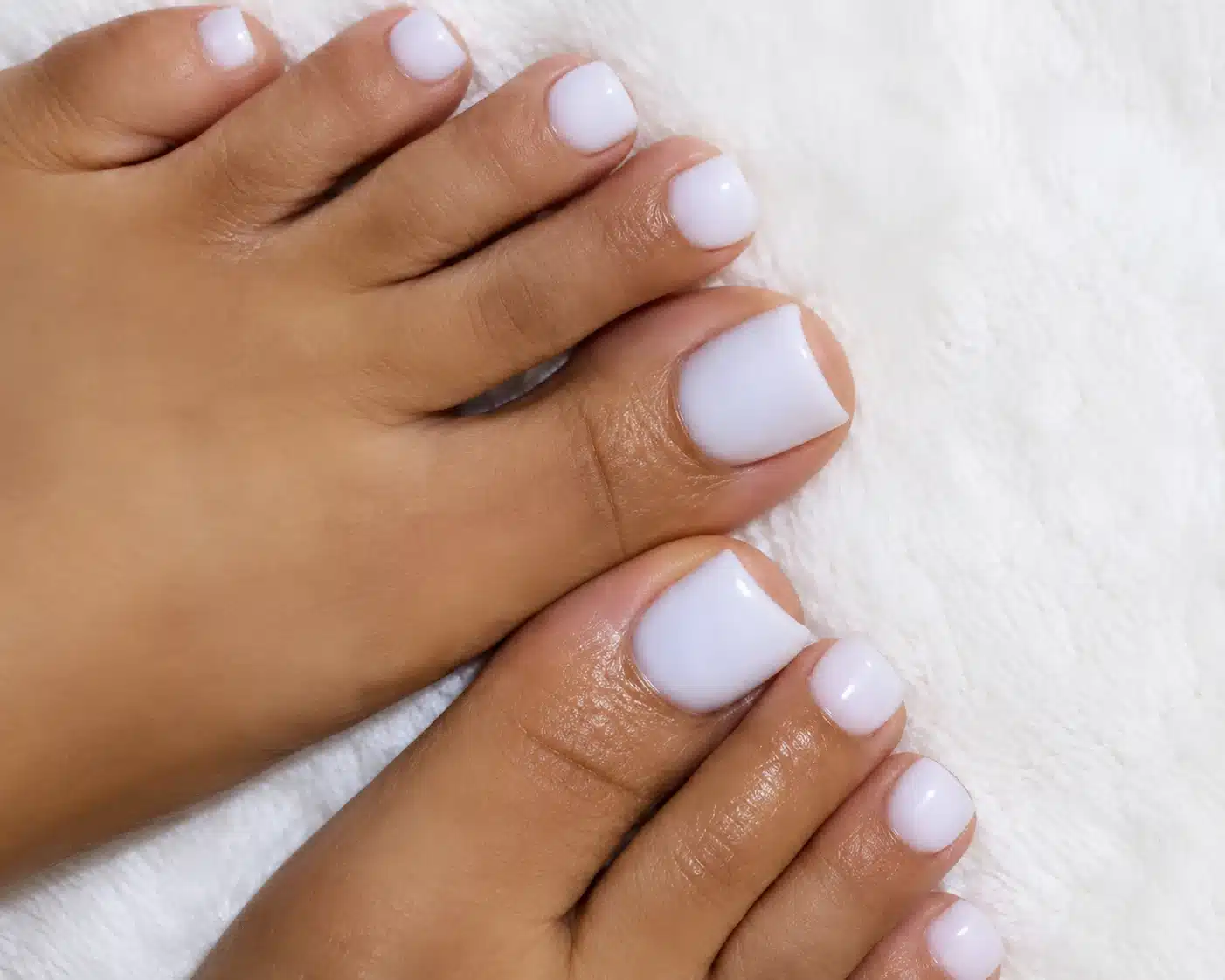
Fuller coverage is useful when you want a bold white result but still prefer creaminess over stark white. The finish should remain smooth and balanced; opacity is not a reason to create a thick enhancement.
Steps: Use controlled acrylic beads to build shape, not bulk. File the surface evenly, then add thin color layers until the natural nail is blurred. Check the big toe from the front and side so the structure does not look heavy in open shoes.
Acrylic Toe Products to Compare
Affiliate disclosure: Parisfy may earn a commission from qualifying purchases. Prices and availability can change. The exact-product buttons below use verified Amazon identifiers; the powder button is deliberately labeled as a similar-options search because no exact milky-white acrylic-powder ASIN was verified confidently.
OPI Nail Lacquer — Funny Bunny
A sheer soft-white lacquer that can be layered over a properly shaped enhancement when the technician’s product systems are compatible.
Komall Metallic Nail Art Liner Brush Set
Fine liner brushes for narrow French edges and small accent details after the acrylic structure has been completed.
Milky White Acrylic Powder — Similar Options
Use this comparison only to browse compatible milky-white acrylic powders; follow the manufacturer’s complete system and professional guidance.
6. Rounded Milky White Acrylic Toes
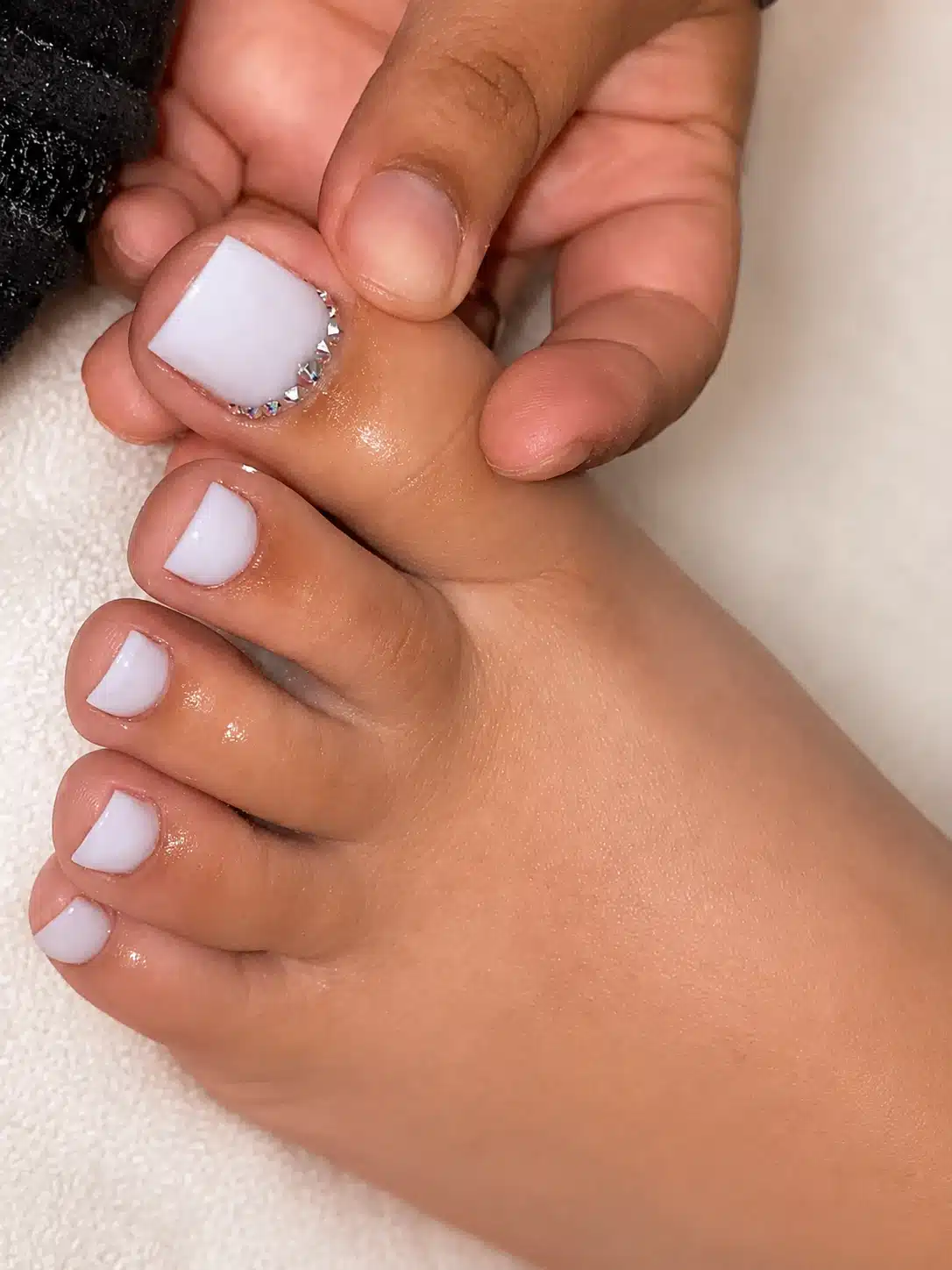
A softly rounded outline can feel more natural when the nail bed is narrow or the corners tend to catch. The acrylic still gives structure, but the finish looks less geometric than a strict square.
Steps: Follow the existing nail width rather than narrowing the enhancement aggressively. File both sides evenly, round only the free-edge corners, and confirm that the outline does not press into the surrounding skin. Apply the milk shade in thin layers and finish with a smooth seal.
7. Milky White Acrylic Toes With a Rebuilt Corner
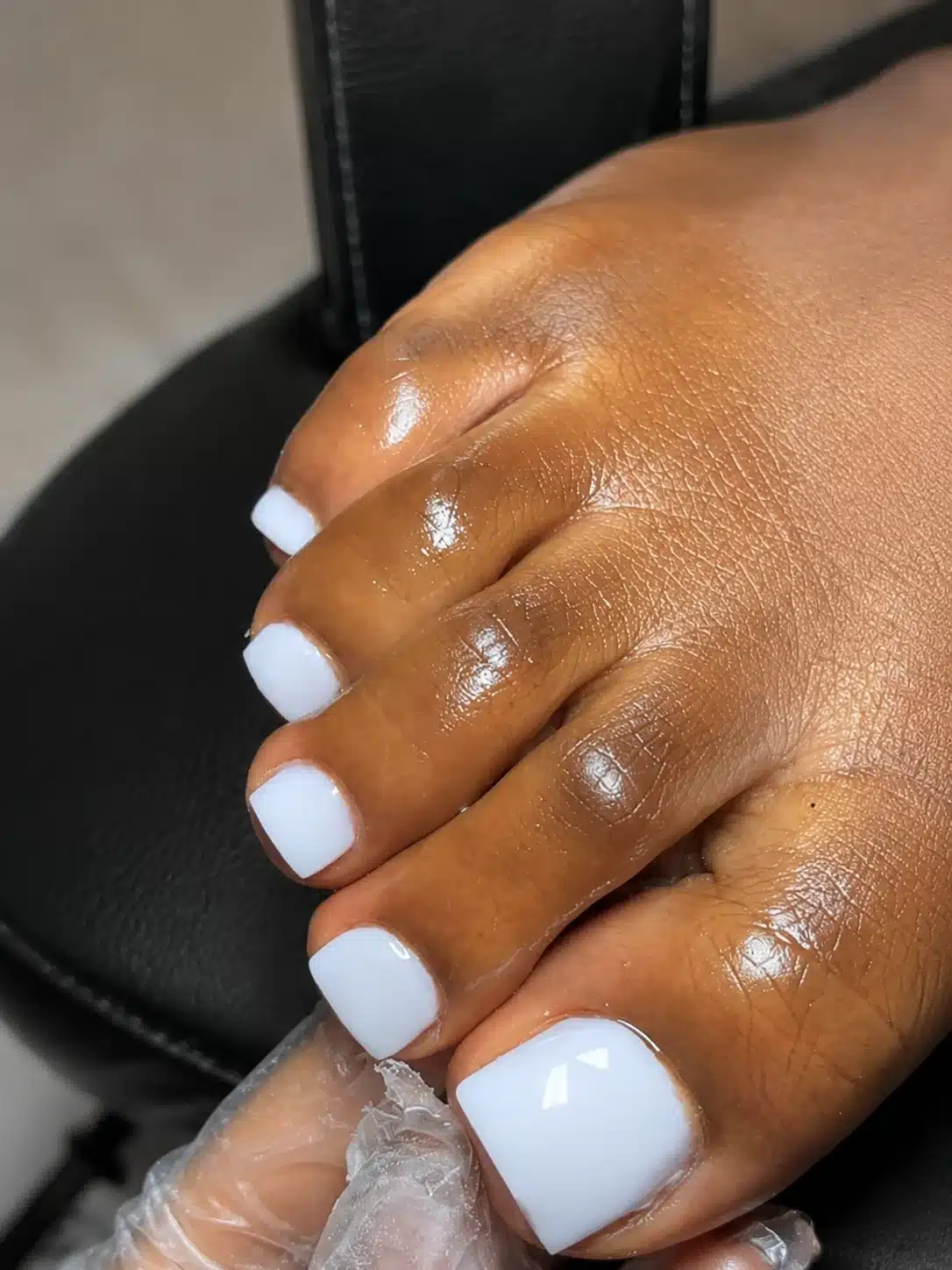
A conservative rebuild can restore visual symmetry when a healthy nail has a small missing corner. It should not be used to disguise active trauma, separation, redness, or suspected infection.
Steps: A trained technician should assess whether enhancement is appropriate, keep the reconstruction short, and blend it without excessive filing of the natural nail. The final square should remain compatible with footwear. For a different enhancement-focused French option, visit acrylic French tip toes.
8. High-Gloss Milky White Acrylic Toes
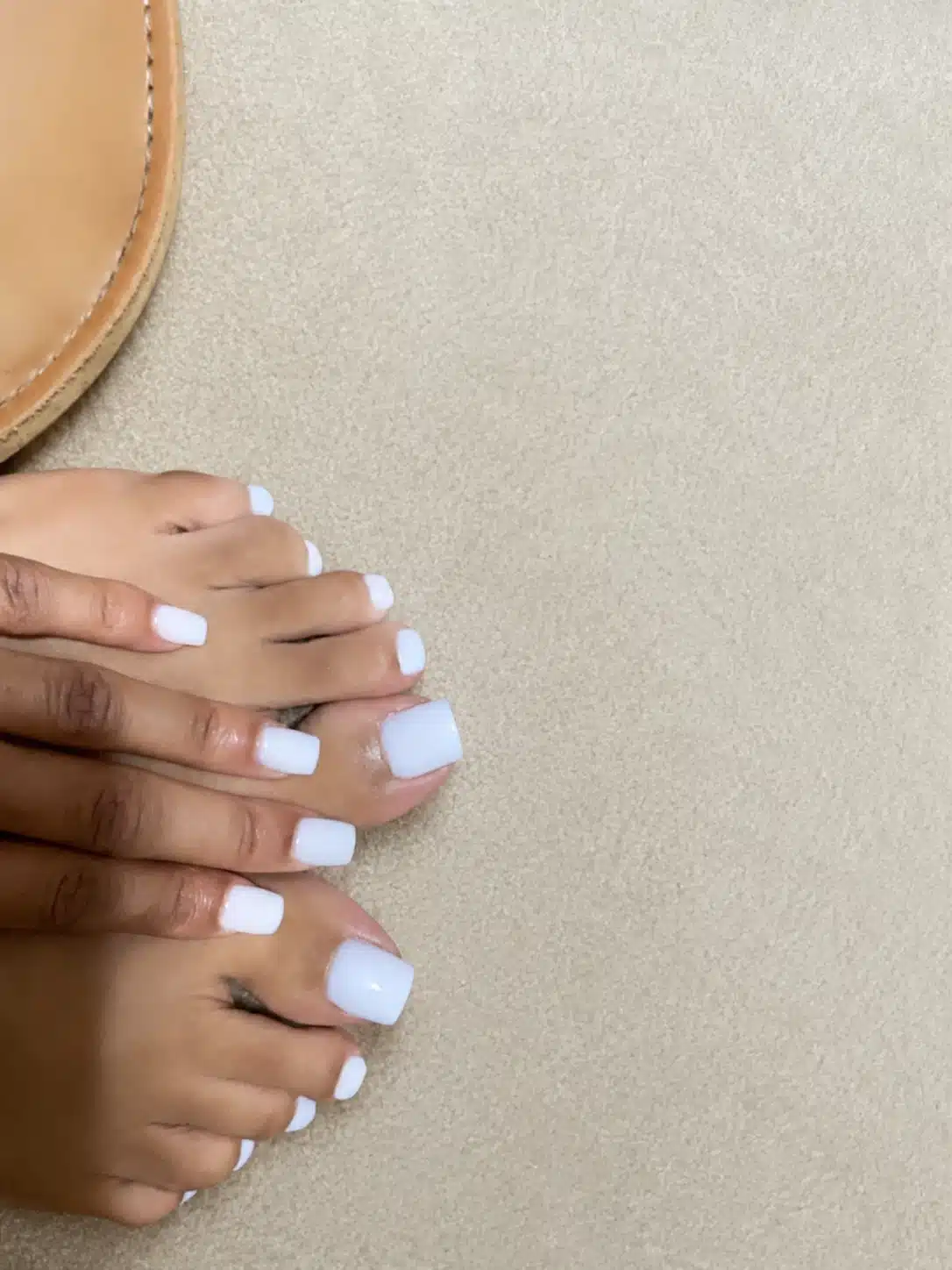
High gloss emphasizes the smooth structure of acrylic and gives a clean glass-like reflection. This style needs no art; careful shaping and an even surface create the effect.
Steps: Refine ridges and bulk before applying color. Keep the milky finish even, remove dust, and use the compatible seal specified for the system. Cap the edge without creating a thick lip, then allow the final layer to complete its full drying or curing process.
9. Milky White Acrylic Toes With Minimal Detail
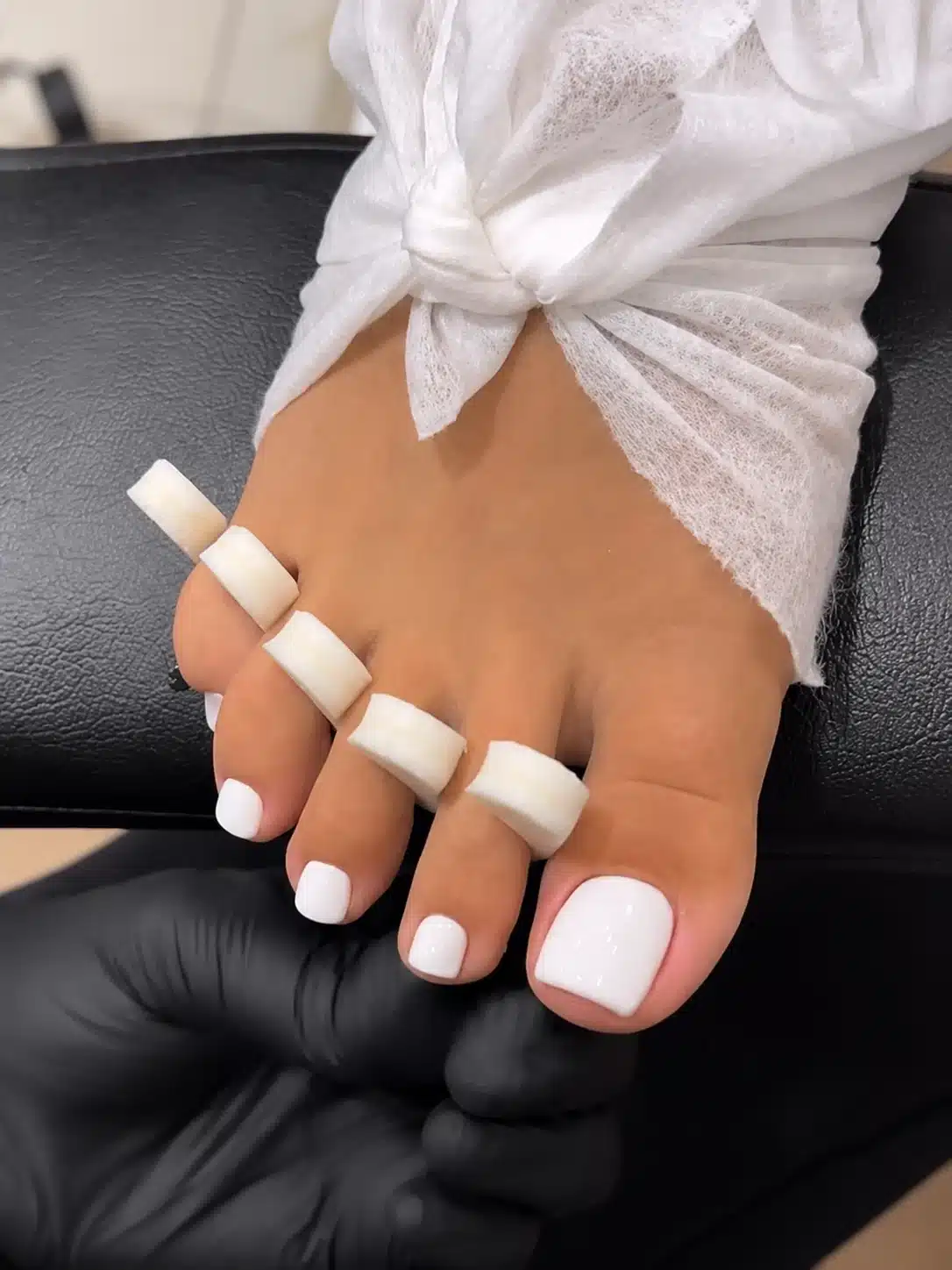
A thin line, one small stone, or a restrained big-toe accent adds personality without hiding the soft white base. The smallest toes usually look cleaner when left solid.
Steps: Complete and seal the acrylic structure before planning the art layer. Place the detail away from pressure points, keep raised decorations small enough for open footwear, and seal only as the product instructions allow. If you prefer a more traditional crisp-white design, browse white French tip toes for a clearer contrast reference.
10. Vacation-Ready Milky White Acrylic Toes
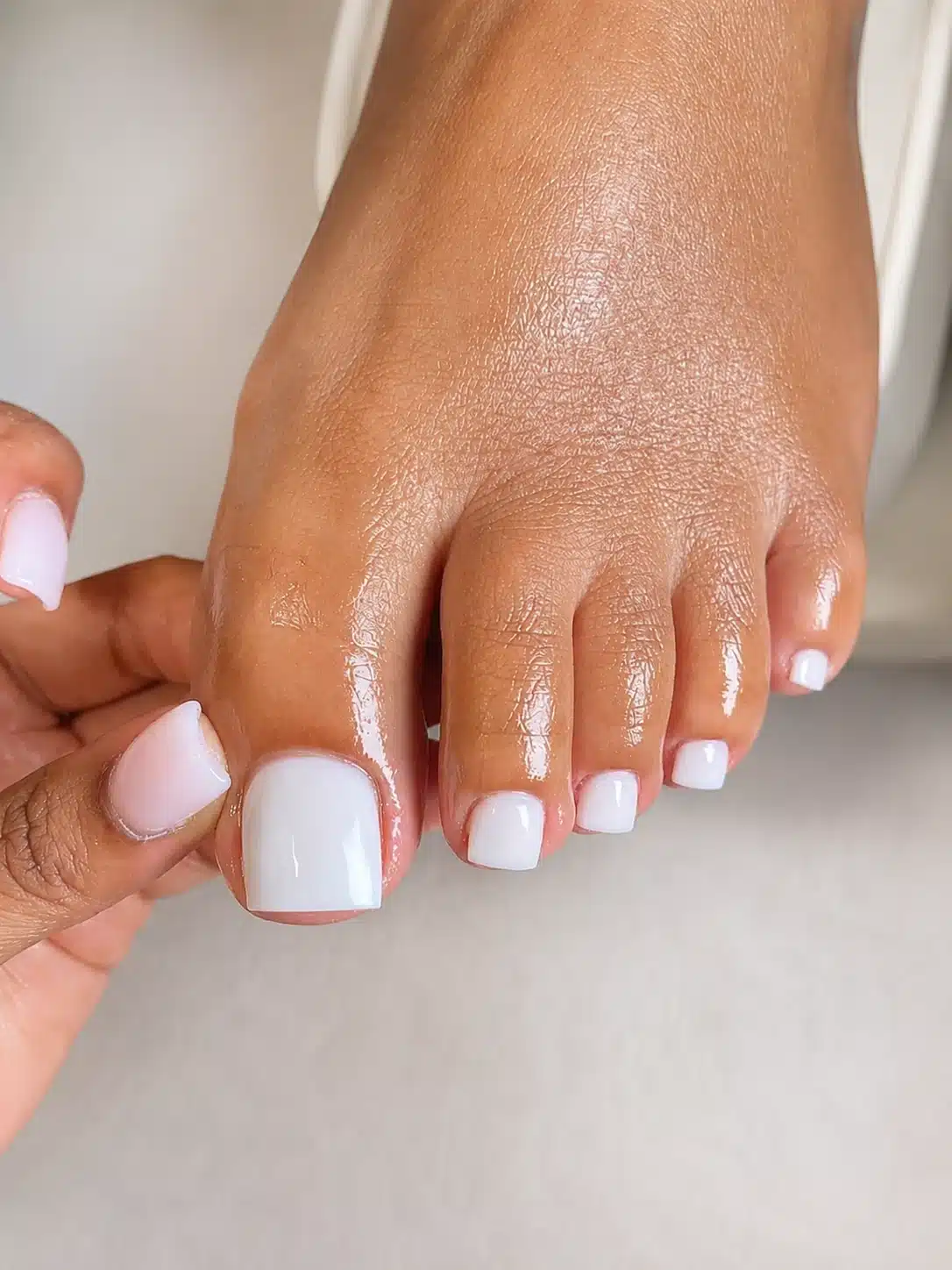
Short glossy acrylic toes pair naturally with sandals because the creamy white reads polished in bright daylight. The key is practical length: the enhancement should not hit the inside of the shoe or create pressure.
Steps: Schedule the service with enough time to check comfort before travel, keep every free edge short, and avoid picking or forcing off any lifting product. Use cuticle oil on the surrounding skin without trying to push oil beneath the enhancement.
What to Ask for at the Salon
Say: “I want short milky white acrylic toe overlays with a thin, natural structure, a soft square shape with rounded corners, semi-sheer creamy white coverage, and high gloss.” This defines the technique, length, shape, opacity, and finish in one request.
If you want extensions, specify which nails need length and keep them conservative. If you want a French edge, show the exact tip thickness. A reference photo is more reliable than asking only for “white toes,” and the tutorial on how to do French tips on toes can help you identify the line style you want.
Acrylic Toe Safety and Upkeep
Do not apply acrylic over a painful, swollen, lifted, discolored, or possibly infected toenail. Cosmetic white polish has no medical meaning, but an unexplained natural change is different. Seek qualified care when a nail change persists, worsens, or concerns you.
Keep toenails short, wear shoes with adequate room, and check the enhancement regularly for lifting or trapped moisture. Never glue down a lifted area at home without understanding why it separated. Removal should follow the exact acrylic system and should not involve peeling or force.
Frequently Asked Questions
What color should I ask for for milky white nails?
Ask for a semi-sheer creamy off-white rather than bright opaque white. Specify whether you want neutral, warm, pink-leaning, or cool milk, and request a swatch before the final color layer is completed.
How do I ask for milky nails at a salon?
Name the product type first: acrylic overlay, acrylic extension, gel, or regular polish. Then describe the shape, opacity, and finish. For this look, ask for a thin short acrylic overlay, soft square edges, two light milky-white color layers, and high gloss.
Do milky white nails look good?
They are versatile because the translucent white can be adjusted to different skin tones and styling preferences. A neutral or warm milk often looks softer than stark white, while a cooler milk gives stronger contrast.
What do milky white toenails mean?
When the white is cosmetic product, it is simply a pedicure style. A natural nail that turns white, thickens, lifts, hurts, or changes texture should not be diagnosed from an article or covered automatically; seek professional assessment when needed.
Conclusion
Milky white acrylic toes work best when the enhancement is short, thin, balanced, and intentionally softer than opaque white. Choose an overlay when natural length is sufficient, reserve extensions for controlled corrections or modest added length, and let careful shaping provide the polished effect. Safety and comfort matter more than extra thickness or decoration.
Try next: Black French Tip Toe Nails | Blue French Tip Toes | Red French Tip Toes | French Tip Toes With Glitter