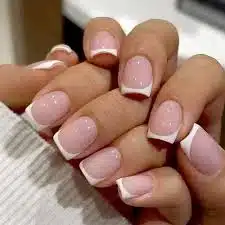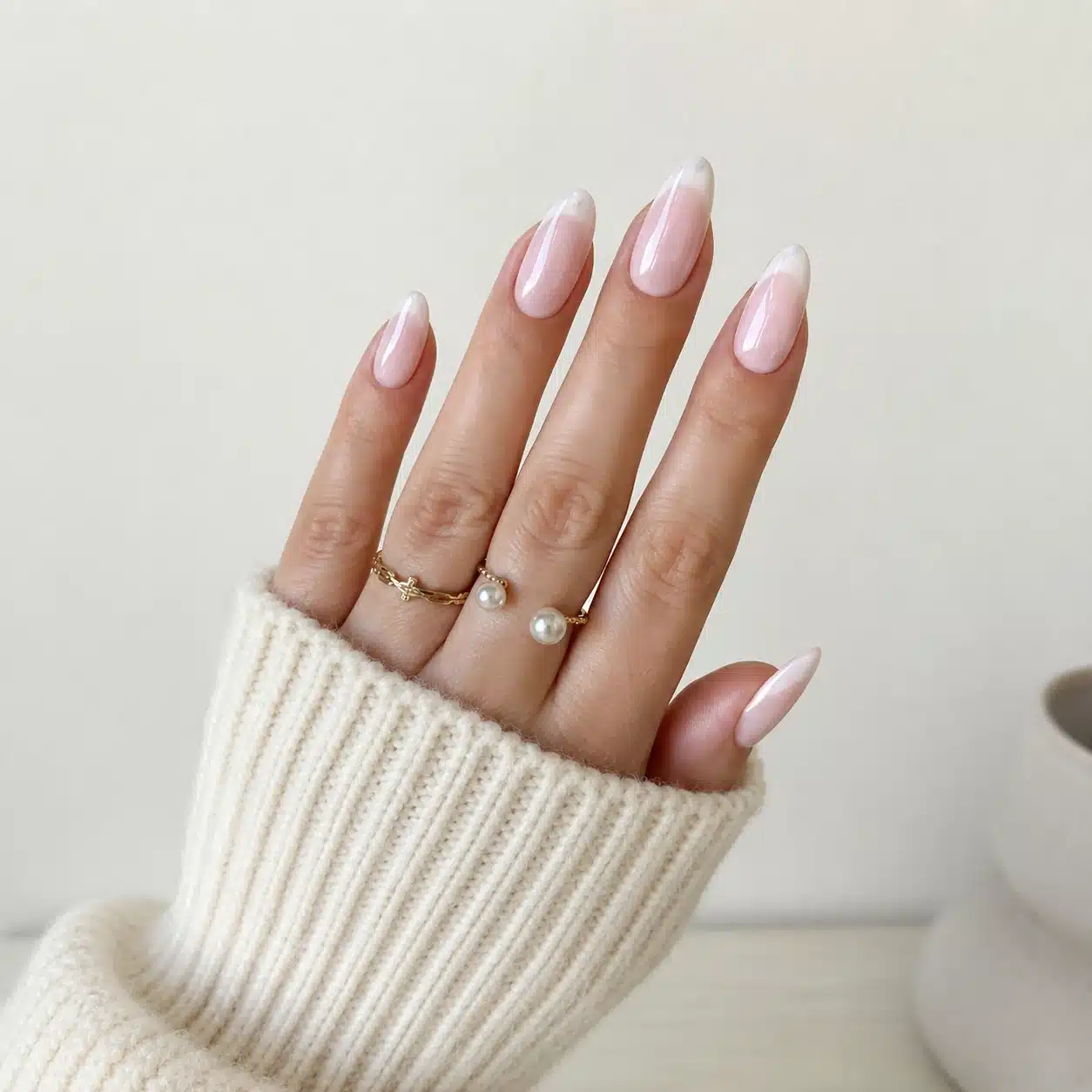
French tip nail polish works best when the base and tip do different jobs. The base should be sheer or buildable enough to keep the nail bed looking natural, while the tip shade should be opaque enough to create a clean line without several thick coats. For a classic manicure, pair a sheer pink or nude base with a crisp white or soft ivory tip. For a modern version, keep the same translucent base and switch the tip to pastel blue, black, burgundy, brown, or metallic polish.
The right formula matters as much as the color. Regular lacquer is easy to remove and ideal for short-term wear, gel can give a smoother, longer-lasting finish when it is applied and cured correctly, and nail-art liner polish offers more control for micro tips or detailed curves. The best choice is the one that matches your skill level, the look you want, and the product directions you can follow safely. Browse the wider French Nails hub when you want to compare polish-based looks with press-ons, chrome, and other French manicure systems.
- Use a sheer pink, nude, or milky base so the manicure stays natural-looking.
- Choose an opaque tip polish that covers cleanly in one or two thin coats.
- Regular lacquer is easier to remove; gel needs the correct lamp, curing time, and removal method.
- A precision brush, liner bottle, guide sticker, or silicone stamper can make the smile line easier.
- Keep the tip proportional to the nail length: micro tips suit short nails, while medium nails can carry a deeper curve.
Table of Contents
What Nail Polish Works Best for French Tips?
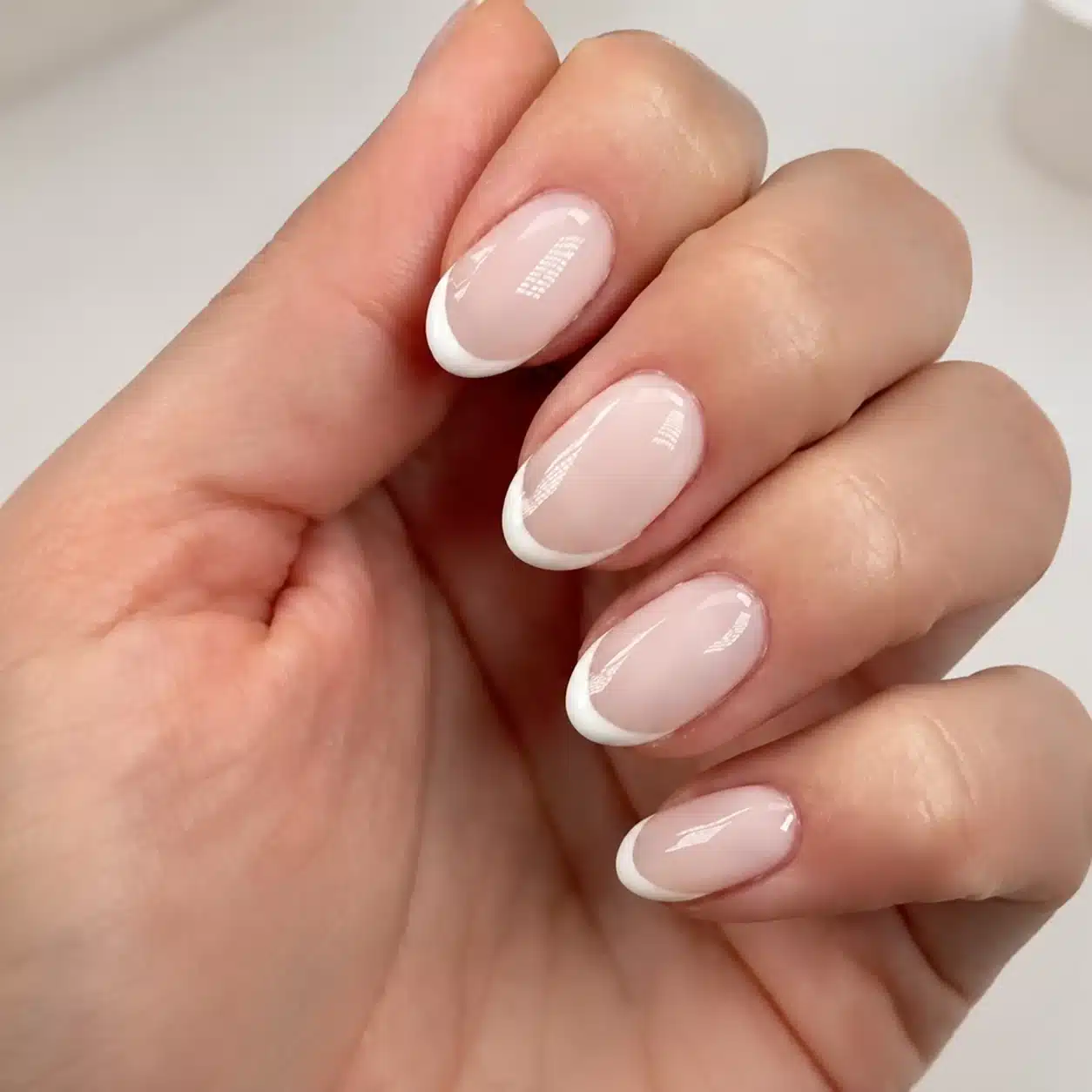
The most reliable combination is a translucent base plus a more opaque tip color. A sheer base evens the nail bed without hiding it, and an opaque white or colored polish gives the edge enough definition. This contrast is what makes a French manicure look clean instead of flat.
If you are starting with short nails, compare the tip width in these short French tip nails before choosing your brush. A narrow micro tip usually looks lighter and more balanced on a short nail. Medium almond or oval nails can carry a deeper smile line because there is more surface area between the cuticle and free edge.
| Polish role | Useful finish | What to avoid |
|---|---|---|
| Base shade | Sheer pink, jelly nude, milky beige, or translucent white | A heavy opaque shade that hides the natural-looking base |
| Classic tip | Opaque white or softer ivory with controlled coverage | A streaky white that needs multiple thick coats |
| Colored tip | Cream, gel liner, metallic, or richly pigmented color | A watery formula that spreads beyond the smile line |
| Top coat | Smooth glossy or intentional matte finish | Dragging the brush repeatedly across a tip that is not dry or cured |
How to Choose the Base Polish
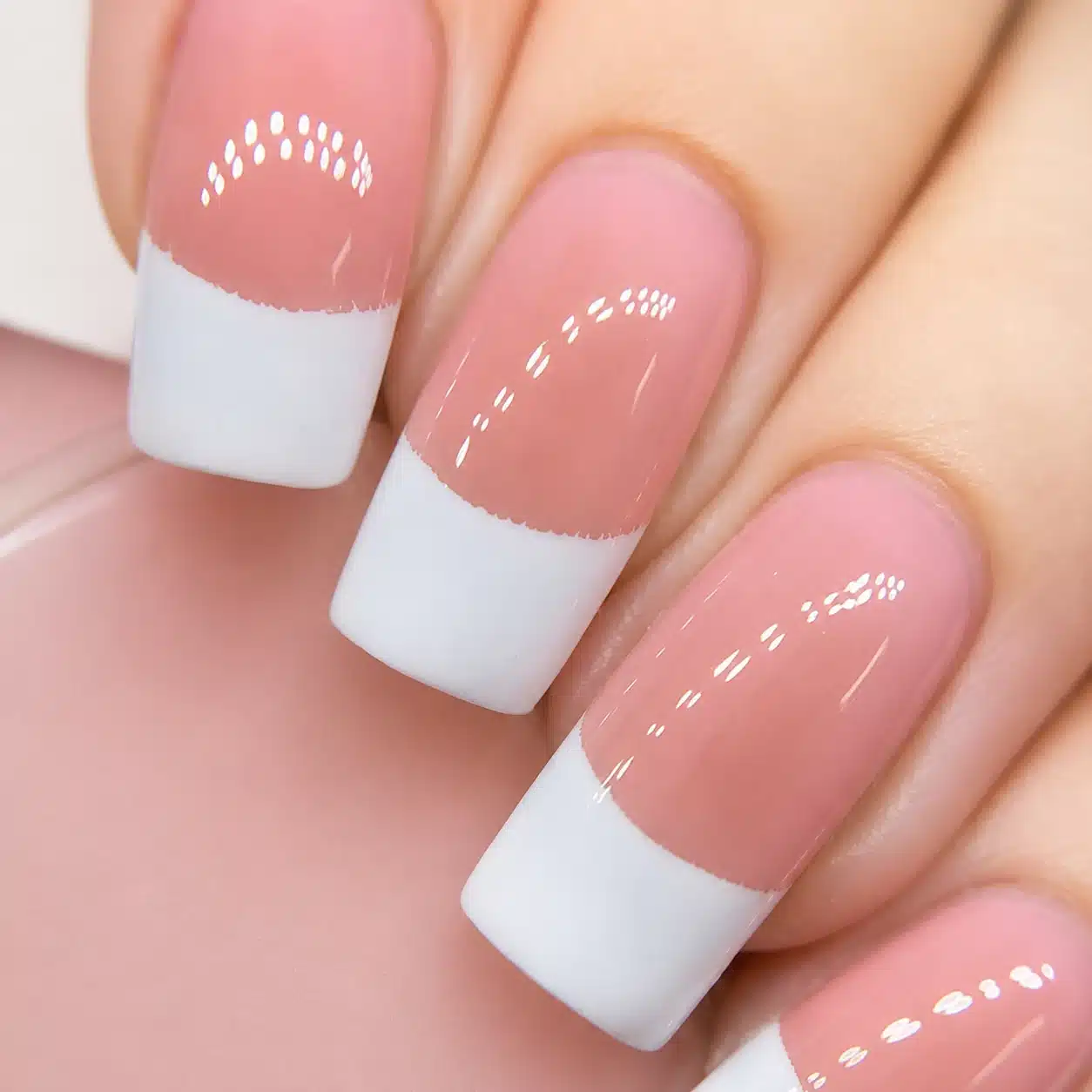
The base should make the nail bed look even, not mask it completely. A cool sheer pink can brighten a rosy nail bed, while a beige or peachy nude may look softer on warm undertones. Milky white is useful when you want a cloudier modern finish, but it should remain translucent enough for the French edge to stay distinct.
Use one thin coat first and decide whether a second coat is actually needed. Too much base color can make the manicure look thick and can reduce the contrast between the nail bed and tip. The soft creamy effect shown in these milky white almond French tips is a good reference for keeping the base diffused rather than chalky.
For a salon appointment, bring one image for the base opacity and another for the tip thickness. Saying “sheer neutral pink with a crisp thin white tip” is more precise than asking only for a French manicure.
How to Choose the Tip Polish
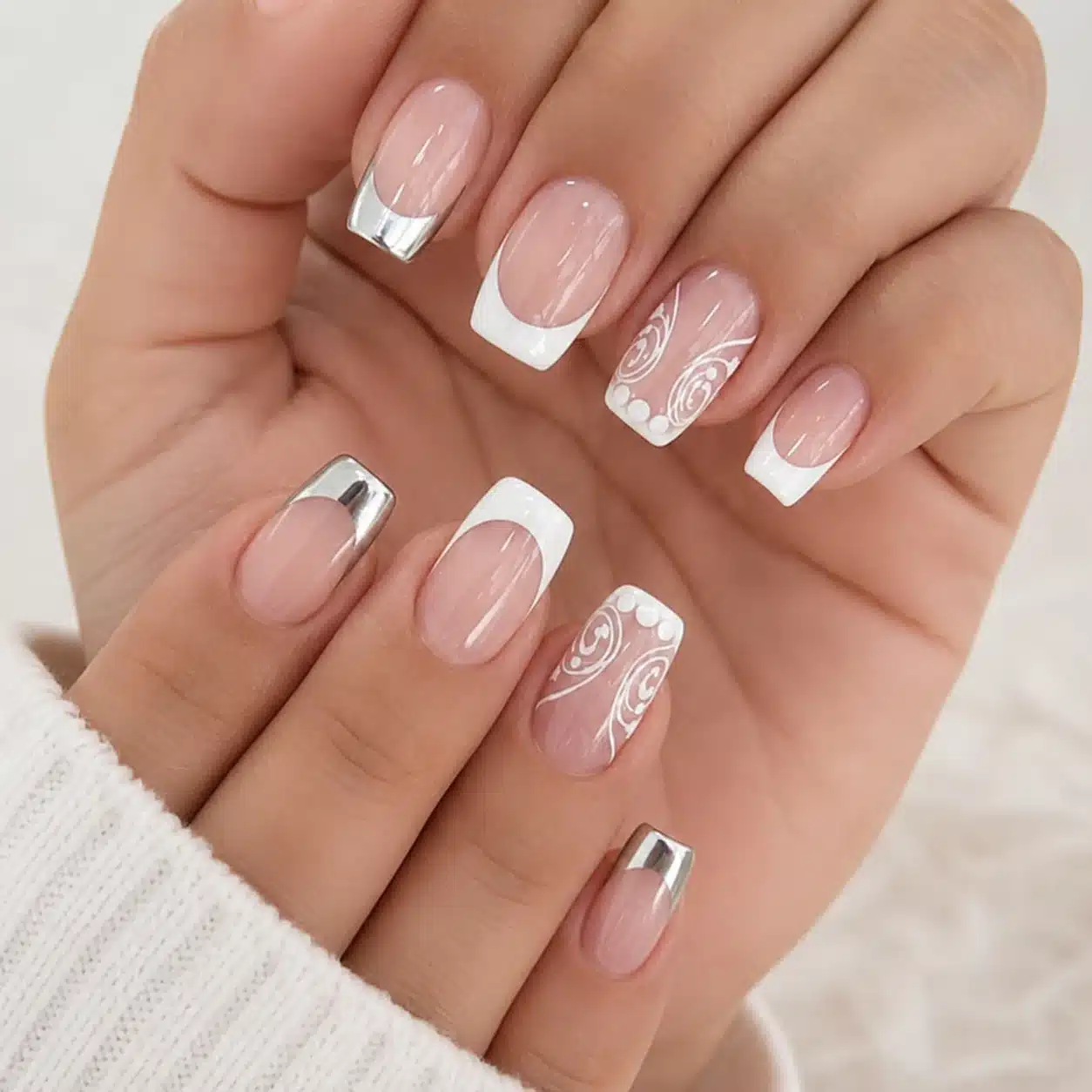
Tip polish needs control. An opaque cream polish works for classic white tips, while a liner polish with a narrow brush is useful for micro French lines, curves, swirls, and double tips. Gel paint can also give detailed control, but it should be used only with the lamp and curing instructions specified by the product.
The shape of the brush changes the result. A standard bottle brush can paint a broad edge on square nails. A fine liner or small angled brush gives more control on almond and oval shapes. Guide stickers can help beginners, but the base layer must be fully dry before the sticker is applied or it may lift the color underneath.
For more shape references, almond French nails show how the tip follows a tapered outline, while square nails need a flatter, more structured edge.
Regular Polish vs Gel Polish for French Tips
Regular nail polish is the simplest option when you want a manicure that is easy to change. It air-dries, removes with standard polish remover, and works well for practice because mistakes can be cleaned with a small brush and remover. The trade-off is that the tip may chip sooner, especially if the white or colored edge is painted too thickly.
Gel polish can create a glossy, durable finish and lets you cure each layer before moving to the next step. That can make detailed tips easier because the base is set before the tip is painted. Gel is not interchangeable with regular lacquer: it needs the correct compatible lamp, thin layers, complete curing, and the removal method stated by the manufacturer.
Do not mix products or curing systems casually. Read the label, keep uncured gel off the skin, and stop using a product if you notice irritation. The FDA’s nail care product guidance advises consumers to follow label directions, heed warnings, use good ventilation, and report adverse reactions.
French Tip Nail Polish Color Ideas
The same sheer base can support very different styles. The easiest way to keep a colored French manicure cohesive is to repeat one finish family—cream, metallic, shimmer, or glossy jelly—rather than mixing every texture in one set.
Classic White or Soft Ivory
A bright white gives the highest contrast, while ivory looks warmer and less stark. Keep the tip slim on short nails and slightly deeper on medium nails. For more classic references, browse French nail ideas before choosing the exact width. You can also compare the finished painted effect with white French tip press-on nails before deciding whether polish or a ready-made set better suits your routine.
Pastel Blue Tips
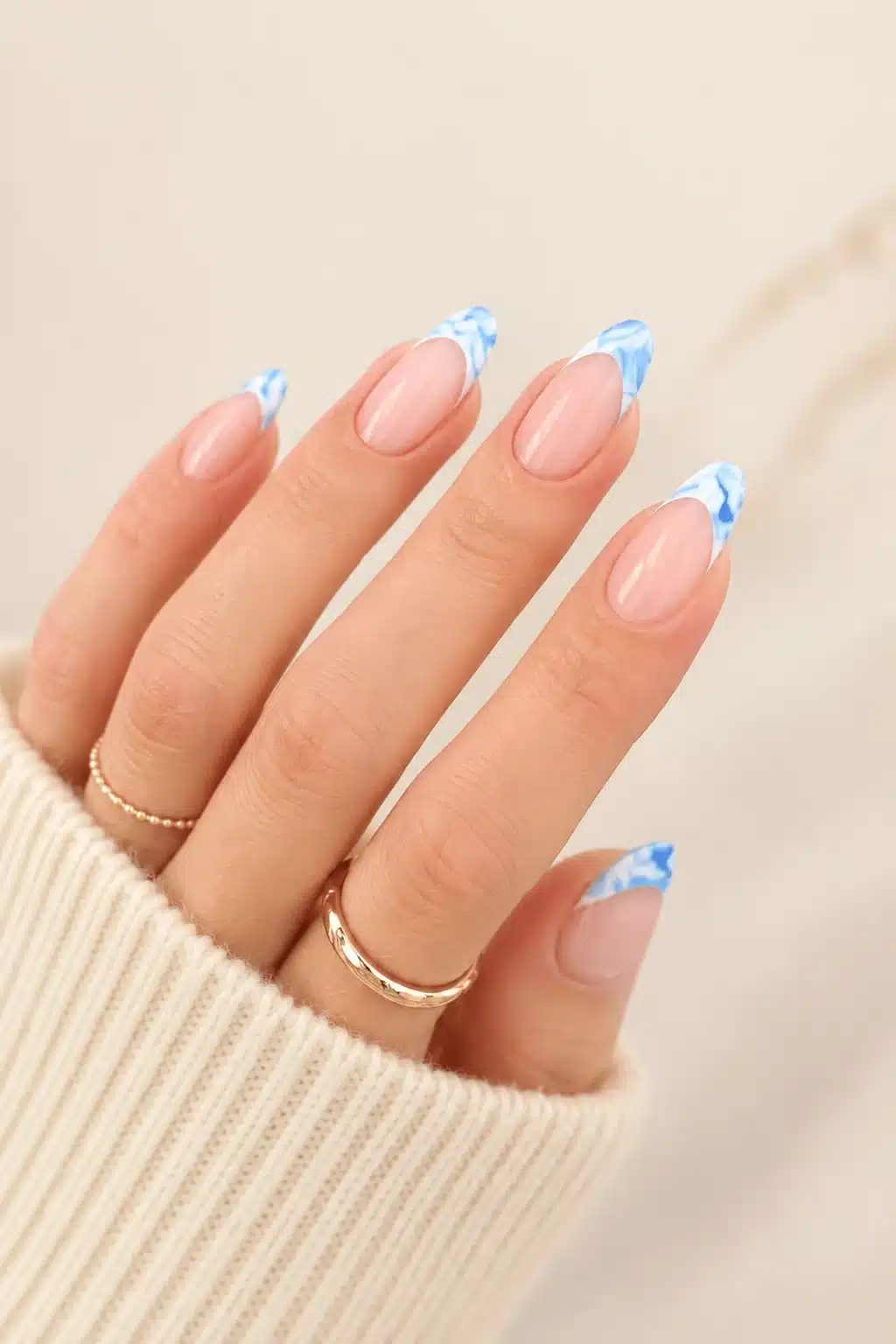
Pastel blue feels fresh without becoming too bold. A sheer neutral base keeps the color clean, while a glossy top coat smooths the edge. This look works especially well in spring and summer, and it connects naturally with broader colored French tip nails.
Black Micro French Tips
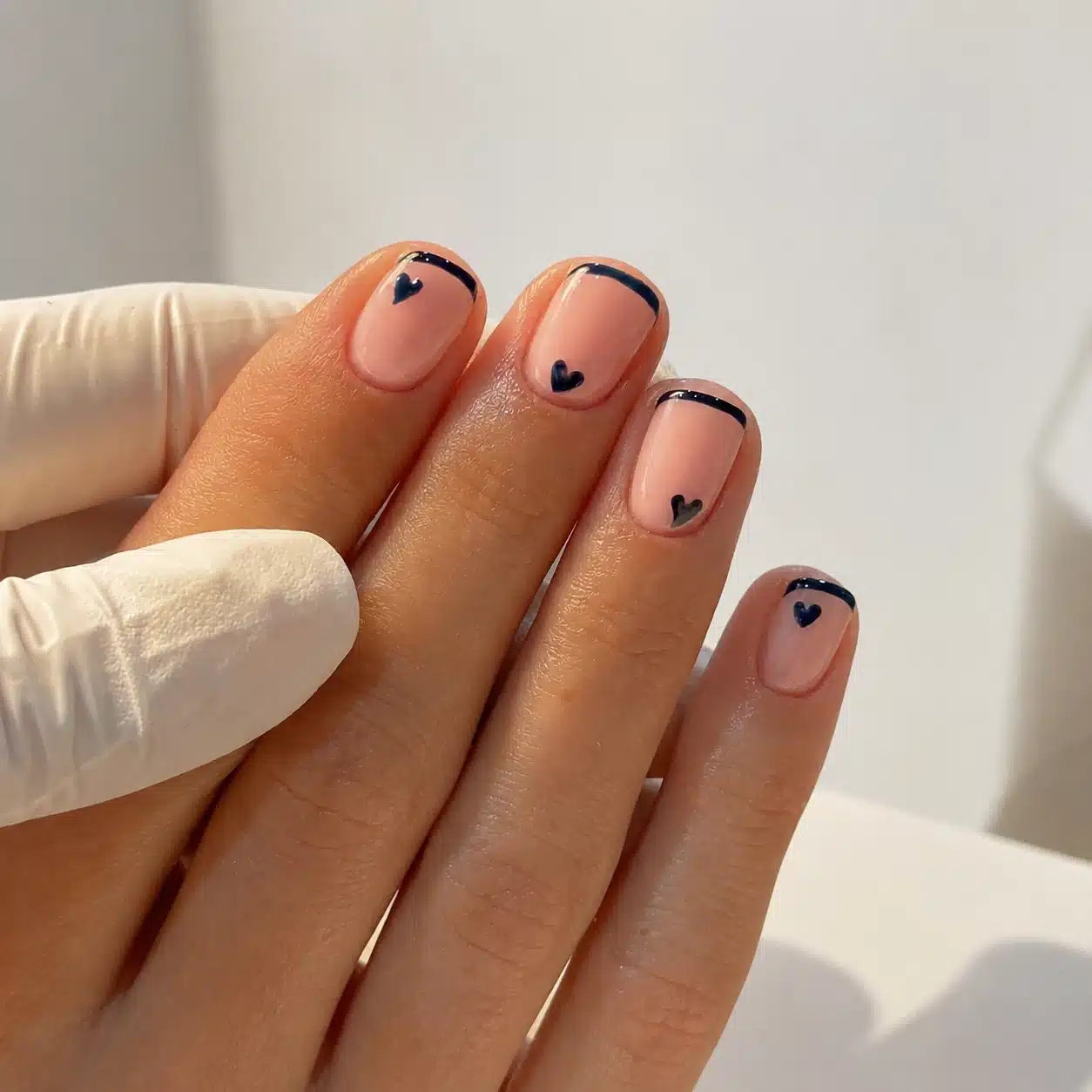
Black polish creates a sharper graphic effect, so a micro line often looks more balanced than a thick edge. Use a fine liner brush and keep the points symmetrical on almond nails. Let the black dry or cure completely before top coat so the line does not drag.
Black and White French Tips
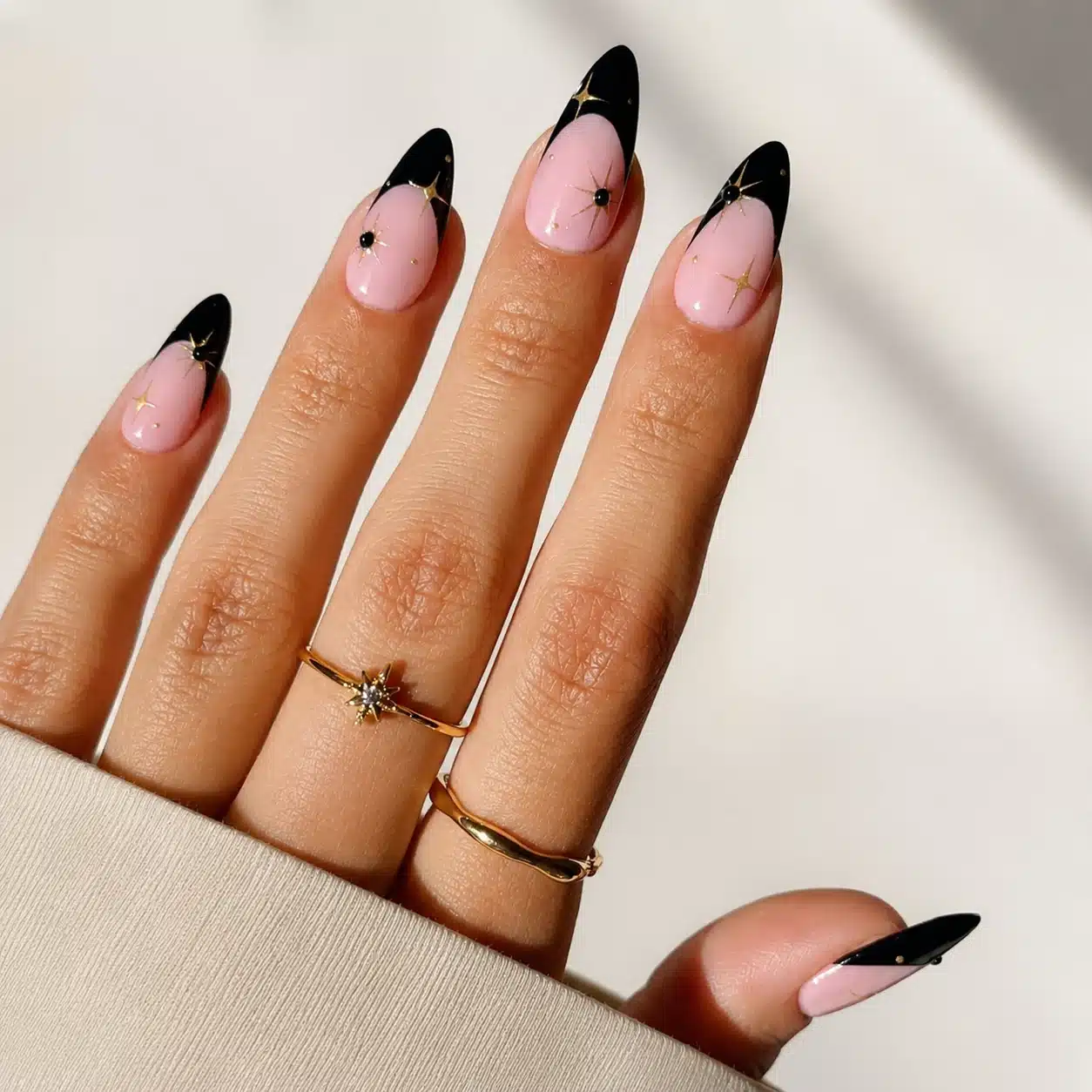
Alternating black and white tips keeps the structure classic while adding contrast. Use the same tip width on every nail so the manicure looks intentional. A natural pink base prevents the two colors from feeling visually heavy.
Burgundy French Tips
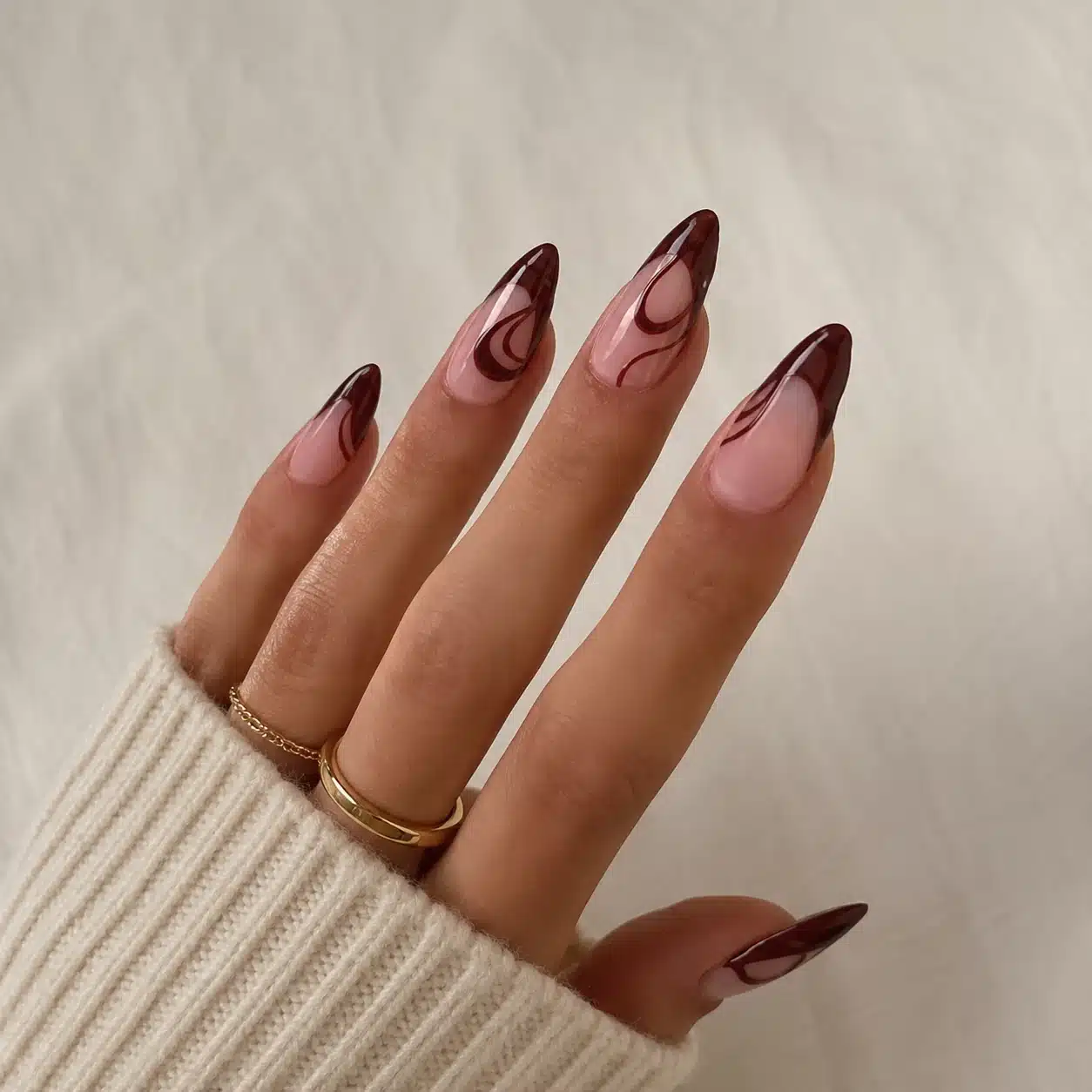
Burgundy is softer than black but richer than classic red. It works well with a blush, beige, or translucent pink base. A cream formula gives a smooth edge, while a subtle shimmer can make the tip feel dressier without covering the whole nail.
Brown Metallic French Tips
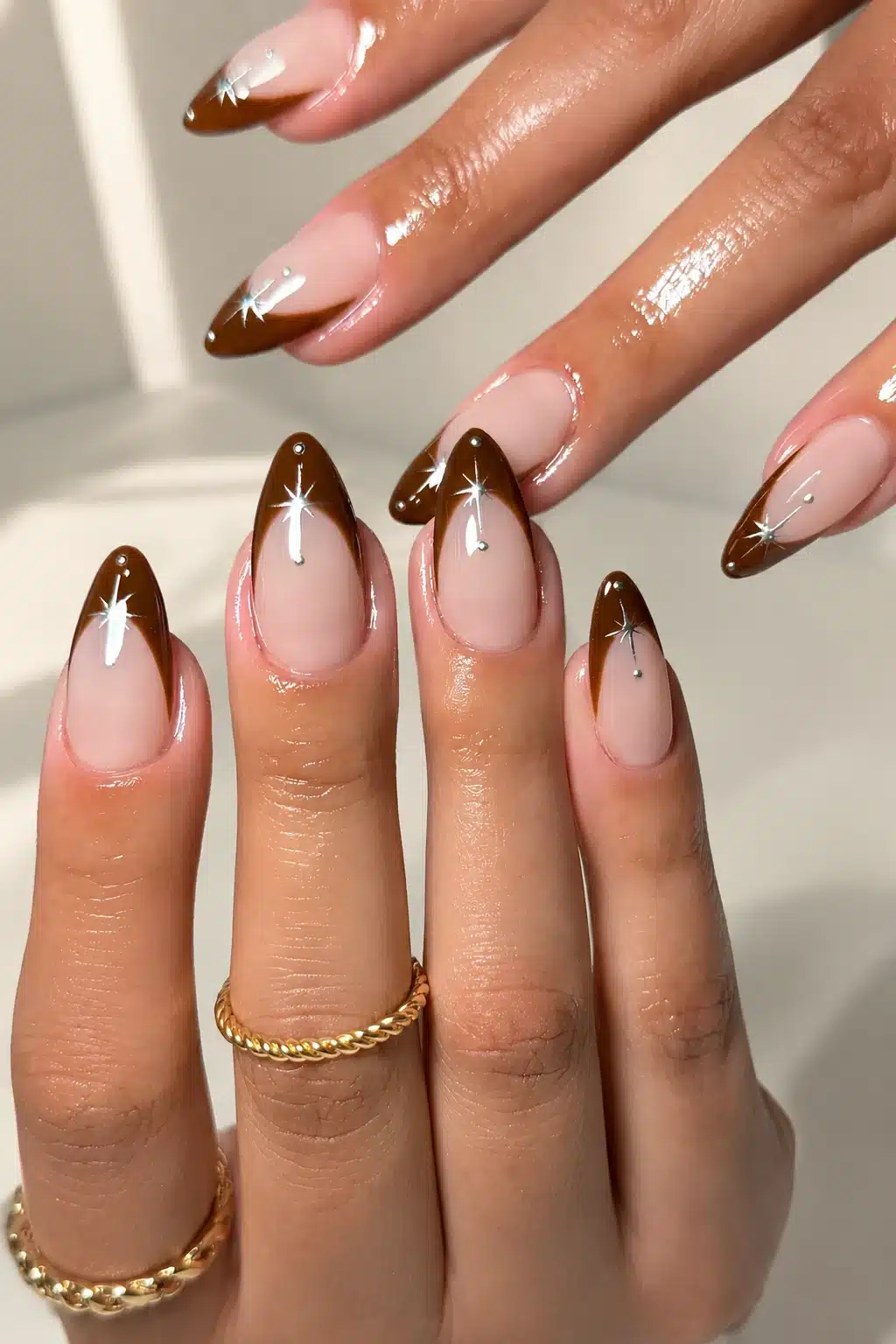
Chocolate, bronze, and copper polishes create a warmer metallic French manicure. Keep the base simple because reflective polish already adds visual detail. This color family looks especially polished on almond shapes and in autumn-inspired sets.
French Manicure Polish Picks
Affiliate disclosure: Parisfy may earn from qualifying purchases at no extra cost to you. Amazon product links are included; local affiliate tracking is not active for this draft.
Best complete regular-polish starter kit
ORLY French Manicure Kit Pink
pink nude and white tip lacquer colors; base and top product included; French tip guides included.
Best gel option for a nude-and-white French manicure
Beetles French Manicure Kit White Nude Pink Gel Nail Polish
nude pink and white gel colors; French tip guide stickers included; requires compatible UV or LED curing.
Best simple sheer-pink and white duo
Essie Ballet French Manicure Kit
sheer pink and white nail polish pairing; regular nail lacquer format; designed as a French manicure kit.
How to Paint French Tips With Nail Polish
- Remove old color and shape the nails before opening the polish.
- Apply a thin base coat and let it dry or cure according to the product directions.
- Add one sheer pink, nude, or milky layer. Use a second only when the base still looks uneven.
- Mark the center of the free edge visually so both sides of the smile line meet evenly.
- Paint the tip with a liner brush, angled brush, guide sticker, stamper, or the bottle brush method that gives you the most control.
- Apply a second thin tip coat only when the color needs more opacity.
- Clean the curve before sealing. A small cleanup brush is useful with regular polish.
- Let the design set fully, then float the top coat over the nail with minimal repeated strokes.
- Cap the free edge lightly when the product instructions allow it.
The goal is not to create the widest possible tip. It is to keep the line proportional, centered, and consistent across all ten nails. A thin edge usually looks more modern on short lengths, while medium nails can support a fuller curve.
How to Fix Streaky or Uneven French Tips
A streaky white tip usually means the polish is too sheer, the brush is overloaded, or the first coat was not dry before the second. Use thinner layers and choose a more opaque formula instead of trying to build coverage with one thick swipe.
If the smile line is uneven, refine it before top coat. With regular lacquer, use a small brush lightly dampened with remover. With gel, correct the uncured line with the method recommended by the brand, then cure only after the curve is clean. If guide stickers pull up the base, wait longer before applying them or use a freehand or stamper method.
Bubbles often come from shaking the bottle or brushing the same area too many times. Roll the bottle gently between the palms and allow each layer to settle. Smudging under top coat usually means the tip was not dry or cured enough.
Frequently Asked Questions
What type of nail polish is best for French tips?
Use a sheer or buildable pink, nude, or milky polish for the base and a more opaque polish for the tip. A cream white is the classic option, while a liner formula can make thin or detailed tips easier to control.
Can I use regular nail polish for French tips?
Yes. Regular lacquer works well and is easy to remove. Let each layer dry before adding guides, the tip color, or top coat. Thin coats are easier to control and less likely to wrinkle or smudge.
Can I use gel nail polish for French tips?
Yes, provided the gel, lamp, base, top coat, curing times, and removal method are compatible and used exactly as directed. Keep uncured product off the skin and do not guess curing times.
Should a French manicure base be pink or nude?
Either can work. Choose a sheer pink when you want a brighter rosy nail bed, a beige or peachy nude for a warmer natural effect, or a milky shade for a softer modern finish.
How do I stop white French tip polish from looking streaky?
Choose a more opaque formula, wipe excess polish from the brush, and apply one or two thin controlled coats. Allow the first layer to set before adding another, and avoid repeatedly brushing over a line that is starting to dry.
Final Thoughts
The best French tip nail polish combination is simple: a translucent base that flatters the nail bed, an opaque tip shade you can control, and a top coat that seals the design without dragging it. Classic white remains timeless, but pastel blue, black, burgundy, and metallic brown can use the same clean structure.
Start with the formula you know how to use safely, keep each layer thin, and match the tip width to the nail length. Once the base and edge are balanced, the manicure will look intentional whether you choose a traditional white French line or a modern colored version.
Try next: Cute Summer French Tip Nails | Summer French Tip Nails Square | Red French Tip Press On Nails | Soap Nail Micro French Tips