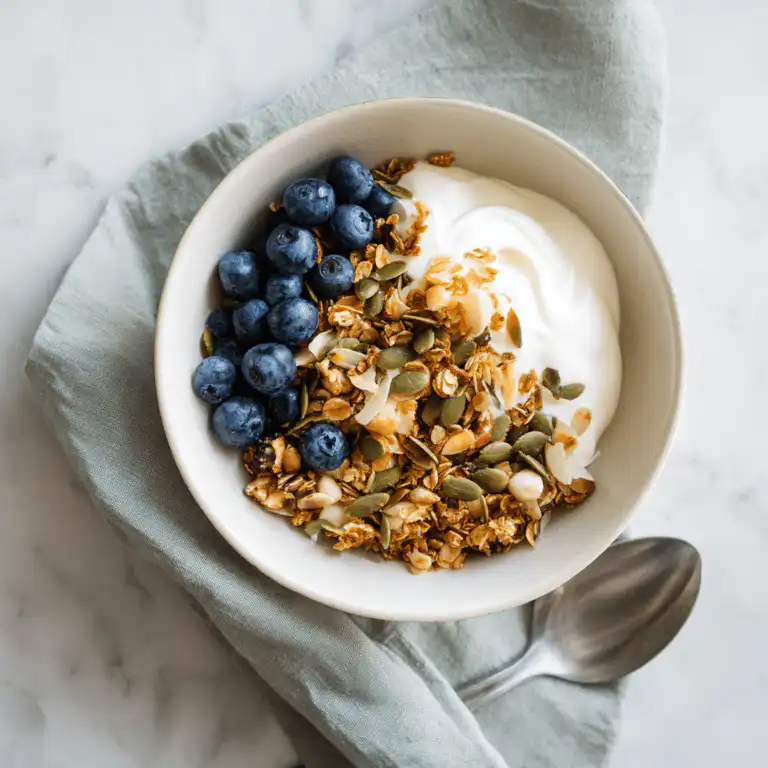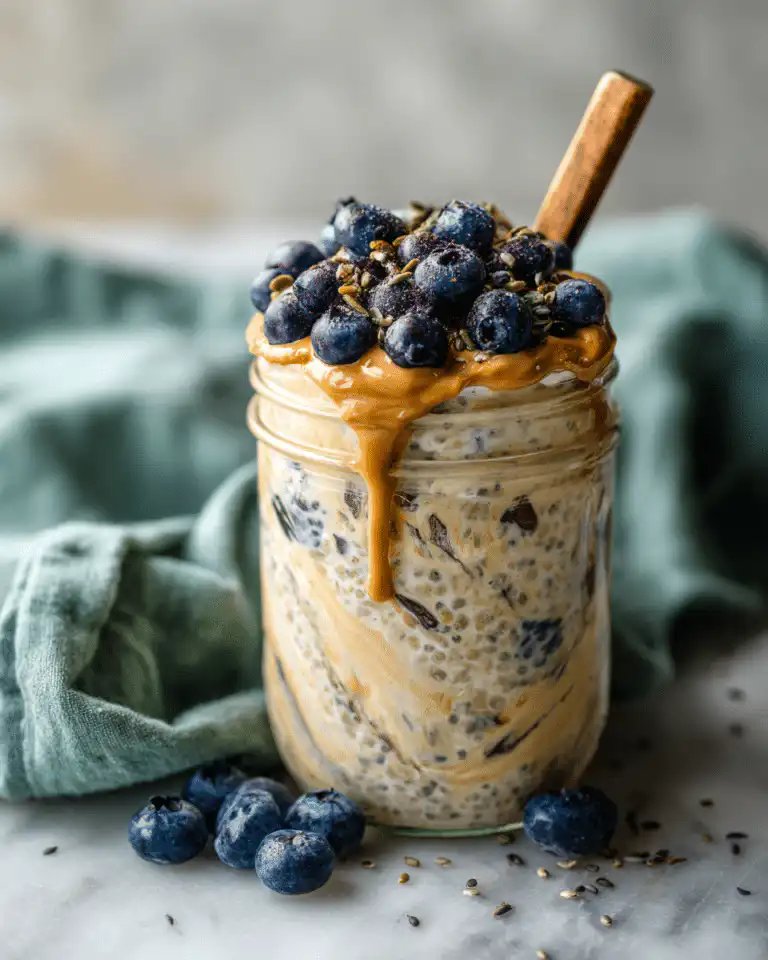

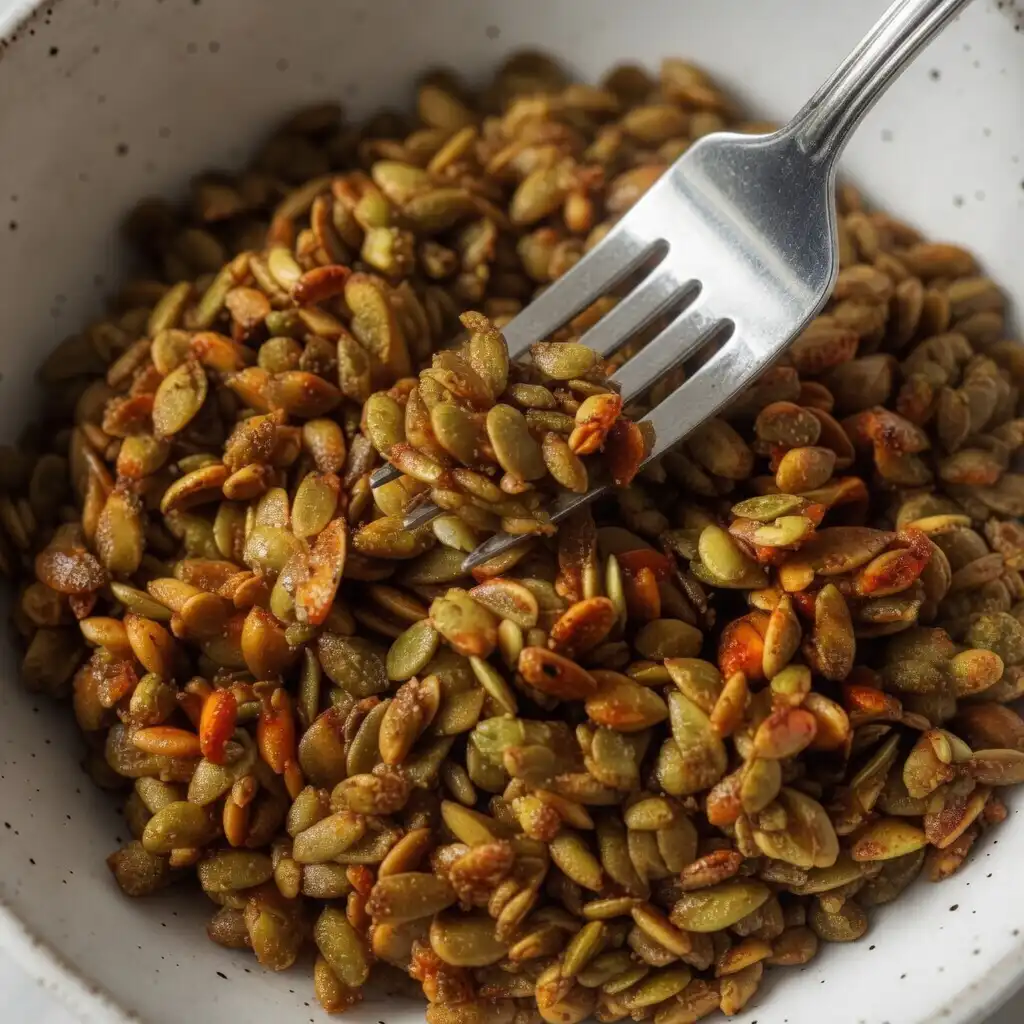
Are pumpkin seeds low FODMAP? Pumpkin seeds, also called pepitas, are Monash-verified safe at 23 grams per serving (approximately 2 tablespoons). According to Monash University’s official low FODMAP shopping guidelines, pepitas remain gut-friendly through the elimination phase, provided you respect the clinical portion threshold. This article covers the exact serving limits, the raw vs. roasted difference for SIBO patients, and a delicious Salted Caramel Roasted Pumpkin Seeds recipe you can enjoy safely.
As a registered dietitian who has lived with IBS since age 19 and spent years being dismissed before training at Oregon Health & Science University, I know how paralyzing it feels to stand in the snack aisle, unsure what will trigger a flare. I’ve reviewed Monash data for over 300 clients, and pumpkin seeds come up constantly. Let me give you the clinical clarity you deserve.
If you’ve been avoiding every nut and seed out of fear, you’re not alone, and you may be unnecessarily restricting one of the most gut-friendly, magnesium-rich snacks available. For more sweet ideas, check out our low FODMAP desserts guide.
In this guide, you’ll learn the exact Monash-verified portion, why the 23g limit is a safety buffer (not the physiological ceiling), how to prevent FODMAP stacking, and why roasting matters for SIBO recovery.
By the end, you’ll have a complete, tested recipe and a clear, science-backed framework for snacking confidently on pepitas without the guesswork.
Table of Contents
Low FODMAP Salted Caramel Roasted Pumpkin Seeds

Equipment
- Large rimmed baking sheet
- parchment paper
- large mixing bowl
- whisk
- Kitchen scale Recommended for precise 23g FODMAP-safe portioning
- Airtight container For storage up to 14 days
Ingredients
- 368 g raw pumpkin seeds / pepitas (hulled)
- 2 tbsp maple syrup (Low FODMAP at ≤2 tbsp per serving)
- 1 tbsp coconut sugar (Low FODMAP at ≤1 tsp per serving, use sparingly)
- 1 tsp ground cinnamon (Low FODMAP, no fructan concern at culinary doses)
- 0.25 tsp ground ginger (Low FODMAP, no fructan concern at culinary doses)
- 0.5 tsp fine salt (iodized or sea salt)
- 1 tbsp light olive oil or rice bran oil (Low FODMAP, fat contains no FODMAPs)
Instructions
- Preheat your oven to 160°C (320°F) fan-forced. Line a large rimmed baking sheet with parchment paper and set aside.
- In a large mixing bowl, combine maple syrup, coconut sugar, cinnamon, ground ginger, salt, and oil. Whisk until fully incorporated into a uniform caramel coating.
- Add the raw pumpkin seeds to the bowl. Toss thoroughly until every seed is evenly coated in the caramel spice mixture. This step ensures consistent roasting and flavor distribution.
- Transfer the coated seeds to the lined baking sheet in a single, even layer. Roast in the preheated oven for 20–25 minutes, stirring once at the 12-minute mark to prevent burning and ensure uniform caramelization.
- Remove from the oven and allow the seeds to cool completely on the baking sheet, approximately 15 minutes. The caramel coating will harden and crisp as it cools. Do not taste until fully cooled to avoid burning your mouth.
- Once cooled, break any clusters apart. Portion into 23g servings (approximately 2 tablespoons) for Low FODMAP compliance. Store in an airtight container at room temperature for up to 14 days.
Notes
Nutrition
Are Pumpkin Seeds OK With IBS?
Pumpkin seeds are one of the few seeds that pass the Monash elimination phase test with a clear green light. Unlike cashews or pistachios, which are high in GOS and fructans, pepitas contain only trace amounts of fermentable oligosaccharides at safe serving sizes. For IBS patients managing symptoms through the Low FODMAP diet, this makes pumpkin seeds a reliable, protein-dense snack option.
The key distinction is that pepitas are not FODMAP-free; they simply fall below the clinical symptom-triggering threshold at 23 grams. Understanding this difference is essential for confident, symptom-free snacking.
Understanding Fructans and GOS in Pepitas
Fructans are a class of fermentable carbohydrates classified under the “O” in FODMAP (Oligosaccharides). In the small intestine, fructans resist digestion and travel intact to the colon, where gut bacteria ferment them rapidly, producing gas, triggering an osmotic effect that pulls water into the intestinal lumen, and causing the bloating and cramping characteristic of IBS flares.
Pepitas contain a small but measurable amount of fructans. At 23 grams, this quantity remains comfortably below the threshold that triggers symptoms in most IBS patients. The Monash University app classifies this portion with a green indicator, meaning it is safe for consumption during the elimination phase without modification.
How Many Pumpkin Seeds Are Low in FODMAP?
23 grams (approximately 2 tablespoons) is the Monash University-verified safe serving for pumpkin seeds on a low FODMAP diet. But understanding why that number exists and what happens beyond it gives you far more practical control over your diet.
The Official Monash University Serving Sizes
Monash University’s lab testing places pumpkin seeds at a green (safe) rating of up to 23 grams per sitting. What most articles omit is that fructan levels only reach a moderate (amber) threshold at approximately 82 grams m, meaning the 23g recommendation functions as a conservative safety buffer, not the physiological ceiling. For patients in the stable maintenance phase of the Low FODMAP protocol, this nuance offers meaningful dietary flexibility, always with dietitian supervision.
| Portion | Fructan Level | Monash Status | Recommendation |
|---|---|---|---|
| 23g (~2 tbsp) | Trace | 🟢 Green | Safe elimination phase |
| 23–81g | Low | 🟡 Caution | Maintenance only monitor |
| 82g+ | Moderate | 🔴 Amber | Avoid during elimination |
Preventing FODMAP Stacking With Nuts and Seeds
FODMAP stacking is one of the most under-discussed triggers for elimination-phase failures. Even when each food is technically “green-rated,” combining multiple fructan-containing foods in a single meal can push total FODMAP load over your personal symptom threshold.
For example, a 23g serving of pepitas paired with a low-FODMAP almond portion and a slice of sourdough, each individually safe, may cumulatively exceed your gut’s osmotic tolerance. According to the Gastrointestinal Associates clinical elimination diet protocol, managing cumulative FODMAP load per meal is as important as individual food classification.
The practical rule: treat pumpkin seeds as your sole fructan source for any given snack. Avoid pairing with other fructan-rich items such as almonds, cashews, wheat-based crackers, or garlic-seasoned foods in the same sitting.
Are Pumpkin Seeds Hard on Your Gut? (Raw vs. Roasted)
From a pure FODMAP chemistry standpoint, roasting pumpkin seeds does not change their fructan content. Both raw and roasted pepitas test identically in Monash’s laboratory conditions. However, for patients managing SIBO or recovering from mucosal inflammation, the mechanical dimension of digestion matters enormously and here, roasting makes a measurable practical difference.

Chewing, SIBO, and Insoluble Fiber Mechanics
Raw pumpkin seeds are dense with insoluble fiber. In a healthy gut, this fiber passes through without issue. But in a SIBO-compromised or inflamed intestinal environment, large, poorly chewed fiber particles can cause mechanical irritation of the intestinal lining, triggering bloating and discomfort that mimics a FODMAP reaction, even when the chemical load is within safe limits. Roasting initiates partial breakdown of the fibrous seed coat, reducing its rigidity and easing gastric workload.
The clinical recommendation for SIBO patients is twofold: always roast your pepitas, and chew each bite thoroughly at least 20–25 chews before swallowing. If you want to explore other gut-friendly Low FODMAP snack options, check out these is peanut butter low FODMAP safety guidelines and serving tips.
What Are the Lowest FODMAP Nuts and Seeds?
Pumpkin seeds sit among a small, privileged group of nuts and seeds that are safe during the elimination phase. Understanding where they rank helps you build a diverse, nutrient-rich snack rotation without symptom risk.
Combining Pumpkin and Sunflower Seeds Safely
- Macadamia nuts (30g): Lowest FODMAP nut; no fructans or GOS at safe portions
- Peanuts (32g) Green-rated; explore our peanut butter Low FODMAP guide for serving details
- Pumpkin seeds / Pepitas (23g) Safe; trace fructans within clinical limits
- Sunflower seeds (2 tbsp) Green-rated; minimal FODMAP content at standard servings
- Walnuts (10 halves) Safe at Monash-verified portions
Pumpkin and sunflower seeds can be safely combined, but respect the combined total. A recommended mixed serving is 15g pepitas + 15g sunflower seeds, keeping cumulative fructan load in the green zone. For gut-friendly sweetener pairings with your seed snacks, see our guide on safe low-FODMAP sweeteners for IBS.
Recipe: Low FODMAP Salted Caramel Roasted Pumpkin Seeds
This Monash-verified recipe delivers a deeply satisfying crunch with a golden salted caramel coating, fully dairy-free, gluten-free, and safe for the IBS elimination phase at one serving (23g).
Frequently Asked Questions
Are pumpkin seeds safe during the FODMAP elimination phase?
Yes p, pumpkin seeds are Monash-verified safe at 23 grams (approximately 2 tablespoons) during the elimination phase. At this portion, fructan levels remain below the clinical symptom threshold for most IBS patients. Always consume as a standalone fructan source within the meal to avoid FODMAP stacking.
How many pumpkin seeds can I eat on a Low FODMAP diet?
The standard Monash-verified safe serving is 23 grams per sitting. Clinical data indicate that fructan levels only reach a moderate (amber) threshold at approximately 82 grams, meaning the 23g recommendation is a conservative safety buffer. During the maintenance phase with dietitian guidance, some patients tolerate slightly larger portions without symptom onset.
Are roasted pumpkin seeds lower in FODMAP than raw?
No roasting does not alter the fructan content of pumpkin seeds. Both raw and roasted pepitas are Monash-verified at the same 23g safe portion. However, roasting partially breaks down insoluble fiber, which reduces mechanical gut irritation, making roasted pepitas the recommended choice for SIBO patients and those with a sensitive intestinal lining.
Can I eat pumpkin seeds with IBS?
Yes, pumpkin seeds are compatible with IBS management through the Low FODMAP protocol at 23g per serving. They provide magnesium, zinc, and plant-based protein without triggering osmotic distress at safe portions. Ensure thorough chewing (20–25 chews per bite) and avoid combining with other fructan-rich foods in the same meal.
Are pepitas and pumpkin seeds the same for FODMAP purposes?
Yes, pepitas are simply the shell-free inner seeds of the pumpkin. For FODMAP classification purposes, Monash University tests pepitas (the shelled seeds commercially available), not whole pumpkin seeds in their outer hull. All Monash serving size data applies to the pepita form found in grocery stores.
What happens if I eat too many pumpkin seeds on a low-FODMAP diet?
Consuming beyond 81–82 grams of pumpkin seeds in a single sitting pushes fructan levels into the moderate (amber) range, which may trigger IBS symptoms including bloating, gas, abdominal cramping, and altered bowel habits. Exceeding this threshold during the elimination phase can also invalidate your symptom tracking data, making it harder to identify your individual FODMAP accurately triggers.
Conclusion
Pumpkin seeds are a genuinely gut-friendly, Monash-verified snack when consumed at 23 grams per serving during the Low FODMAP elimination phase. The clinical nuance understanding that 23g is a safety buffer, not the physiological ceiling, and that roasting benefits SIBO patients mechanically gives you the dietary confidence that most generic FODMAP lists fail to provide.
Pair your pepitas with a Low FODMAP-safe sweetener, avoid fructan stacking, chew thoroughly, and enjoy one of the most nutrient-dense snacks available on the IBS elimination diet. For more gut-safe ingredient guides, explore our resource on are blueberries low FODMAP Monash serving guide and our is dark chocolate low FODMAP clinical breakdown.
Tested by James Rivera, Recipe Developer & Texture Specialist – Avril 2026
Recipe tested 3 times for flavor, texture, and Low FODMAP compliance based on Monash University data.
📌 Love this recipe? Save it to your Low FODMAP Snacks board on Pinterest!
Try these next:
More Low FODMAP Dessert Recipes | Is Peanut Butter Low FODMAP? | Low FODMAP Sweeteners Guide
Medical Disclaimer: Educational purposes only not medical advice. Consult your healthcare provider or RD before any dietary change.
Nutritional Information: All values are estimates unless specified.