
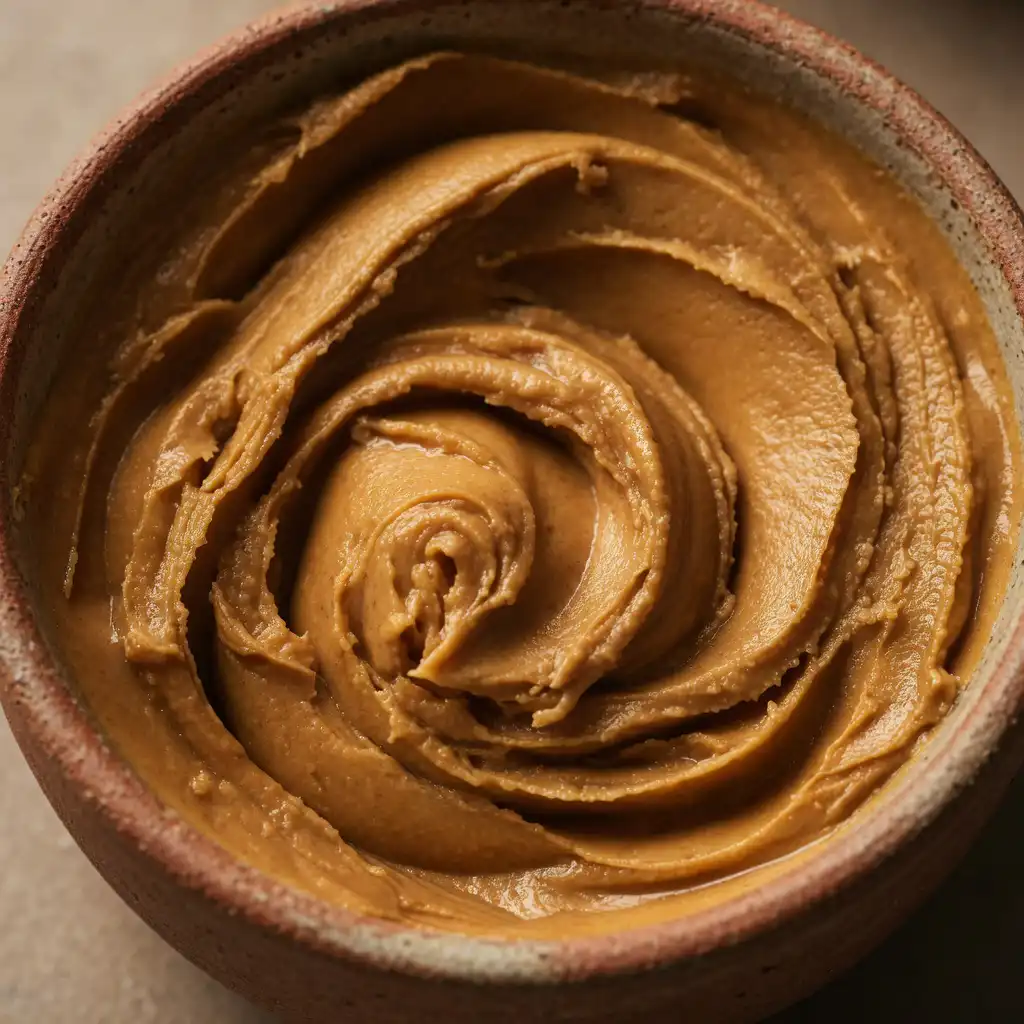
Is peanut butter low FODMAP? Yes, at 50g per serving (approximately two tablespoons), natural peanut butter is low FODMAP, Monash-verified. This guide covers safe brands, dangerous additives, the fat content paradox, and a gut-friendly recipe to put it all together.
I’m Sarah Martinez, a registered dietitian who spent years managing IBS myself before training at Oregon Health & Science University. I’ve seen how one mislabeled jar of peanut butter can derail weeks of careful elimination dieting for my 300+ clients.
If you’ve been standing frozen in the peanut butter aisle wondering whether that familiar jar was secretly wrecking your gut, you’re not alone. The frustration is real: you did everything right, checked every grain and every vegetable and somehow, peanut butter slipped through. For more dessert ideas, visit our low FODMAP desserts guide.
The good news is that pure, natural peanut butter is genuinely safe on a low FODMAP diet, but only when you know exactly what to look for. In this guide, you’ll get the Monash-verified serving sizes, a plain-English brand-by-brand breakdown of Jif and Skippy, a decoded additive matrix showing which ingredients silently spike your FODMAP load, and a complete low FODMAP Thai Peanut Quinoa Bowl recipe designed to bring it all to your plate safely.
Table of Contents


Low FODMAP Thai Peanut Quinoa Bowl

Equipment
- Medium saucepan with lid
- Kitchen scale (grams) Essential for accurate FODMAP portion control
- whisk
- 4 serving bowls
Ingredients
- 1 cup white quinoa, rinsed Low FODMAP no serving limit at standard portions
- 2 cups water
- 50 g all-natural peanut butter Roasted peanuts + salt ONLY. No molasses, no honey, no HFCS. Monash-verified low FODMAP at 50g per serving
- 90 g frozen edamame, thawed Monash-verified low FODMAP at 90g per serving do not exceed
- 75 g shredded red cabbage Monash-verified low FODMAP at 75g per serving do not exceed
- 2 cups finely grated carrots Low FODMAP safe
- 2 tbsp pure maple syrup Low FODMAP at 2 tbsp no honey substitute
- 2 tbsp rice vinegar Low FODMAP not malt vinegar
- 3 tbsp fresh lime juice
- 2 tbsp gluten-free tamari Not regular soy sauce
- 1 tsp sesame oil
- 1 tbsp garlic-infused olive oil FODMAPs stay in garlic bulb infused oil is SAFE
Instructions
- Combine rinsed quinoa and water in a medium saucepan. Bring to a boil over medium-high heat, then reduce to a simmer. Cover and cook for 13–15 minutes until all water is absorbed. Remove from heat and let steam, covered, for 5 minutes. Fluff with a fork.
- In a bowl, whisk together the 50g natural peanut butter, maple syrup, rice vinegar, lime juice, tamari, and sesame oil until fully smooth. If the sauce is too thick, add 1–2 tbsp of warm water and whisk again. Adjust lime juice to taste.

- Place frozen edamame in a colander and run warm water over them for 2 minutes until thawed. Pat dry. Do not exceed 90g per serving to stay within Monash FODMAP limits.
- Divide the cooked quinoa evenly between 4 bowls. Top each with edamame (90g), shredded red cabbage (75g), and grated carrots. Drizzle garlic-infused olive oil over the vegetables.
- Spoon the peanut sauce evenly over each bowl. Serve immediately. For meal prep, store sauce separately and dress just before serving to maintain texture.
Notes
Nutrition
Is peanut butter okay for IBS sufferers?
Yes, natural peanut butter is safe for most people managing IBS on a low FODMAP diet, provided the serving stays at or under 50g per sitting. That precise figure comes directly from Monash University’s clinical testing program, the global gold standard for FODMAP research. For context, FODMAP Friendly, a parallel certification body, has independently confirmed tolerability up to 167g for some processed varieties. However, the Monash 50g threshold remains the conservative, evidence-based target during the elimination phase.
What makes peanut butter safe is its botanical classification: peanuts are legumes, not tree nuts, and their carbohydrate composition contains only negligible levels of fermentable oligosaccharides, disaccharides, monosaccharides, and polyols. Unlike cashews or pistachios, which tip into high-FODMAP territory quickly, peanuts carry an exceptionally low GOS and fructan load at standard serving sizes. This means that during the strictest phase of your elimination diet, two tablespoons of plain, unsweetened peanut butter can be a genuinely reliable protein and fat source rather than a hidden trigger.
That said, the clinical reality is more nuanced than a simple green light. If you’d like to see how peanut butter fits into a complete low FODMAP breakfast, our low FODMAP banana bread recipe uses peanut butter as an optional add-on and walks through FODMAP stacking in detail.
The Fat Content Paradox: When Low FODMAP Still Triggers IBS
Here is the clinical nuance that almost no mainstream source explains adequately: being low FODMAP does not automatically mean symptom-free for every IBS patient. Peanuts are extraordinarily fat-dense, roughly 50g of fat per 100g of product, and this lipid load triggers a completely separate IBS mechanism known as the gastrocolic reflex.
When a large bolus of dietary fat reaches the small intestine, the gut responds with accelerated colonic motility. For someone with IBS-D (diarrhea-predominant) or post-infectious IBS, this reflex can generate cramping, urgency, and loose stools that are indistinguishable from a classic FODMAP reaction even when your serving was perfectly within the 50g Monash limit. According to Monash University’s IBS research program, fat sensitivity is documented as a co-existing trigger distinct from fermentable carbohydrate intolerance.
The practical takeaway: if you’ve confirmed peanut butter is within your FODMAP threshold but still experience symptoms, reduce portion size to 1 tablespoon (approximately 16g), eat it slowly alongside a complex carbohydrate, and avoid consuming it after a high-fat meal. This isn’t a failure of the low FODMAP protocol; it’s your gut telling you it’s dealing with two triggers simultaneously.
What brand of peanut butter is low FODMAP?
The brand question is where most low FODMAP guides fall completely short. The answer is never simply “natural peanut butter is fine” because the word “natural” on a US label is largely unregulated. What you actually need is a short, clean ingredient list: roasted peanuts, salt. Full stop. The moment a manufacturer introduces a secondary sweetener or stabilizer, the FODMAP profile can shift dramatically.
Is Jif Peanut Butter Low FODMAP?
Standard Jif Creamy Peanut Butter contains roasted peanuts, sugar, molasses, fully hydrogenated vegetable oils, and salt. The inclusion of molasses is the critical FODMAP concern here: molasses is a concentrated by-product of sugar refining that carries significant excess fructose alongside trace fructans. During a strict elimination phase, even small quantities of excess fructose can exceed a sensitized gut’s absorption capacity in the small intestine, triggering fermentation further down the colon.
Verdict: Standard Jif Creamy use with caution or avoid during elimination. Jif Natural Creamy Peanut Butter Spread, which reduces additives significantly, is the safer choice within the range But still check the current label, as formulations change. Always prioritize the ingredient list over the brand name.
Is Skippy Peanut Butter Low FODMAP?
Skippy Natural Creamy Peanut Butter Spread lists roasted peanuts, sugar, palm oil, and salt. The sugar addition is worth monitoring: at standard 32g (two-tablespoon) servings, the sucrose quantity is unlikely to breach FODMAP thresholds, as sucrose is a disaccharide that is generally well-tolerated when not combined with excess fructose. However, Skippy Natural does contain palm oil, a hydrogenated stabilizer that, while not a FODMAP trigger, can contribute to the lipid load discussed in the fat content paradox section above.
Verdict: Skippy Natural is generally acceptable during low FODMAP elimination at standard 32–50g servings, with the caveat of the fat trigger risk. Skippy’s standard “Reduced Fat” variant replaces fat with corn syrup solids. Do not use this on a low FODMAP diet. The fat removal paradoxically increases the carbohydrate and potential FODMAP load significantly.
Why is peanut butter high in FODMAP sometimes?
A jar of peanut butter that is technically high FODMAP is almost always a product of industrial processing decisions, not of the peanut itself. Understanding the specific mechanisms by which manufacturers inadvertently (or deliberately) transform a safe food into a gut trigger is the most powerful tool you have as a low FODMAP patient.
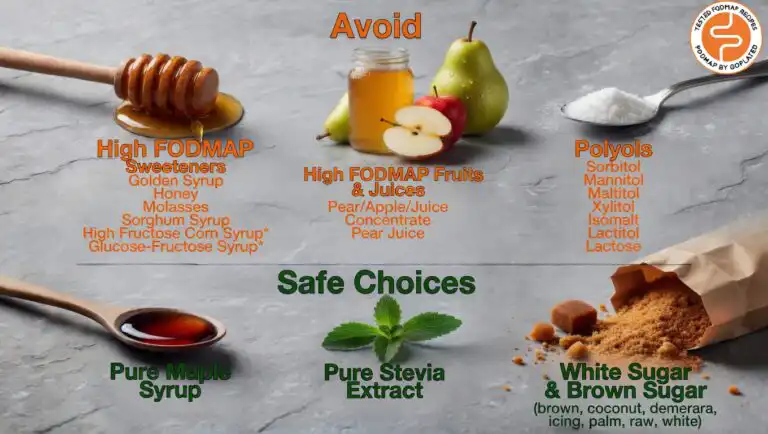
The Hidden FODMAP Additive Matrix: HFCS, Molasses, and Honey
Three additives account for the vast majority of FODMAP contamination in commercial peanut butter products:
- High Fructose Corn Syrup (HFCS): Introduces free fructose in ratios that exceed sucrose’s 1:1 glucose-to-fructose balance. The small intestine’s fructose transport capacity (primarily via GLUT-5 transporters) is limited and highly variable in IBS patients. Excess free fructose that is not absorbed reaches the colon intact, where bacterial fermentation produces hydrogen, methane, and CO₂, the direct biochemical cause of bloating and cramping.
- Molasses: A concentrated sugar derivative containing excess fructose and trace fructan polymers. Classified as a high-FODMAP ingredient by Monash University. Even partial-tablespoon quantities in a serving can push total fructan load beyond safe thresholds when combined with other fructan-containing foods that day.
- Honey: Composed primarily of excess fructose (approximately 38% fructose vs 31% glucose), honey is one of the most consistently high-FODMAP sweeteners. It is among the most common “natural” sweetener additions to artisan and health-marketed peanut butter brands and one of the most dangerous for IBS management.
There is also a fourth, frequently overlooked hazard: dry-roasted peanut varieties. Many dry-roasted peanut products, both whole and used as a peanut butter base, are seasoned with onion powder and garlic powder before roasting. Both are extremely concentrated sources of fructans. A peanut butter labeled “dry roasted” with “spices” or “natural flavors” in its ingredient list should be treated as high-FODMAP until confirmed otherwise. According to NIH research on gut microbiome and IBS, fructan fermentation is among the most significant drivers of gas production in IBS patients.
How much peanut butter is low FODMAP?
The precise, clinically validated answer is 50g per serving, as established by Monash University’s laboratory testing, which is approximately two level tablespoons. This is not an estimate derived from general nutrition guidelines; it is the outcome of controlled fermentation testing on actual peanut butter samples. FODMAP Friendly’s independent certification extends tolerability data up to 167g for certain processed peanut butters. Still, this upper range reflects maximum tested tolerance rather than a target serving during elimination.
The key clinical instruction: measure by weight, not by visual estimation. Tablespoon volumes vary considerably depending on how tightly peanut butter is packed into the spoon. A kitchen scale set to grams removes all ambiguity. It is the standard recommendation from every registered dietitian working within the Monash FODMAP framework. During the reintroduction phase, you can test incrementally above 50g to determine your personal threshold, but do so as a structured reintroduction step, not casually.
For baked goods where peanut butter is one of several ingredients, always calculate the FODMAP contribution per serving of the finished product. Our low FODMAP chocolate chip cookies demonstrate exactly how to account for ingredient stacking across a complete recipe, so your total FODMAP load per portion stays safely within range.
Is peanut butter powder low FODMAP?
Peanut butter powder, also sold under brands like PB2 and PBfit, is produced by pressing most of the oil out of roasted peanuts and then dehydrating the solids into a fine powder. From a FODMAP perspective, this process does not meaningfully change the fermentable carbohydrate profile: peanuts were already low in FODMAPs, and that remains true in powder form. What does change significantly is the fat content, which drops from approximately 16g per two tablespoons (whole peanut butter) to roughly 1.5–2g per two tablespoons of reconstituted powder.
This reduced fat load makes peanut butter powder a compelling option for IBS patients who have confirmed they experience the gastrocolic fat-trigger effect described above. The reduced lipid content substantially lowers the risk of a reflex-driven symptom episode, making it a genuinely superior alternative for smoothies, oatmeal, and sauces when fat sensitivity is a co-existing issue. The absolute requirement: choose plain, unsweetened peanut butter powder with no added sweeteners. Most commercial varieties add sugar acceptable in small amounts. Still, some add honey or coconut sugar, both of which reintroduce FODMAP risk.
Is peanut butter good for your bowels?
Within the validated 50g serving window, natural peanut butter offers genuine benefits for bowel function in most IBS patients. Peanuts contain approximately 1.6g of dietary fiber per two-tablespoon serving, a blend of soluble and insoluble fiber. Soluble fiber supports the formation of a cohesive, well-formed stool by absorbing water in the colon. In contrast, insoluble fiber adds bulk that supports regular peristalsis without the fermentative gas production associated with high-FODMAP fibers like inulin or FOS.
Natural peanut butter also provides a meaningful magnesium contribution, approximately 49mg per 50g serving, a mineral that plays a direct role in smooth muscle relaxation in the gut wall. Chronically low magnesium intake is associated with increased gut motility dysregulation in IBS patients. In this context, a daily 50g serving of unsweetened peanut butter is not merely a tolerated indulgence; it is a micronutrient-dense, gut-supportive food that earns its place in a carefully structured low FODMAP eating pattern.
Pair it with a Monash-verified fruit like blueberries (at the correct serving size), and you have a powerful, gut-friendly snack. Our low FODMAP blueberry muffins do exactly that, built to deliver fiber, flavor, and FODMAP safety in every bite.
Low FODMAP Thai Peanut Quinoa Bowl Recipe
This recipe brings everything in this guide to the table: a safe, measured serving of all-natural peanut butter in a savory sauce, built around Monash-verified portions for every single ingredient.
Frequently Asked Questions
Is peanut butter low FODMAP?
Yes. Natural peanut butter is low FODMAP at 50g per serving, as verified by Monash University. Peanuts contain only negligible levels of fermentable carbohydrates at this serving size. The key condition is that the product contains no high-FODMAP additives such as honey, molasses, or high fructose corn syrup.
Is peanut butter a low FODMAP food?
Yes plain, natural peanut butter qualifies as a low FODMAP food within the 50g Monash-verified threshold. Peanuts are botanically classified as legumes, and their fermentable carbohydrate content is minimal at standard serving sizes, making them reliably safe during the elimination phase of the low FODMAP diet.
Is Jif peanut butter low FODMAP?
Standard Jif Creamy contains molasses, which is a high-FODMAP ingredient due to its excess fructose and fructan content. Jif Natural Creamy reduces these additives and is a safer option, but always verify the current label. During strict elimination, choose a peanut butter with only roasted peanuts and salt in the ingredient list.
Is Skippy peanut butter low FODMAP?
Skippy Natural Creamy Peanut Butter is generally acceptable at standard 32–50g servings. The main caveats are its palm oil content (a fat-trigger risk) and the fact that Skippy’s Reduced Fat variant replaces fat with corn syrup solids, making it a high-FODMAP product. Always choose the Natural variety and stick to the 50g limit.
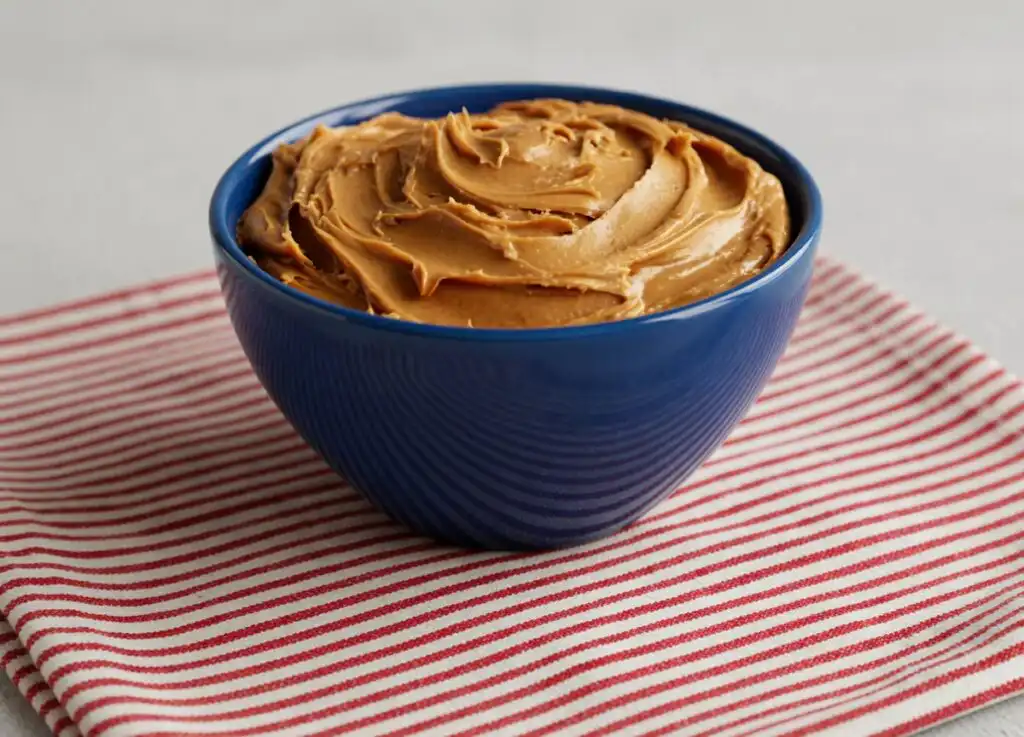
📌 Love this recipe? Save it to your Low FODMAP Dinners board on Pinterest!
Try these next: More Low FODMAP Recipes
Medical Disclaimer: Educational purposes only — not medical advice. Consult your healthcare provider or RD before any dietary change.
Nutritional Information: All values are estimates unless specified.
Tested by James Rivera – April 2026
This recipe was reviewed for ingredient safety, practical execution, and low FODMAP compatibility based on Monash University data.