

Low FODMAP salad is safe at 75g of cabbage per serving, Monash-verified. King’s College London’s FODMAP nutrition department confirms that reducing fermentable carbohydrates through carefully portioned greens is one of the most effective strategies for managing IBS symptoms. This guide gives you every safe ingredient, dressing formula, and protein swap you need to build a gut-calm bowl tested and approved.
I’m James Rivera. I didn’t discover the low FODMAP diet in a clinical setting; I discovered it the hard way, watching my partner Elena double over in pain after a dinner I’d cooked with garlic and onion. I went back to culinary school with one mission: to make food that actually feels safe. Every recipe here has been tested three times minimum, and Sarah Martinez reviews every portion for Monash compliance before it goes live.
If you’ve ever stood in front of a salad bar and felt genuine anxiety, wondering which ingredient would be the one that triggers an afternoon of cramps, this guide is written for you. Raw vegetables shouldn’t be the enemy.
What you’ll find here: a complete breakdown of safe salad bases, greens, and toppings by Monash-verified gram weight; a section on FODMAP stacking that most recipe sites completely ignore; and a foolproof vinegar coleslaw recipe you can build in 15 minutes flat.
From quick weekday lunches to satisfying sides, this is your complete low FODMAP salad playbook with clinical precision built into every serving.
Table of Contents

Low FODMAP Vinegar Coleslaw Salad

Equipment
- Kitchen scale Essential for weighing 75g cabbage per portion
- Large salad bowl
- whisk
Ingredients
- 4 cups (400g) green cabbage, shredded (Monash safe limit: 75g per serving)
- 2 cups (150g) carrots, grated (low FODMAP no threshold identified)
- 2 tablespoons apple cider vinegar (Monash safe up to 42g)
- 2 tablespoons extra-light tasting olive oil
- 1 teaspoon Dijon mustard (Monash safe up to 23g)
- 1/4 teaspoon kosher salt
Instructions
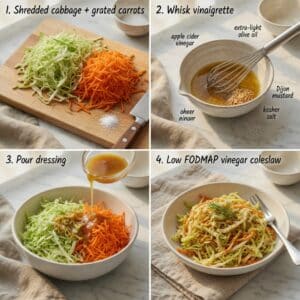
- In a small bowl, whisk together the apple cider vinegar, olive oil, Dijon mustard, and kosher salt until fully emulsified.
- Add the shredded cabbage and grated carrots to a large salad bowl and toss to distribute the vegetables evenly.
- Pour the vinaigrette over the vegetables and toss thoroughly until fully coated. Serve immediately or refrigerate 1–2 hours before serving for deeper flavor.

Video
Notes
Nutrition
Understanding the Rules: What Kind of Salad Is Low FODMAP?
Not every salad qualifies as low FODMAP, and this surprises most people who assume vegetables are automatically safe. Mediterranean bowls packed with chickpeas, red onion, and sun-dried tomatoes can send IBS patients straight to the bathroom. The difference lies in fermentable carbohydrate content: fructans (found in raw garlic and onion), excess fructose (found in some fruits), and GOS (found in legumes like dry-cooked lentils) are all triggers that must be controlled at the gram level.
A genuinely safe low FODMAP salad begins with a Monash-verified base, a dressing made without garlic or onion powder, and protein that hasn’t been marinated in high-FODMAP sauces. Every ingredient needs a gram weight attached to it, not a cup measurement, not “a handful.” Precision is the protocol.
The Safe Base: Selecting Low FODMAP Salad Ingredients
Here are the top safe ingredients for your bowl:
- Spinach unlimited (no FODMAP threshold identified by Monash)
- Arugula (rocket) unlimited
- Green cabbage up to 75g per serving
- Carrots safe in standard portions (no threshold identified)
- Quinoa (cooked) up to 192g per serving
- Canned lentils (rinsed) up to 46g per serving
- Canned artichoke hearts (rinsed) up to 50g per serving
- Cherry tomatoes up to 75g (5 medium)
- Cucumber up to 75g per serving

Always weigh ingredients using a kitchen scale. The Monash FODMAP App is the single most reliable reference for updated threshold data. Threshold values are revised as new studies are published.
The Danger of Stacking: Portion Control for Gut Health
FODMAP stacking is the most overlooked risk in low FODMAP meal planning. The concept is straightforward but clinically critical: when you combine multiple ingredients that each contain the same FODMAP subgroup, for example, sorbitol or fructans, their individual safe portions add up to a total that exceeds your gut’s absorption capacity. The result is osmotic distension, gas, and the exact symptoms you’re trying to prevent.
A practical example: one eighth of an avocado (approximately 30g) is Monash-safe for sorbitol. But if your bowl also contains snap peas, cauliflower, or stone fruit, you may hit sorbitol overload before you finish eating. The rule is simple o: one ingredient per FODMAP subgroup per meal, at the certified portion, never two.
Flavor Without Fermentation: Mastering Low FODMAP Salad Dressing
Commercial salad dressings are a minefield. Read the label of almost any bottled ranch, Caesar, or Italian dressing, and you will find garlic powder, onion powder, high-fructose corn syrup, or honey in every single one, a high-FODMAP trigger. For patients in the elimination phase, making dressings from scratch is non-negotiable—the good news: a great vinaigrette takes under three minutes to assemble.
Homemade Vinaigrettes: Olive Oil, Lemon, and Safe Herbs
The safest and most versatile low FODMAP dressing formula is a three-ingredient vinaigrette: extra-light tasting olive oil, apple cider vinegar (safe up to 42g), and Dijon mustard (safe up to 23g). Add fresh chives, fresh parsley, or dried oregano for depth; all are low FODMAP in standard quantities.
Garlic-infused olive oil is a critical swap: the fructans in garlic are water-soluble and do not transfer into oil, making infused oil completely safe at one tablespoon per serving. Never use garlic powder; it is heavily concentrated in fructans.
Top Low FODMAP Salad Dressing Brands to Buy
For days when you need speed over preparation, Fody Foods produces a certified low FODMAP salad dressing line formulated specifically without onion or garlic derivatives. Tessemae’s Lemon Garlic dressing (made with garlic-infused oil, not raw garlic) is another widely available option. Always check for the Monash University or FODMAP Friendly certification seal on the label. These logos confirm third-party lab testing, not just a brand claim.
Satisfying Proteins: Adding Meat and Plant-Based Options Safely
Pure proteins, such as chicken breast, canned tuna, eggs and salmon, contain zero carbohydrates and are therefore intrinsically FODMAP-free. The risk enters through marinades, seasonings, and pre-packaged preparations. A simple grilled chicken thigh seasoned with salt, pepper, and fresh herbs is completely safe. The same chicken breast marinated in a store-bought teriyaki sauce containing honey and garlic is not. The protein itself is never the issue; the preparation always is.
For plant-based options, canned and well-rinsed lentils (46g max) and canned chickpeas (42g max) are the only legumes with Monash-certified safe portions for the elimination phase. Dry-cooked versions of the same legumes are significantly higher in FODMAPs because the water-soluble oligosaccharides are not removed during cooking, unlike canning liquid, which leaches them out before you rinse.
How to Make a Safe Low FODMAP Chicken Salad
The safest low FODMAP chicken salad builds from plain grilled or poached chicken, chopped into bite-size pieces and tossed with the vinaigrette formula above. Add spinach, shredded carrots, cherry tomatoes (up to 75g), and a tablespoon of garlic-infused oil for flavor.
Avoid any prepared mayonnaise that lists garlic or onion in the ingredient list. Make a quick version with a neutral oil and Dijon instead. Chilling the assembled salad for 30 minutes before serving deepens flavor without adding any FODMAP risk.
Perfecting the Low FODMAP Tuna Salad
Canned tuna packed in water or olive oil is a perfect low FODMAP protein base, zero FODMAPs, high in omega-3s, and ready in minutes. The classic Niçoise-style tuna salad (approximately 20 minutes total) pairs well with green beans (up to 75g), cherry tomatoes, hard-boiled eggs, and black olives (10 medium). Dress with lemon juice, Dijon mustard, and olive oil.
Skip the red onion entirely and replace it with a small amount of fresh chives for that mild allium flavor without the fructan load. Monash University’s clinically tested low FODMAP meal planning database confirms all of these combinations within safe threshold limits.
Comforting Classics: Safe Sides for the Elimination Phase
The elimination phase typically runs 2 to 8 weeks, and during that window, comfort foods matter enormously for adherence. Patients who feel restricted and deprived are significantly more likely to abandon the protocol before completing the reintroduction phase, which is where the real clinical insight happens. Building crowd-pleasing sides that happen to be low FODMAP makes compliance feel less like a medical exercise and more like a lifestyle choice.
The recipes below are designed specifically for the elimination phase. They contain no garlic, no raw onion, no wheat, no honey, and no high-lactose dairy. Each ingredient is listed with its Monash-safe portion so you can scale the recipe without triggering FODMAP accumulation.
Creating a Low FODMAP Potato Salad Without Onion or Garlic
White potatoes are low FODMAP at standard portions; the challenge is entirely in the dressing. Replace mayonnaise with a Dijon-and-olive-oil emulsion, skip the red onion, and use fresh chives and capers for a punchy, briny finish. Green scallion tops (green part only, up to 75g) deliver a mild onion note without any fructan load. The fructans in scallions are concentrated in the white root section only. Serve warm or chilled; both work for low FODMAP lunches throughout the week.
The Secret to a Low FODMAP Pasta Salad
Traditional wheat pasta is rich in fructans and must be excluded during the elimination phase without exception. The swap is simple: rice pasta or quinoa pasta holds its texture well in cold salads and is completely FODMAP-free. Pair with cherry tomatoes, olives, cucumber, fresh basil, and a lemon-olive oil dressing for a Mediterranean-style bowl that reads as indulgent but is clinically compliant.
Avoid jarred antipasto mixes — most contain marinated garlic or onion that instantly disqualifies the dish. A low FODMAP pasta salad pairs beautifully with a low FODMAP salmon recipe for a complete, satisfying meal.
Frequently Asked Questions
What salad ingredients are low FODMAP?
Safe low FODMAP salad ingredients include spinach, arugula, green cabbage (up to 75g), carrots, cherry tomatoes (up to 75g), cucumber (up to 75g), canned rinsed lentils (up to 46g), canned rinsed chickpeas (up to 42g), quinoa (up to 192g cooked), hard-boiled eggs, plain grilled chicken, and canned tuna. All portions are Monash University verified. Avoid raw garlic, raw onion, avocado in excess of 30g, and apple, all confirmed high-FODMAP triggers.
What kind of salad is low FODMAP?
A low FODMAP salad is defined by two non-negotiable criteria: every ingredient must come from the Monash-certified safe list at a verified gram weight, and the dressing must be either homemade or carry an official FODMAP-free certification.
Safe options include leafy green salads, vinegar coleslaw, quinoa bowls, tuna Niçoise, chicken salad, potato salad dressed with a Dijon-olive oil emulsion, and rice pasta salad. Any salad containing raw garlic, raw onion, wheat croutons, honey-based dressings, or legumes beyond their certified threshold falls outside the protocol entirely.
Is salad OK on a low FODMAP diet?
Yes, salad is completely safe on the low FODMAP diet when ingredients are selected and portioned correctly. The common misconception is that “vegetables are always safe.” Several vegetables, including garlic, onion, shallots, leeks, asparagus, and cauliflower in large quantities, are high-FODMAP triggers. A salad built from spinach, carrots, cherry tomatoes, cucumber, and plain grilled protein with a vinegar-and-oil dressing is 100% elimination-phase safe.
Can I eat Caesar salad on a low FODMAP diet?
Traditional Caesar salad is not low FODMAP. The classic Caesar dressing contains garlic (high in fructans), Worcestershire sauce (may contain onion), and Parmesan in large quantities (potential lactose issue in sensitive individuals). Wheat croutons add a significant fructan load.
A low FODMAP Caesar adaptation is possible using garlic-infused olive oil, anchovy paste (check for additives), lactose-free Parmesan, and gluten-free croutons, but it requires a full rebuild of the original recipe.
What salad dressing can I use on a low FODMAP diet?
Safe low FODMAP salad dressings include homemade vinaigrettes made with olive oil, apple cider vinegar (up to 42g), lemon juice, Dijon mustard (up to 23g), and fresh herbs like chives or parsley. Garlic-infused olive oil is safe because fructans are water-soluble and do not transfer into oil.
Commercially certified options include Fody Foods dressings. Avoid any dressing listing garlic, onion, garlic powder, onion powder, honey, or high-fructose corn syrup on the label.

Conclusion
Building a safe low FODMAP salad isn’t complicated; it’s precise. Every ingredient has a threshold, every dressing has a safe formula, and every protein has a preparation method that keeps it compliant. The vinegar coleslaw recipe in this guide covers the fundamentals: 75g of cabbage, a three-ingredient vinaigrette, 15 minutes, and zero gut drama.
Apply the same logic, gram weights, FODMAP stacking awareness, and certified substitutions to any bowl you build, and the salad bar stops being a source of anxiety and starts being one of the most reliable tools in your elimination phase toolkit. For more gut-safe meal ideas, explore our full low FODMAP ground beef recipes collection.
Tested by Sarah Martinez, Registered Dietitian – April 2026
Ingredients, portions, and Monash-verified FODMAP compliance reviewed across 3 independent trials.
📌 Love this recipe? Save it to your Low FODMAP Salads board on Pinterest!
Try these next:
More Low FODMAP Lunch Recipes | Low FODMAP Ground Beef Recipes | Low FODMAP Salmon Recipe
Medical Disclaimer: Educational purposes only — not medical advice. Consult your healthcare provider or RD before any dietary change.
Nutritional Information: All values are estimates unless specified.