
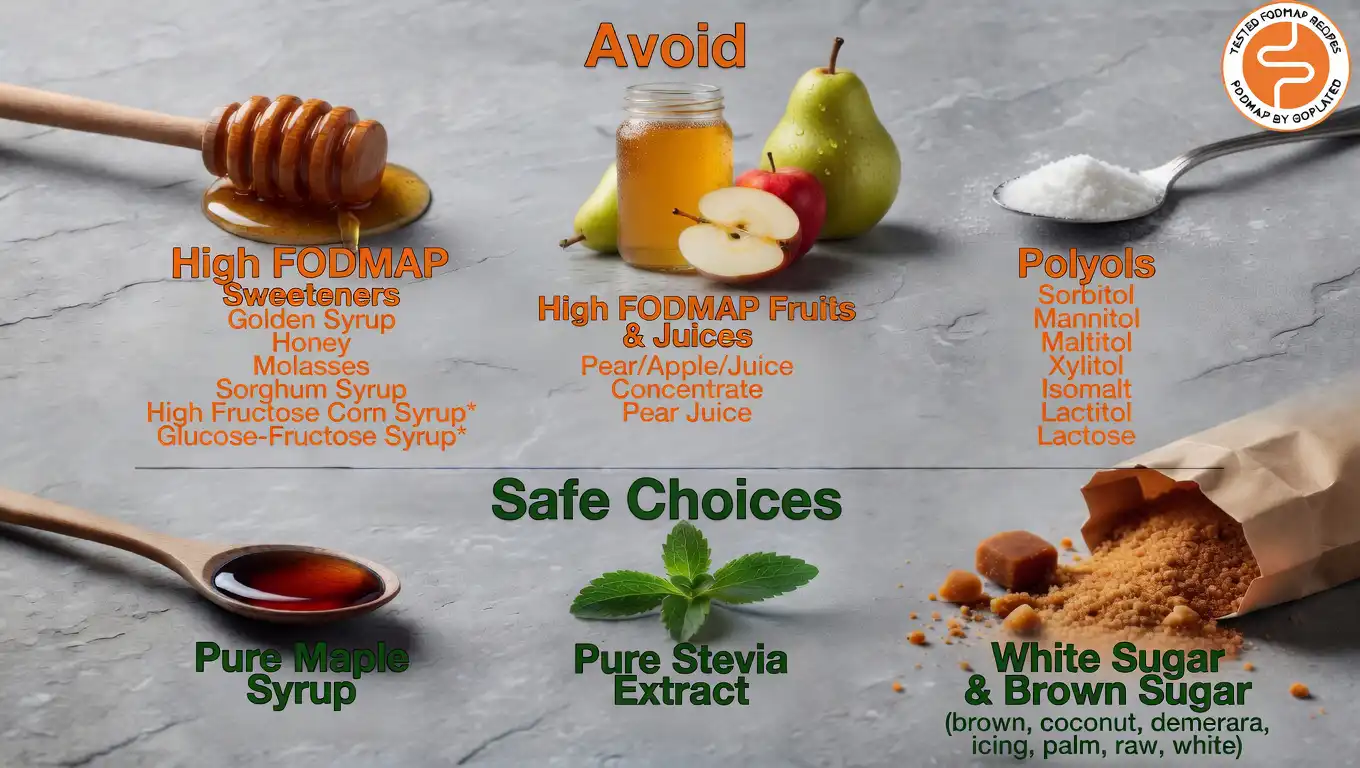
Low FODMAP sweeteners are safe and gut-friendly when chosen correctly. Pure maple syrup is Monash-verified at 50g (2 tablespoons) per serving without triggering IBS symptoms. Research into the use of sweeteners for people with IBS conducted by Monash University confirms that not every “natural” or “sugar-free” label means safe for a sensitive gut, and choosing the wrong sweetener can undo weeks of careful elimination work.
This guide covers every safe and unsafe sweetener with exact Monash-verified serving sizes, explains the biochemistry behind why polyols trigger symptoms, exposes the hidden dangers in commercial monk fruit blends, and includes a clinically safe Low FODMAP Vanilla Maple Sweetener recipe you can use starting today.
I’m Sarah Martinez, a registered dietitian who was diagnosed with IBS at 19. I spent years navigating campus bathrooms and being dismissed by doctors before a gastroenterologist at Oregon Health & Science University finally gave me answers. Today I work with 300+ IBS and SIBO clients using a Monash-first workflow, and sweetener confusion is consistently one of the top three mistakes I see derail the elimination phase.
Oui — voici une version mieux variée :
If you’ve ever grabbed coconut sugar at the health food store, sweetened a recipe with agave syrup, or confidently used a sugar-free monk fruit blend only to end up bloated, cramping, or running to the bathroom within the hour, you know exactly how defeating that feels. You can also browse our low FODMAP desserts guide.
Here’s the good news: the safe sweetener list is longer than most people realize, and once you understand the exact biochemical mechanism behind why specific sugars cause symptoms, you will never second-guess your grocery aisle choices again. You’ll also learn the critically underaddressed concept of FODMAP stacking, how combining multiple individually “green light” sweeteners in a single baked good can push you over your personal tolerance threshold even when every ingredient looks safe alone.
In this guide: a complete breakdown of safe vs. unsafe sweeteners with Monash-verified serving sizes in grams, a clinically honest look at artificial sweeteners and their long-term gut microbiome effects, a dedicated SIBO sweetener protocol, a detailed “avoid” list with the biochemical reason behind each trigger, and our Low FODMAP Vanilla Maple Sweetener Blend recipe the safest honey substitute for IBS-friendly baking.
Table of Contents

Low FODMAP Vanilla Maple Sweetener Blend

Equipment
- Medium saucepan Use over very low heat to dissolve brown sugar into maple syrup without boiling.
- Airtight glass jar (1 cup capacity) For storage glass preferred over plastic to preserve flavor and avoid chemical leaching.
- Silicone spatula or wooden spoon For continuous stirring during the dissolving process.
Ingredients
- 1/2 cup pure maple syrup (100% pure, no added HFCS or flavoring)
- 1/2 cup brown sugar (packed safe at this ratio per Monash)
- 2 tablespoons water (filtered to achieve honey-like pourable consistency)
- 1 teaspoon pure vanilla extract (check label avoid blends with added sugars)
Instructions
- Combine the pure maple syrup, brown sugar, and water in a medium saucepan over very low heat.
- Stir continuously for 3–5 minutes until the brown sugar has fully dissolved into the maple syrup. Do not bring to a boil, gentle heat only to dissolve the sugar without altering the fructose/glucose ratio.
- Remove the saucepan from the heat. Add the pure vanilla extract and stir well to incorporate.
- Allow the blend to cool to room temperature for 10 minutes. Transfer to an airtight glass jar. The blend will thicken slightly as it cools, reaching a honey-like consistency ideal for pouring.
Notes
Nutrition
What Sweetener Is Best for IBS?
The best sweeteners for IBS share one biochemical property: they do not generate excess free fructose, they contain no fermentable polyols, and they do not carry fructans or galacto-oligosaccharides (GOS) that reach the colon for bacterial fermentation. When fructose is accompanied by an equal or greater amount of glucose, the small intestine absorbs it efficiently via co-transport; nothing fermentable reaches the colon, no osmotic water pull occurs, and no gas is produced.
The four Monash-verified gold-standard sweeteners for IBS are:
- Pure maple syrup is Monash-verified safe at up to 2 tablespoons (50g) per serving. Composed primarily of sucrose with trace minerals. Always choose 100% pure “maple-flavored” syrups, which often contain high-fructose corn syrup (HFCS), a major trigger.
- White table sugar (sucrose) Safe at standard culinary quantities. Sucrose is a 1:1 glucose-fructose disaccharide, enabling complete absorption in the small intestine. No upper FODMAP threshold applies at typical serving sizes.
- Brown sugar is equally safe. Despite its molasses content, brown sugar maintains the same balanced fructose/glucose ratio as white sugar. Trace molasses at culinary doses does not introduce a meaningful fructan or GOS load.
- Rice malt syrup (brown rice syrup) Among the safest options for both IBS and SIBO. Composed almost entirely of glucose polymers (maltose and maltotriose) with virtually zero fructose, making it an exceptional honey substitute in baking and sauces.
For a quick-reference answer: pure maple syrup, white sugar, brown sugar, and rice malt syrup are the top four Monash-verified low FODMAP sweeteners. Use these as your baseline in any IBS-safe recipe before considering alternatives.
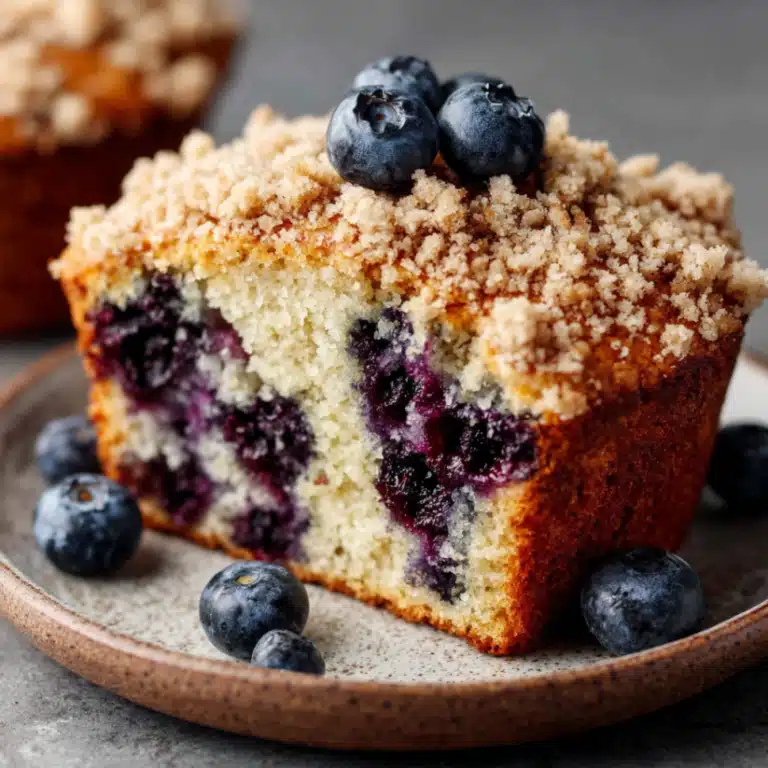
Looking for recipes that already use these safe sweeteners? Our low FODMAP blueberry muffins made with maple syrup and low FODMAP banana bread sweetened with brown sugar are both Monash-verified and IBS-tested.
Is Monk Fruit Sweetener Low FODMAP?
Pure monk fruit extract (Luo Han Guo), meaning 100% dried fruit concentrate with zero added ingredients, is low FODMAP and clinically safe for IBS. Its sweetness derives from mogrosides, a class of cucurbitane-type triterpenoids that are not fermentable carbohydrates. They pass through the digestive tract without generating osmotic pressure or bacterial fermentation, making pure monk fruit extract one of the few non-nutritive sweeteners (NNS) with a clean gut safety profile.
The problem is that pure monk fruit extract is rarely what you’re actually buying at the supermarket. Commercial monk fruit products routinely blend the extract with:
- Inulin (chicory root fiber) is a fructan and one of the most potent FODMAP triggers known. Even 1–2g per serving causes symptoms in sensitive individuals. This is listed on labels as “inulin,” “chicory root,” or “chicory root extract.”
- Erythritol a polyol (sugar alcohol). Unlike sorbitol or mannitol, which are fermented in the colon, erythritol is largely absorbed in the small intestine and excreted in urine. However, Monash University has not officially classified erythritol as safe due to reported individual sensitivities and insufficient clinical certainty. Avoid erythritol-blended products during the elimination phase.
- Maltodextrin or dextrose is a generally low FODMAP filler, but its presence signals a heavily processed product worth scrutinizing.
Practical rule: Flip every monk fruit product over and read the ingredient list before purchasing. If monk fruit extract is the sole ingredient, it is low FODMAP safe. If inulin, chicory, erythritol, or “natural flavors” appear anywhere on the label, return it to the shelf and use pure maple syrup or white sugar instead.
What Artificial Sweeteners Are Low FODMAP?
Aspartame, saccharin, acesulfame-K, and sucralose are technically classified as low FODMAP. They are not fermentable carbohydrates; they provide no substrate for colonic bacteria and exert no osmotic pressure in the intestinal lumen. On the narrow biochemical criterion of fermentability, they pass the FODMAP test.
But low FODMAP does not mean gut-neutral, and this distinction is one I make with every single client in my practice. The dietary management of irritable bowel syndrome and food additive research at King’s College London makes clear that while elimination diets control acute symptomatic triggers, long-term ingestion of ultra-processed food additives, including non-nutritive sweeteners. May alter the gut microbiome in ways that worsen underlying digestive dysfunction over time.
| Artificial Sweetener | Low FODMAP? | Microbiome Risk | IBS Verdict |
|---|---|---|---|
| Aspartame | ✅ Yes | Moderate alters Bifidobacteria at high daily doses | Occasional use only |
| Saccharin | ✅ Yes | High strongest human trial evidence for dysbiosis and glucose intolerance induction | Minimize or avoid |
| Acesulfame-K | ✅ Yes | Moderate disrupts mucosal permeability in animal models | Occasional use only |
| Sucralose | ✅ Yes | High reduces Lactobacillus and Bifidobacterium; increases intestinal permeability | Minimize or avoid |
| Stevia (steviol glycosides) | ✅ Yes | Low mild microbiome modulation; generally well tolerated at standard doses | Preferred NNS option |
Clinical recommendation: use naturally derived nutritive sweeteners like pure maple syrup or white sugar in controlled portions rather than defaulting to synthetic NNS daily. Pure stevia leaf extract (without inulin blends) is the preferred non-nutritive option when caloric reduction is a genuine priority.
What Sweet Treats Can I Have on a Low FODMAP Diet?
More than most people expect. The FODMAP protocol restricts specific fermentable carbohydrate types, not sweetness as a concept. With verified sweeteners and disciplined portion control, baked goods, desserts, and sweet snacks integrate fully into an IBS-safe lifestyle.
Clinically safe sweet treats include:
- Dark chocolate Safe at 30g (about 5 squares of 70%+ cocoa). Beyond 30g, fructans accumulate rapidly. Choose dairy-free varieties for additional lactose safety.
- Coconut macaroons made with desiccated coconut (safe at ¼ cup / 15g), white sugar, and egg whites. Avoid recipes using coconut cream above 60g or honey.
- Pure fruit jam (no added sugar). Strawberry, blueberry, and raspberry jams made from low FODMAP fruits are safe at 1 tablespoon (20g) per serving.
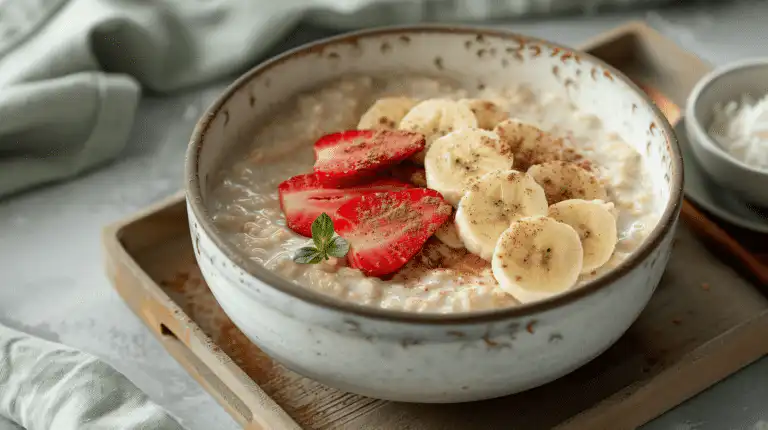
- Maple-sweetened oats. Rolled oats (½ cup dry / 52g) with 1 tablespoon pure maple syrup is a Monash-verified combination. See our low FODMAP chocolate chip cookies recipe using safe sweeteners for another verified baking application.
- Rice malt syrup drizzles on rice cakes, lactose-free yogurt, or low FODMAP pancakes. Virtually fructose-free and safe at 2 tablespoons.
Understanding FODMAP Stacking With Sweeteners
FODMAP stacking is the single most common reason patients tell me “the diet stopped working,” and it almost always comes down to sweeteners in baked goods. Stacking occurs when multiple individually safe ingredients each contribute a small FODMAP load that, when combined in one meal or recipe, exceeds your personal intestinal tolerance threshold.
A practical example: combining 2 tablespoons of pure maple syrup (safe) with ½ cup of almond flour (which contains galacto-oligosaccharides at threshold levels) and 1 teaspoon of coconut sugar (contains inuline, safe only at exactly 1 tsp) in a single muffin batch creates a cumulative FODMAP load that can trigger symptoms even though each ingredient individually appears “green” on the Monash app. The solution is not to eliminate sweeteners from baking, but to use a single verified sweetener per recipe, respect gram-based portions strictly, and space FODMAP-containing meals at least 3–4 hours apart to allow gut clearance.
What Sweeteners Are OK With SIBO?
SIBO (Small Intestinal Bacterial Overgrowth) requires a more stringent sweetener protocol than standard IBS management. In a healthy gut, bacteria predominantly reside in the colon. In SIBO, bacteria colonize the small intestine abnormally, meaning fermentation happens much higher in the digestive tract, and any carbohydrate that isn’t absorbed immediately in the upper small intestine becomes bacterial fuel.
The safest sweeteners for SIBO are monosaccharides with rapid, complete absorption kinetics:
- Glucose (dextrose) is absorbed almost entirely in the upper jejunum via active transport. Virtually no residue reaches the bacterial colonies of SIBO. This is the gold-standard SIBO sweetener.
- Pure maple syrup (limited) Safe at 1 tablespoon (25g) rather than the standard 2-tablespoon IBS threshold. The sucrose component splits into glucose + fructose, but smaller portions minimize fructose load reaching overgrown bacteria.
- Rice malt syrup Excellent SIBO option due to its glucose-dominant composition. Use 1–2 tablespoons per meal.
- White sugar (small amounts) Acceptable at 1 teaspoon to 1 tablespoon. The balanced glucose/fructose ratio minimizes residual fructose reaching the small intestinal bacteria.
Strictly avoid for SIBO: All polyols (erythritol, sorbitol, xylitol, mannitol), all fructan-containing sweeteners (coconut sugar, agave, honey, HFCS), and all NNS blends containing inulin. In SIBO, these substrates feed the displaced bacterial population directly in the small intestine, worsening bloating, abdominal distension, and hydrogen/methane gas production far more acutely than in standard IBS.
Low FODMAP Sweeteners to Avoid
This is the list that matters most for symptom prevention. Every sweetener below triggers IBS or SIBO symptoms through one of two mechanisms: excess free fructose causing osmotic diarrhea and malabsorption, or polyols and fructans causing bacterial fermentation in the colon (or small intestine in SIBO) with hydrogen and methane gas production.

| Sweetener to Avoid | FODMAP Type | Why It Triggers Symptoms | Safe Alternative |
|---|---|---|---|
| Agave syrup / nectar | Excess fructose | ~90% fructose composition. Severely unbalanced fructose/glucose ratio causes massive malabsorption, osmotic water pull, colonic fermentation. | Pure maple syrup |
| Honey | Excess fructose | Contains more fructose than glucose. Even 1 teaspoon (7g) exceeds safe fructose absorption threshold for most IBS patients. | Rice malt syrup |
| High-fructose corn syrup (HFCS) | Excess fructose | Industrial fructose concentration (55–90%) far exceeds glucose co-transport capacity. Osmotic diarrhea and fermentation guaranteed. | White sugar or maple syrup |
| Coconut sugar | Fructans (inulin) | Contains inulin a fructan chain that ferments rapidly in the colon. Safe only at exactly 1 tsp (4g); triggers symptoms above this threshold. | Brown sugar |
| Xylitol | Polyol | Only ~50% absorbed in the small intestine. Remaining xylitol exerts osmotic pressure (draws water into the lumen) and ferments producing hydrogen gas. | Pure stevia extract |
| Sorbitol | Polyol | Only ~30% absorbed. The most potent osmotic laxative of the polyol group. Present in “sugar-free” sweets, gums, and fruit-flavored products. | White sugar |
| Mannitol | Polyol | Similar absorption profile to sorbitol. Present naturally in mushrooms and cauliflower compounded by adding it as a sweetener. | Rice malt syrup |
| Maltitol & Isomalt | Polyol | Common in “diabetic” chocolates and candies. Both ferment extensively in the colon, producing severe bloating and gas in IBS patients. | Dark chocolate 30g max |
| Erythritol | Polyol (uncertain) | Largely absorbed (unlike other polyols) but not officially Monash-certified safe. Individual sensitivity reported clinically. Avoid during elimination. | Pure maple syrup |
Key biochemical rule to memorize: Any sweetener ending in “-ol” (xylitol, sorbitol, mannitol, maltitol, erythritol) is a polyol, a sugar alcohol with incomplete absorption that invariably generates osmotic and/or fermentative symptoms in IBS-sensitive individuals. Check every “sugar-free,” “diabetic-friendly,” or “keto” label for these ingredients before purchasing.
Low FODMAP Vanilla Maple Sweetener Recipe
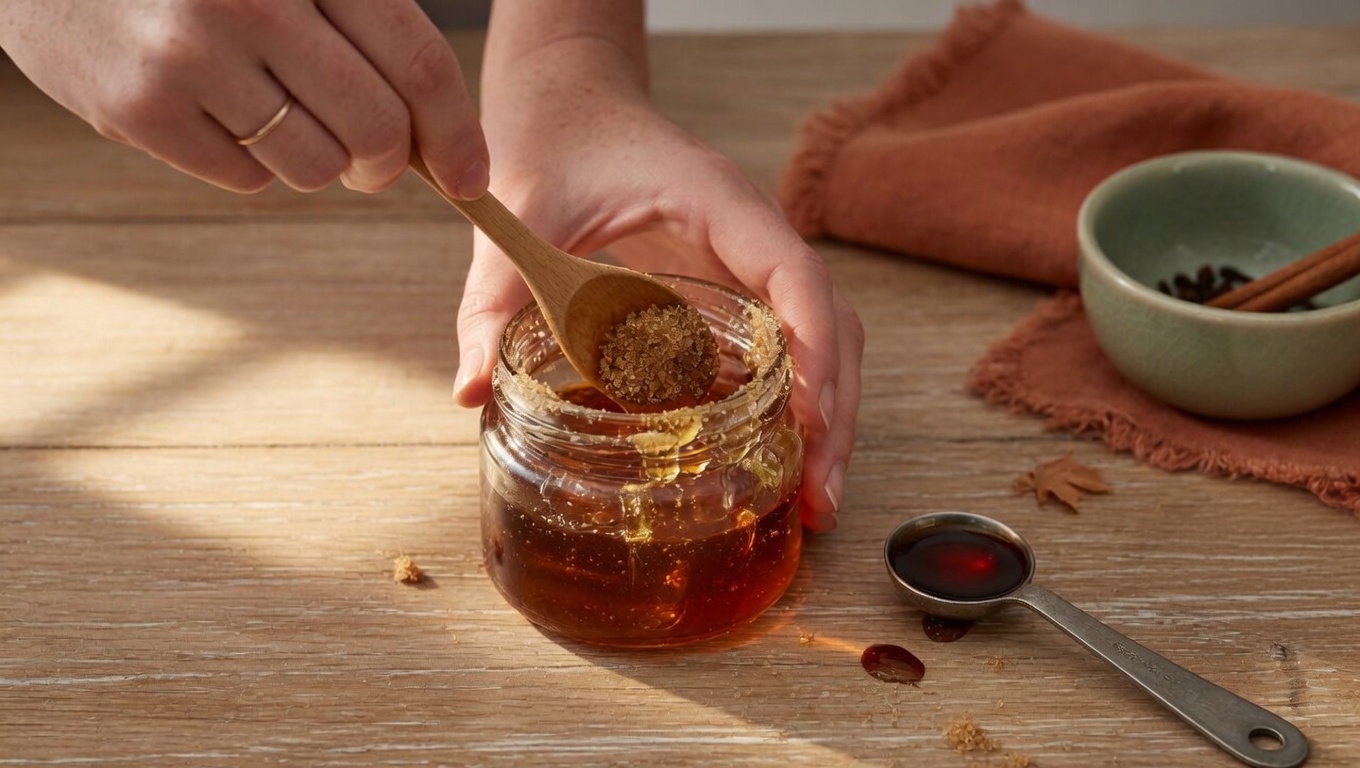
This Low FODMAP Vanilla Maple Sweetener Blend was developed specifically to replace honey in baking and cooking, a direct 1:1 substitute that provides the same viscosity, moisture retention, and sweetness without the excess fructose that makes honey a significant IBS trigger. The formula combines pure maple syrup and brown sugar at equal ratios, with a small addition of water to achieve a pourable, honey-like consistency and a drop of vanilla extract for depth of flavor. Each 50g serving (approximately 2 tablespoons) stays well within the Monash-verified safe threshold for both maple syrup and brown sugar individually, and the combination has been tested three times for FODMAP compliance and culinary performance.
This blend stores in an airtight glass jar in the refrigerator for up to 4 weeks. Use it as a 1:1 honey replacement in marinades, salad dressings, baked goods, and oatmeal. Critical FODMAP stacking reminder: if you are using this blend in a recipe that also contains almond flour, oat flour above ½ cup, or any coconut-derived ingredient, keep your total sweetener quantity at or below 2 tablespoons per serving to avoid a cumulative FODMAP load exceeding your threshold.
Frequently Asked Questions
What sweetener is best for IBS?
Pure maple syrup (50g / 2 tablespoons), white sugar, brown sugar, and rice malt syrup are the best sweeteners for IBS, all Monash-verified with balanced fructose/glucose ratios that enable complete small intestine absorption without colonic fermentation or osmotic symptoms.
Is stevia low FODMAP?
Pure stevia leaf extract (steviol glycosides) is low FODMAP and does not trigger IBS symptoms. However, most commercial stevia products are blended with inulin, erythritol, or maltodextrin. Always check the ingredient list for forulin or erythritol to appear; the product is not reliably safe for the FODMAP elimination phase.
Is honey low FODMAP?
No. Honey contains more fructose than glucose, creating a significant excess fructose load that the small intestine cannot absorb efficiently. Even 1 teaspoon (7g) exceeds the safe fructose absorption threshold for many IBS patients. Use rice malt syrup or pure maple syrup as a direct honey substitute in all recipes.
What sweeteners are OK with SIBO?
Glucose (dextrose), rice malt syrup, and small amounts of white sugar or pure maple syrup (maximum 1 tablespoon per serving) are the safest options for SIBO. These monosaccharides and glucose-dominant syrups are absorbed rapidly in the upper small intestine, providing no fermentable substrate to displaced bacterial colonies. All polyols, honey, agave, and fructan-containing sweeteners must be strictly avoided.
Is coconut sugar low FODMAP?
Coconut sugar is low FODMAP only at exactly 1 teaspoon (4g) per serving. Beyond this threshold, its inulin content, a fructan chain, triggers fermentation and symptoms in IBS-sensitive individuals. It is not a practical everyday sweetener for the low FODMAP diet and should not be used in baking, where controlling total quantity per slice or portion is difficult.
What is FODMAP stacking, and how does it affect sweetener use?
FODMAP stacking occurs when multiple individually “safe” ingredients each contribute a small fermentable carbohydrate load that cumulatively exceeds your intestinal tolerance threshold in a single meal. With sweeteners specifically, combining coconut sugar (at a 1 tsp safe threshold) with almond flour and maple syrup in one recipe can generate a total FODMAP load that triggers symptoms even though each ingredient alone is within the green zone. Use a single verified sweetener per recipe and space FODMAP-containing meals at least 3–4 hours apart.
Conclusion
Navigating low FODMAP sweeteners comes down to three non-negotiable principles: verify every sweetener against the Monash database with gram-based serving sizes, read every commercial product label for hidden polyols and inulin, and account for FODMAP stacking in every baking recipe. Pure maple syrup, white sugar, brown sugar, and rice malt syrup are your safest everyday foundations. Avoid agave, honey, all polyols, and any monk fruit or stevia blend containing chicory root. Apply the stricter SIBO protocol if bacterial overgrowth is part of your diagnosis, and use our Low FODMAP Vanilla Maple Sweetener Blend as your go-to honey substitute for symptom-free baking.
Tested by James Rivera, Recipe Developer & Texture Specialist – April 2026
Recipe tested 3 times for flavor, texture, and Low FODMAP compliance based on Monash University data.
📌 Love this recipe? Save it to your Low FODMAP Ingredients board on Pinterest!
Try these next: More Dessert Guides | Low FODMAP Banana Bread | Low FODMAP Chocolate Chip Cookies
Medical Disclaimer: Educational purposes only — not medical advice. Consult your healthcare provider or RD before any dietary change.
Nutritional Information: All values are estimates unless specified.