
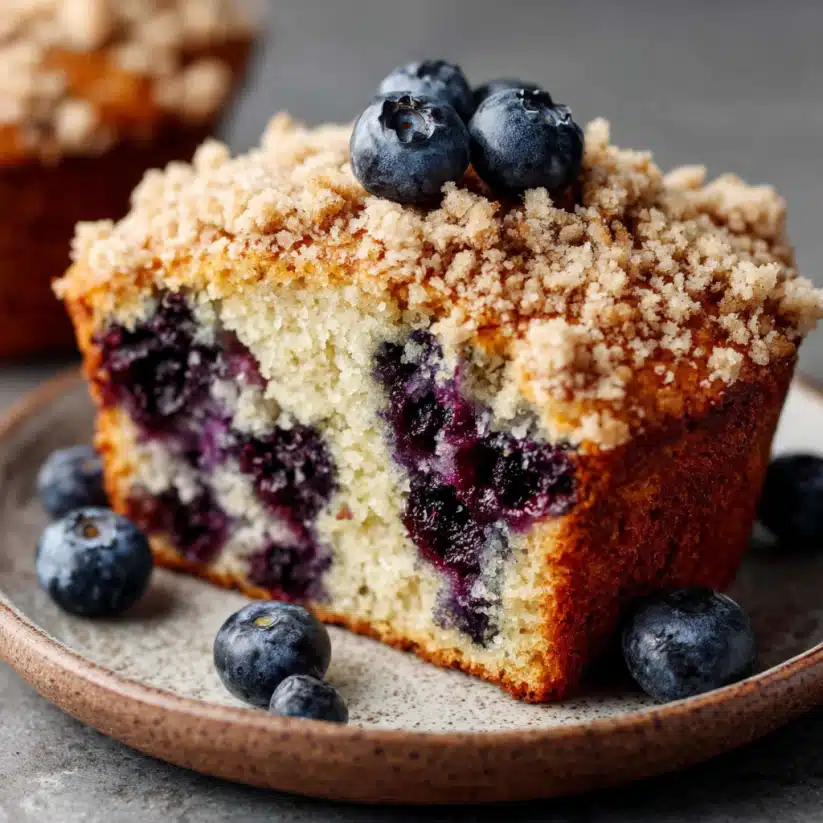
These low FODMAP blueberry muffins are absolutely safe to bake and eat on the IBS elimination phase as long as you use fresh or frozen blueberries at the right serving size and stick to a Monash-verified serving of 1 muffin (approximately 75 g of blueberries per batch of 6, well within the 125 g green-light threshold). With oat flour, pure maple syrup, and unsweetened almond milk, this recipe keeps every serving within the green-light fructan and fructose threshold established by Monash University.
I’m James Rivera. I went to culinary school dreaming of opening a restaurant. Still, everything changed when I married Elena, who has SIBO and follows a strict low FODMAP diet. The first dinner I cooked for her parents, a garlic-and-onion pasta bake loaded with wheat, left her in pain all night. That disaster dinner sent me straight to the Monash Low FODMAP App. Now every recipe I develop at GoPlated is cooked at least three times, Sarah Martinez verifies every serving size using Monash University data, and Elena’s support group tastes everything before publication.
If you’ve been eyeing a punnet of fresh blueberries on your counter, wondering whether they will ever be safe again since your Irritable Bowel Syndrome (IBS) diagnosis, you’re not alone. Most blueberry muffin recipes online are built with wheat flour and regular cow’s milk: two of the biggest FODMAP triggers for people managing gastrointestinal symptoms. You can also explore our low FODMAP desserts guide.
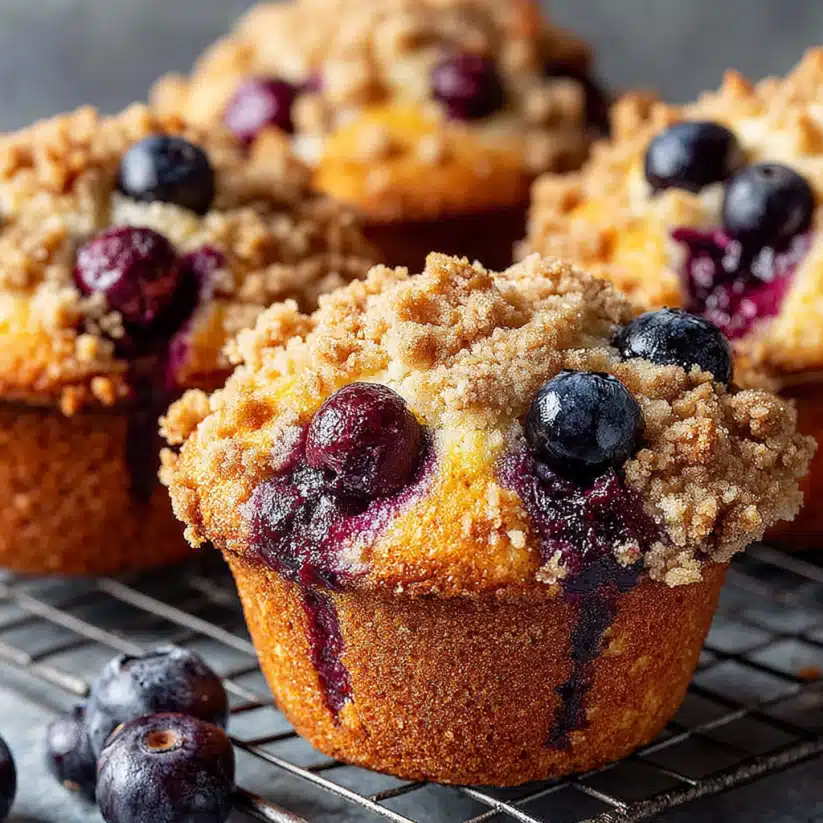
This recipe solves that completely. Every ingredient has been cross-checked against the Monash FODMAP app, the serving size is locked to a safe 1 muffin per sitting, and the method uses a vegan flax egg and gluten-free flour blend. So you get a fluffy, bakery-style domed top with a streusel crunch instead of a bloated, painful morning.
In this article, why these muffins are IBS-safe and Monash-compliant, provide a full ingredients and substitutions guide, step-by-step baking instructions, a troubleshooting guide for dense crumb or bleeding blueberries, and storage and freezing tips for easy IBS-friendly meal prep.
Table of Contents
Low-FODMAP Blueberry Muffins

Equipment
- 6-cup muffin pan
- paper liners
- mixing bowls
- fork
- wire rack
Ingredients
- 1 tbsp vegan butter or coconut oil, softened
- 1 tbsp coconut sugar
- 1 tbsp brown rice flour
- 1 tbsp blanched almond flour
- pinch of salt
- 1/2 tbsp ground flaxseed
- 1 1/2 tbsp warm water
- 1/2 cup fresh or frozen blueberries
- 1 tbsp brown rice flour
- 1/2 cup oat flour
- 1/2 cup brown rice flour
- 2 tbsp tapioca starch
- 2 tbsp blanched almond flour
- 1 tsp baking powder
- 1/4 tsp salt
- 1/3 cup pure maple syrup
- 1/4 cup unsweetened almond milk
- 2 tbsp vegan butter or coconut oil, melted
- 1 tsp vanilla extract
Instructions
- Preheat the oven to 400°F (200°C). Grease a 6-cup muffin pan or line it with paper liners.
- In a small bowl, mash together the streusel ingredients with a fork until crumbly. Set aside.
- Combine the ground flaxseed and warm water. Let it rest for at least 5 minutes to form a flax egg.
- Chop any large blueberries. If using frozen blueberries, coat them in 1 tablespoon of brown rice flour.
- In a large bowl, mix the dry ingredients. In a separate medium bowl, combine the flax egg, almond milk, maple syrup, melted vegan butter or coconut oil, and vanilla extract.
- Pour the wet ingredients into the dry ingredients and stir until just combined. Gently fold in the blueberries.
- Divide the batter evenly between the 6 muffin cups. Sprinkle the streusel generously over the top.
- Bake for 22 to 25 minutes, until the tops are golden.
- Cool the muffins in the pan for exactly 10 minutes, then transfer them to a wire rack to cool completely.
- Store in an airtight container for up to 3 days or freeze individually.
Notes
Nutrition
Why These Muffins Are IBS-Friendly & Monash-Compliant
Standard blueberry muffins are not safe on the low FODMAP diet. Conventional recipes use wheat flour, a high-fructan ingredient, and regular cow’s milk, which is high in lactose. Both trigger bloating, cramping, and gastrointestinal symptoms in people with Irritable Bowel Syndrome (IBS) or Coeliac disease. This recipe removes both triggers: wheat flour is replaced with a calibrated blend of oat, brown rice, and tapioca flours, and cow’s milk is replaced with unsweetened almond milk.
The Science Behind the Safe Serving Size
Updated Monash University chromatography data confirms that fresh blueberries are low FODMAP in servings up to 125 g (1 full cup). This recipe uses only 75 g across all 6 muffins, making the per-muffin blueberry dose well within the green-light threshold. The critical risk is FODMAP stacking: even individually safe ingredients contribute small amounts of fermentable carbohydrates. Keeping strictly to 1 muffin per sitting accounts for the cumulative load of all ingredients combined, including the almond flour micro-dose in the streusel and the trace GOS in oat flour.
Why the Flour Blend Matters for IBS Safety
The multi-flour approach used here, oat flour, brown rice flour, tapioca starch, and blanched almond flour, is not just a culinary choice. Each flour is validated as low FODMAP at the quantities used. Oat flour provides beta-glucans and a soft crumb. Brown rice flour adds structural bulk. Tapioca starch enables the chewy, moisture-retaining gelatinization that prevents the sandy, crumbly texture common in gluten-free baking. The correct choice is certified gluten-free oat flour, milled from oats with no cross-contamination, widely available in health food stores and major supermarkets.
Ingredients & Substitutions
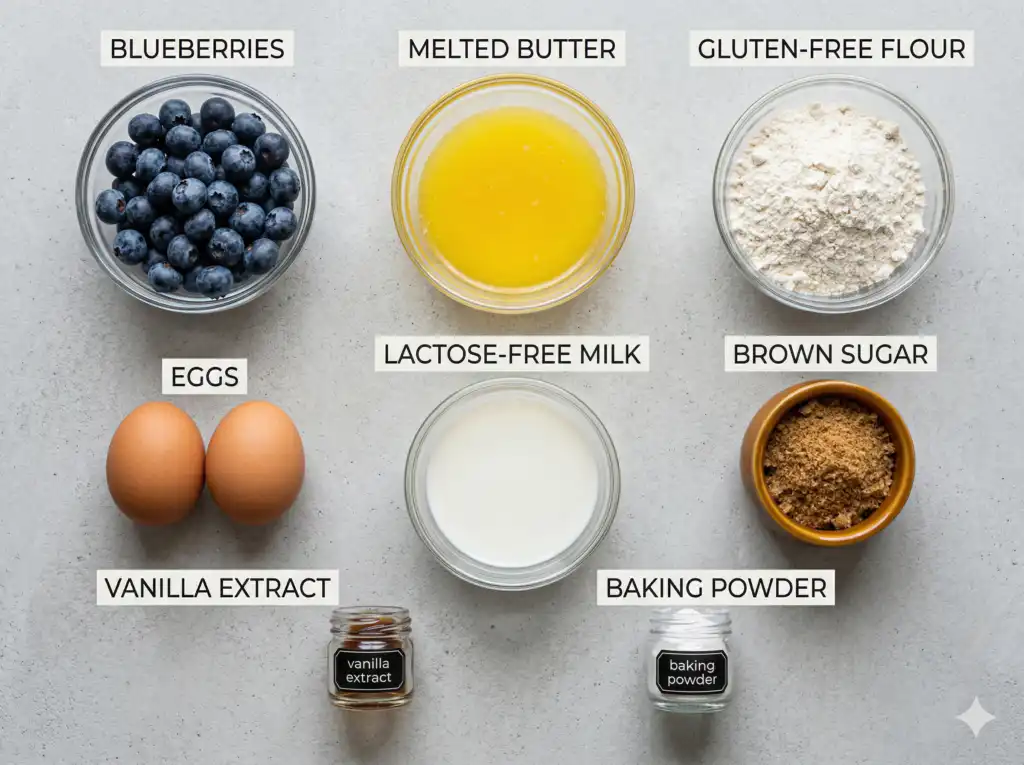
Every ingredient below has been validated against the Monash Low FODMAP App. Quantities per serving matter as much as ingredient choice; do not increase amounts without recalculating the FODMAP load per serving.
Dairy-Free & Vegan Swaps That Keep It IBS-Safe
The flax egg (½ tbsp ground flaxseed + 1½ tbsp warm water, rested 5 minutes) replaces a conventional egg, making this recipe fully vegan without compromising binding. Unsweetened almond milk replaces cow’s milk and is low FODMAP at up to 250 mL per serving. This recipe uses only 60 mL across the entire batch. Vegan butter or melted coconut oil replaces dairy butter with zero FODMAP impact, since pure fats contain no fermentable carbohydrates. For a sweetener, pure maple syrup is low FODMAP at up to ⅓ cup (106 g) per batch of 6 muffins. Always choose 100% pure maple syrup, never maple-flavored syrups, which may contain high-fructose corn syrup.
Leavening: Why 1 Teaspoon Is the Right Dose
A full teaspoon of baking powder provides the double-acting lift needed to counteract the density of the gluten-free flour matrix. Standard baking powder is FODMAP-free. Avoid baking powder blends containing inulin or chicory root fiber, as these are concentrated fructans that will immediately compromise the IBS safety of the recipe. If your baking powder label lists any prebiotic fiber or chicory, discard it and switch brands before baking.
Optional Add-Ins & Flavor Variations
A pinch of cinnamon or a teaspoon of lemon zest can be folded into the dry ingredients for added depth; both are low FODMAP at these micro-doses. For the streusel, coconut sugar can be substituted 1:1 with standard brown sugar if you want a more tightly controlled sucrose profile and longer shelf life. Do not add dried blueberries or blueberry jam to this recipe: dried and concentrated fruit forms significantly increase the per-serving fructose and polyol load and have not been validated at these quantities.
Step-by-Step Baking Method
Prep: Streusel, Flax Egg, and Blueberry Coating
Preheat your oven to 400°F (200°C) and grease a 6-cup muffin tin or line it with paper cases. In a small bowl, combine 14 g vegan butter, 12 g coconut sugar, 10 g brown rice flour, 7 g blanched almond flour, and a pinch of salt. Use a fork to press and cut until the mixture forms coarse, irregular crumbs. Do not over-mix into a paste. Set aside.
Make the flax egg: stir 3 g ground flaxseed into 21 g warm water and set aside for at least 5 minutes until a thick, gel-like consistency forms. While it rests, prepare your blueberries: if using frozen, do not thaw. Toss 75 g frozen blueberries in 10 g brown rice flour until fully coated. This starch coating absorbs the anthocyanin-rich juice released by ruptured cell walls, preventing the batter from turning gray-green.
Mix, Fill, and Bake
In a large bowl, whisk together 60 g oat flour, 80 g brown rice flour, 16 g tapioca starch, 14 g blanched almond flour, 1 tsp baking powder, and ¼ tsp salt. In a separate medium bowl, combine the set flax egg, 106 g pure maple syrup, 60 g unsweetened almond milk, 28 g melted vegan butter or coconut oil, and 1 tsp vanilla extract. Pour the wet ingredients into the dry and stir until just combined. Do not overmix, or the muffins will be dense.
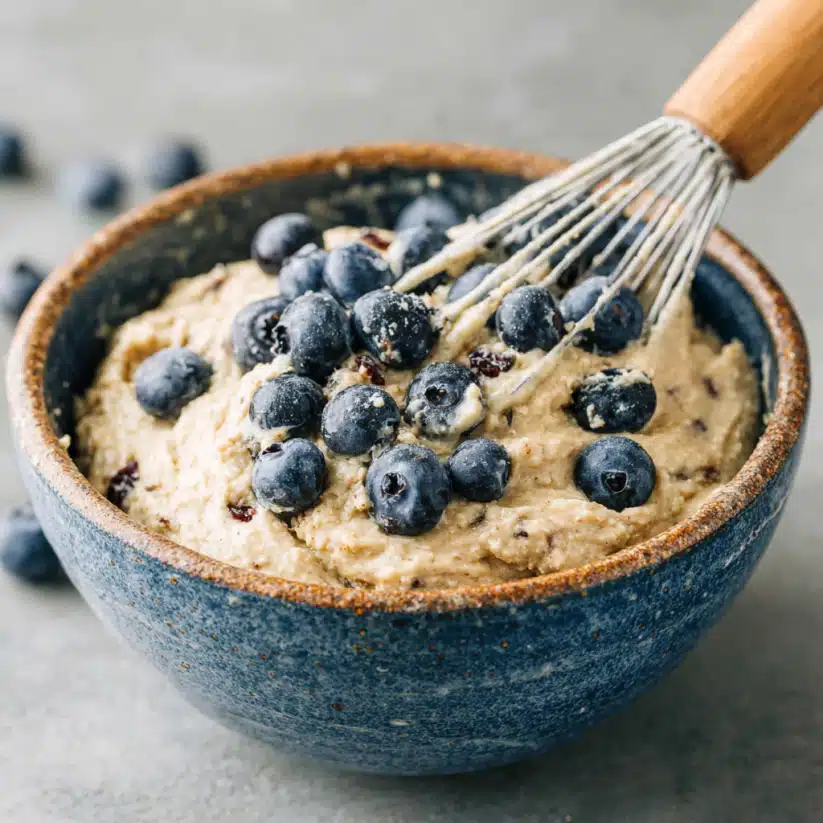
Gently fold in the coated blueberries as the very last step. Divide the batter evenly across the 6 muffin cups and generously top each with the prepared streusel. Bake at 400°F (200°C) for 22 to 25 minutes, until the tops are golden and a toothpick inserted into the center withdraws cleanly. Cool in the tin for exactly 10 minutes before transferring to a wire rack.
Troubleshooting Guide
My Muffins Are Dense and Gummy
Dense, gummy muffins are almost always caused by one of three issues: overmixing the batter after the wet and dry ingredients are combined, under-baking by pulling the muffins out before the internal starch matrix has fully gelatinized, or skipping the 10-minute in-tin cooling period. Overmixing develops excessive starch bonds in the tapioca and rice flour blend, creating a tough, dense crumb. Stir the batter until the flour streaks disappear; lumps are acceptable. Always test with a toothpick before removing from the oven, and never cut the cooling time short.
My Muffins Have a Green or Gray Tint
A blue-gray or green-tinted crumb is caused by anthocyanin pigments from blueberries reacting with the slightly alkaline baking powder environment. This is a purely visual issue and does not affect taste or IBS safety. To prevent it, always coat frozen blueberries in brown rice flour before folding them into the batter, fold the berries in at the very last moment with as few strokes as possible, and do not press or crush the berries against the bowl. Using fresh blueberries instead of frozen significantly reduces the risk, as their cell walls remain intact and release far less pigment juice into the batter during mixing.
Storage, Freezing & Reheating
Room Temperature Storage
Once completely cooled to room temperature, store the muffins in an airtight container at room temperature for up to 3 days. Do not seal them while still warm: residual steam will condense inside the container and make the streusel soggy within hours. If you used coconut oil instead of vegan butter, the muffins will firm noticeably as the coconut oil solidifies at room temperature below 24 °C. This is normal. Microwave for 15 seconds before eating to restore the soft crumb texture.
Freezing for Long-Term IBS Meal Prep
These muffins freeze exceptionally well for up to 3 months. Wrap each fully cooled muffin individually in cling film or place in separate zip-lock bags to prevent freezer burn and make single-serving retrieval easier for daily meal prep. Do not freeze in a bulk container, as the muffins will stick together and the streusel topping will be damaged when separating them. To reheat from frozen, place unwrapped muffins in an oven at 250°F (120°C) for 10 to 15 minutes, or microwave on medium power for 60 to 90 seconds. Avoid high-power microwave reheating, which causes the gluten-free starch matrix to toughen rapidly.
Frequently Asked Questions
Can I freeze these low-FODMAP blueberry muffins?
Yes. Wrap each muffin individually in cling film and freeze for up to 3 months, or store in an airtight container. Reheat in an oven at 250°F for 10 to 15 minutes to restore the streusel crunch and soft crumb.
Can I make these muffins oil-free?
The vegan butter or coconut oil can technically be replaced with almond butter or unsweetened applesauce, but this will alter the fat-to-carbohydrate ratio and may change the overall FODMAP load per muffin. Applesauce made from high-fructose apple concentrate is not low FODMAP. If you use almond butter, keep the substitution to 2 tablespoons maximum and verify that the brand contains no added high-fructose sweeteners.
Can I use normal oats instead of gluten-free oat flour?
If you are not strictly gluten-intolerant or do not have Coeliac disease, regular certified-pure oats can be used. However, gluten can sometimes aggravate sensitive intestines independent of FODMAP content. For strict IBS management and to eliminate all possible gut irritants during the elimination phase, always use certified gluten-free oat flour.
Conclusion
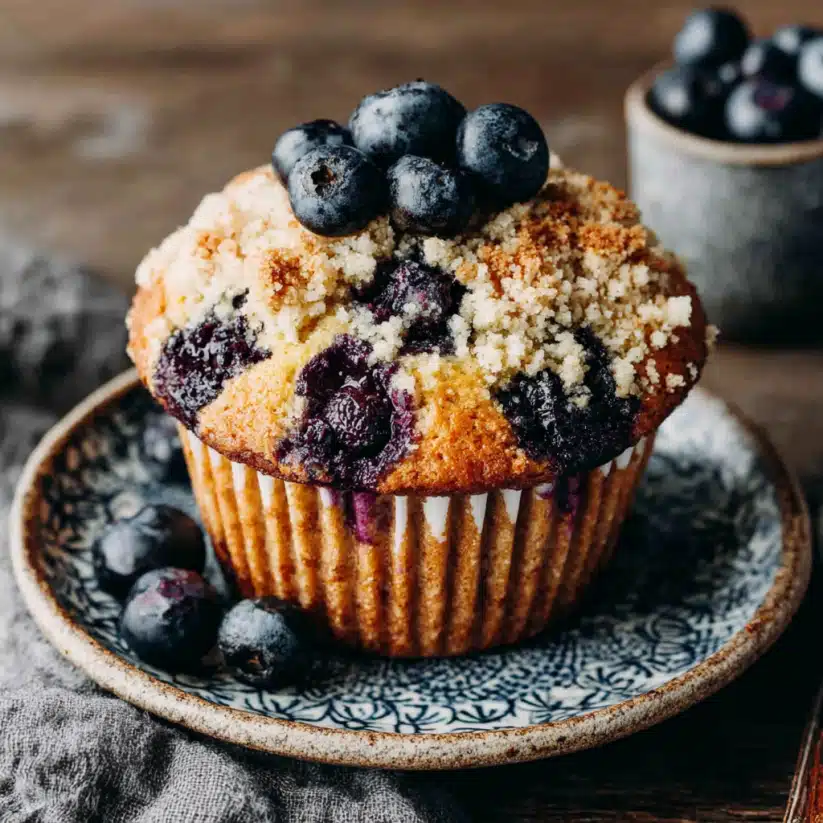
These low FODMAP blueberry muffins prove that IBS-friendly baking does not mean sacrificing texture, flavor, or satisfaction. By replacing wheat flour with a calibrated multi-flour blend, eliminating dairy with unsweetened almond milk, and using pure maple syrup as a safe disaccharide sweetener, every serving stays well within the green-light thresholds established by Monash University without a single compromise on the domed, streusel-topped bakery finish.
Keep it simple: use certified gluten-free oat flour and brown rice flour, keep blueberries to 75 g per batch of 6, bake at 400°F for 22 to 25 minutes, and treat 1 muffin as a single serving until personal tolerance is confirmed during the reintroduction phase.
📌 Love this recipe? Save it to your Low FODMAP Recipes board on Pinterest!
Try these next: Low FODMAP Chocolate Chip Cookies | Low FODMAP Banana Bread | More Low FODMAP Dessert Recipes
Last reviewed by James Rivera — April 2026
This recipe was reviewed for ingredient safety, practical execution, and low FODMAP compatibility based on Monash University data.
Medical Disclaimer: The content on this page is for educational purposes only and does not constitute medical advice. Always consult your healthcare provider or a registered dietitian before beginning, modifying, or discontinuing any dietary protocol.
Nutritional Information: All nutritional values should be treated as estimates unless otherwise specified.