
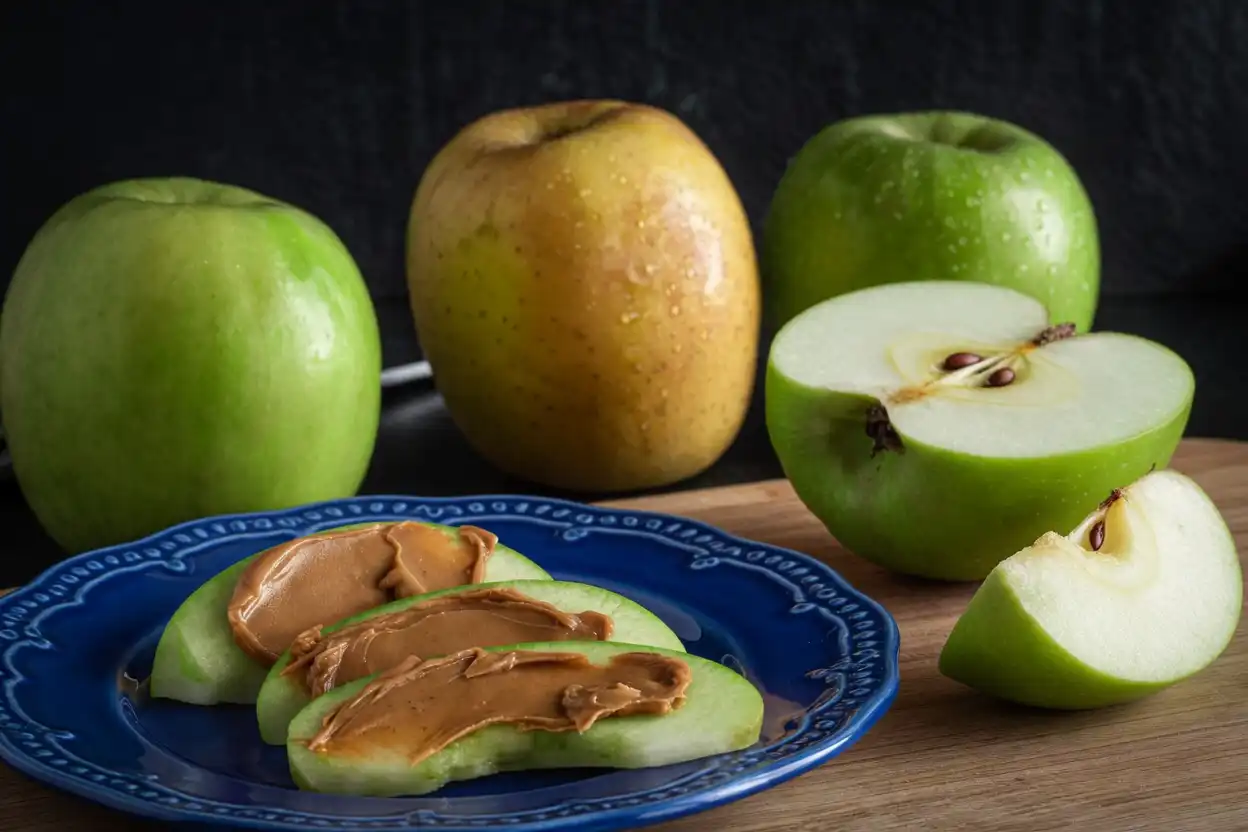
Are apples low FODMAP? They are high FODMAP at standard portions but safe at just 20g per serving (approximately 2 thin slices), Monash-verified. According to Monash University’s official FODMAP food guide, this narrow threshold is due to the double burden of excess fructose and sorbitol found in apples. In this guide, you’ll find the exact safe serving sizes for Pink Lady and Granny Smith varieties, what happens with cooked or processed apples, how to avoid FODMAP stacking, and the safest fruit alternatives for your IBS meal plan.
As a registered dietitian who has spent over 19 years managing my own IBS diagnosed after countless dismissed symptoms and too many emergency bathroom stops on a college campus, I know firsthand how confusing apple portions can feel when you’re trying to follow the Low FODMAP protocol. After working with over 300 IBS clients at Oregon Health & Science University, I can tell you that apples are one of the most misunderstood foods in the entire FODMAP system.
You’ve probably been told to just “avoid apples” and walked away confused, staring at a fruit bowl, wondering if one tiny slice would send you to the bathroom for the rest of the afternoon.
The good news: you don’t have to avoid apples entirely. You just need to understand the exact weight threshold, the specific varieties that are safest, and how to slot them into a meal without triggering a cumulative FODMAP load. You can also explore our low FODMAP desserts guide.
In this Monash-first guide, you’ll learn which apple varieties have been clinically tested, why the 20g rule exists biochemically, what the applesauce trap is, how green apples compare, and which low FODMAP fruits you can confidently swap in. Every recommendation is grounded in Monash University data and clinical practice no guessing.
A 20g serving of Pink Lady apple is the Monash-verified safe threshold for IBS patients on the Low FODMAP elimination phase.
- What Kind of Apples Are Low FODMAP?
- Do Apples Trigger IBS Symptoms?
- Are Cooked Apples Low FODMAP?
- Are Green Apples Low FODMAP?
- How to Avoid FODMAP Stacking with Apples
- What Is the Lowest FODMAP Fruit?
- Frequently Asked Questions
- The Bottom Line on Apples and Low FODMAP
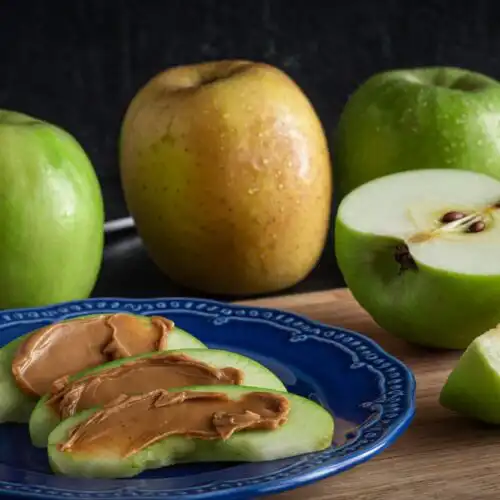
En-cas Croquant Pomme Pink Lady et Cheddar Vieilli

Equipment
- Digital kitchen scale Essential portions must be weighed, not estimated
- Sharp paring knife
- Small cutting board
Ingredients
- 20 g Pink Lady apple, thinly sliced (weighed approx. 2 thin slices, skin optional)
- 30 g aged cheddar cheese, sliced (low lactose safe in Low FODMAP)
- 16 g peanut butter, smooth, no added honey (safe at 32g max use 16g to avoid stacking)
Instructions
- Wash the Pink Lady apple thoroughly under cold running water. Do not skip this step; surface residues can affect taste.
- Place a small plate on your digital kitchen scale and tare to zero. Slice the apple thinly and add slices until the scale reads exactly 20g. Remove any excess. This step is non-negotiable. Visual estimation is unreliable.
- Arrange the 20g of apple slices on a small plate. Add 30g of aged cheddar and 16g of smooth peanut butter on the side. The fat and protein in cheddar and peanut butter slow gastric emptying, giving the GLUT5 transporter more time to process the fructose load gradually.
Notes
Nutrition
Are Apples Low FODMAP? What Varieties Are Safe
Not all apples behave the same way in the FODMAP system. The key variable is the ratio of fructose to glucose and whether the variety has been independently tested. Monash University has certified that Pink Lady apples are the most precisely studied variety, with a safe threshold of 20g per serving during the elimination phase. FODMAP Friendly testing places Granny Smith apples at a slightly more generous threshold of 25g. However, the Monash-first workflow always defaults to the more conservative 20g figure for safety during Phase 1.
Other varieties, including Fuji, Gala, Braeburn, and Honeycrisp, have not been independently tested to the same clinical standard and should be treated as high FODMAP unless re-test data becomes available. The safest approach: default to Pink Lady at 20g, weighed on a digital kitchen scale, with no skin if you have heightened sensitivity to insoluble fiber.
The Pink Lady Protocol: The 20g Threshold Explained
Why 20g? At 20g, the total fructose load from a Pink Lady apple stays below the intestinal absorption threshold for most IBS patients. The key mechanism involves the GLUT5 transporter, the primary carrier responsible for fructose absorption in the small intestine. Pink Lady apples have a fructose-to-glucose ratio that exceeds 1:1, meaning there is more fructose present than the co-transport system can efficiently handle at larger servings. At 20g, this imbalance is mild enough that most IBS patients clear it without symptoms.
At 31g and above, the Pink Lady apple enters the moderate FODMAP zone (amber/orange rating in the Monash app), primarily due to excess fructose. At standard serving sizes (100g–120g, or roughly half a medium apple), the fructose load becomes clinically significant, triggering osmotic water pull, colonic fermentation, and, for many patients, accelerated gut motility within 30–90 minutes of consumption.
Use this as your mental model: a 20g serving is approximately 2 paper-thin slices, about the size of a Post-it note. Weigh it d, do not estimate by eye.
Visual comparison: 20g (safe) vs 100g (high FODMAP) apple serving. The difference is dramatic: two thin slices versus half a standard apple.
Granny Smith vs. Fuji: Varietal Discrepancies
Granny Smith apples carry a slightly more generous threshold of 25g according to FODMAP Friendly testing, likely due to their higher acidity, tartaric acid. Malic acid content may modestly slow gastric emptying, giving the GLUT5 transport system more time to clear fructose before it reaches the colon. However, this 5g difference is clinically marginal. It should not be used to justify estimating portions rather than weighing them precisely.
Fuji and Yello varieties are the subject of ongoing re-testing as of 2025–2026. Still, verified thresholds are not yet publicly available through the Monash University app. Until independently certified data is published, treat both as high FODMAP at any standard serving. The Monash-first workflow is non-negotiable: if it hasn’t been clinically tested and assigned a green light, it doesn’t belong in your elimination phase meal plan.
Apple VarietySafe ThresholdSourceFODMAP TypeStatus
Pink Lady 20g Monash University Excess fructose + Sorbitol ✅ Clinically tested
Granny Smith 25g FODMAP Friendly Excess fructose + Sorbitol ✅ Clinically tested
Fuji Unknown Pending 2025–2026 Excess fructose + Sorbitol ⚠️ Treat as high FODMAP
Gala / Honeycrisp Unknown Not tested Unknown ❌ Avoid in elimination phase
Do Apples Trigger IBS Symptoms?
Yes, at standard serving sizes, apples are one of the most reliable IBS triggers in the fruit category. The reason goes deeper than simply “high in sugar.” Apples carry a double FODMAP burden: they contain both excess fructose (more fructose than glucose, making efficient absorption impossible for most people) and sorbitol, a naturally occurring polyol. This combination is sometimes called the “Double Trouble” profile, and it places apples at the highest end of the FODMAP fruit risk spectrum.
The Biochemistry of Fructose and Sorbitol in Apples
Fructose absorption in the small intestine depends on the GLUT5 transporter. When glucose is present in equal or greater quantities, it facilitates fructose co-transport via GLUT2. In apples, however, the fructose-to-glucose ratio is consistently greater than 1:1, a configuration that saturates GLUT5 and leaves residual fructose to travel unabsorbed into the colon. There, colonic bacteria ferment it rapidly, producing hydrogen, carbon dioxide, and short-chain fatty acids, the molecular origin of IBS bloating, cramping, and urgency.
Sorbitol compounds this problem by a separate mechanism: it draws water into the intestinal lumen via osmosis. For IBS-D patients (diarrhea-predominant), this osmotic pull is particularly destabilizing, often producing loose stools within 60–120 minutes of consuming a standard apple serving. The two mechanisms act independently and cumulatively, which is precisely why apples trigger symptoms at lower thresholds than fruits with only one FODMAP type.
Apples trigger IBS symptoms through two independent pathways: GLUT5-saturation by excess fructose and osmotic water pull from sorbitol.
GLUT5 Malabsorption and Colonic Fermentation
GLUT5 malabsorption is not a disease or a deficiency; it’s a normal physiological limitation. The GLUT5 transporter has a finite capacity. When the fructose load arriving at the intestinal brush border exceeds that capacity, absorption becomes incomplete by design. The unabsorbed fructose then enters the colon, where it acts as a substrate for rapid microbial fermentation. The speed of fermentation in IBS patients is often accelerated compared to healthy controls, which explains why symptoms can appear more quickly and more intensely.
This is also why apple juice is more problematic than whole apple slices. Juice eliminates fiber, accelerating gastric emptying and delivering a concentrated fructose load to the small intestine far more rapidly than a solid food would. The result is a faster, larger colonic fermentation event and more intense symptoms at smaller serving sizes. If you’re on the Low FODMAP elimination phase, apple juice should be completely avoided, regardless of portion size.
Are Cooked Apples Low FODMAP?
Cooking apples does not meaningfully reduce their FODMAP content. Heat breaks down cell walls and softens insoluble fiber (primarily cellulose in the skin), making cooked apple mechanically easier to digest for some patients. Still, it does not destroy fructose molecules or sorbitol. The FODMAP load per gram remains essentially the same whether the apple is raw, baked, or stewed. For IBS patients, the critical variable remains weight per serving, not preparation method.
According to King’s College London’s FODMAP research department, reintroduction protocols specifically assess tolerance to individual FODMAP types rather than preparation methods, confirming that cooking does not constitute a safe loophole for increasing apple servings during the elimination phase.
Gastric Emptying and Thermal Degradation
One nuanced benefit of cooking is slowed gastric emptying. Baked or stewed apple, being denser and more viscous due to released pectin, may slow transit from the stomach to the small intestine, giving GLUT5 a slightly longer window to process fructose incrementally. This is not a clinically validated dose-increase strategy. Still, it may explain why some patients subjectively tolerate small amounts of cooked apple better than raw. Portion discipline 20g, weighed remains mandatory regardless.
The 3g Applesauce Trap: Why Processing Matters
Applesauce (unsweetened) is tested separately by Monash University, and the results are striking: the safe threshold drops to just 3g, approximately three-quarters of a teaspoon. At 4g, applesauce enters moderate FODMAP territory. The concentration effect is the primary cause: processing removes most of the structural fiber. It condenses the fructose and sorbitol into a smaller volume. A single tablespoon of standard applesauce (approximately 15–18g) delivers a FODMAP load many times higher than the safe threshold, making it one of the most deceptive “healthy” foods in the IBS kitchen.
This is a critical education point for GoPlated readers who may be using applesauce as a baking substitute (common in low-fat baking recipes). The 3g ceiling makes applesauce functionally unusable as a recipe ingredient during Phase 1. For baking substitutions, mashed ripe banana (up to 35g) or pure pumpkin puree are safer alternatives. For more Low FODMAP baking ideas, explore our low FODMAP banana bread recipe, which uses banana as an applesauce-free, IBS-safe base.
Processing concentrates FODMAP load: 20g raw apple is safe, but applesauce drops to a 3g threshold. Always check the Monash app for processed forms.
Are Green Apples Low FODMAP?
“Green apple” most commonly refers to Granny Smith in the FODMAP literature, and as noted above, Granny Smith carries a 25g threshold marginally more generous than Pink Lady’s 20g. The tartness associated with green apples is a product of higher malic acid content, not a lower FODMAP profile. The clinical data from FODMAP Friendly confirms 25g as the safe ceiling, but this should be understood as a best-case scenario for a single, carefully weighed portion with no other sorbitol sources in the same meal.
Comparing Acidity and Sugar Profiles
Green apples have a lower sugar density per 100g compared to sweeter red varieties like Fuji or Honeycrisp, but this does not translate directly into a lower fructose load. FODMAP content is not equivalent to total sugar; it’s specifically about the excess fructose ratio and sorbitol concentration, both of which are present in Granny Smith at threshold-crossing levels beyond 25g. The practical implication: green or red, weigh your apple. Flavor profile and sweetness perception are not reliable guides to FODMAP safety.
How to Avoid FODMAP Stacking with Apples
FODMAP stacking is one of the most common causes of unexpected symptom flares in people who are otherwise following the protocol correctly. It occurs when multiple low FODMAP servings of different foods, each individually safe, are consumed in the same meal, pushing the cumulative FODMAP load above the intestinal tolerance threshold. Apples are a particularly high-risk stacking ingredient because their fructose and sorbitol contribute to two FODMAP sub-categories simultaneously.
If you’re including 20g of Pink Lady apple in a meal or snack, you must account for other sorbitol sources consumed within the same 3-hour window. Common sorbitol-containing foods include avocado (safe at 30g, but sorbitol is present), blackberries, and stone fruits. Similarly, if your meal already includes other excess-fructose sources such as honey (safe at 7g), your fructose budget for that window is partially consumed before the apple is even eaten.
For practical guidance on stacking-aware snacking, our guide on whether peanut butter is low FODMAP explains how to pair protein with low FODMAP fruit servings to slow gastric emptying and reduce fermentation speed, a strategy directly applicable to apple pairing. Understanding how low-FODMAP sweeteners interact with your fructose budget is also essential. Our guide to low FODMAP sweeteners covers this in detail.
FODMAP stacking is invisible but cumulative. Apple’s dual fructose + sorbitol burden makes precise meal planning essential to avoid threshold breaches.
What Is the Lowest FODMAP Fruit?
Several fruits carry a significantly more generous FODMAP profile than apples. They can be consumed in standard serving sizes without the micro-dosing discipline that apples require. The most reliably safe low FODMAP fruits extensively verified by Monash University include:
- Strawberries: Safe at 65g (approximately 5 medium berries), low in fructose and polyols
- Oranges: Safe at 130g (1 medium orange), no excess fructose, minimal sorbitol
- Firm bananas: Safe at 100g (1 medium unripe banana), low fructose, very low polyols
- Blueberries: Safe at 40g (approximately 28 blueberries). See our dedicated blueberries low FODMAP guide for exact thresholds.
- Grapes: Safe at 120g balan,ced fructose-glucose ratio facilitates absorption
- Kiwi: Safe at 2 small fruits, low FODMAP across all tested varieties
These alternatives offer substantially more flexibility in meal planning and remove the scale-dependency that makes apple incorporation so logistically demanding during Phase 1.
Safe Alternatives: Strawberries and Bananas as Apple Substitutes
Strawberries are the closest sensory substitute for apples in many recipe applications, crisp, slightly tart, and naturally sweet. At 65g, they provide a satisfying snack volume without the FODMAP stacking risk. Firm bananas (not overripe bananas, which develop higher fructan levels as they soften) offer portability and natural sweetness comparable to a sweet apple variety, at a far more manageable FODMAP load. Both are excellent starting points for building low-FODMAP fruit habits before advancing to carefully measured apple portions in the reintroduction phase.
Strawberries, firm bananas, and blueberries are the most flexible low FODMAP fruit alternatives to apples available in standard servings without micro-dosing.
For structured snack and dessert ideas using these safer fruit options, browse our full Low FODMAP desserts recipe collection, including tested cookies, muffins, and banana-based baked goods.
Frequently Asked Questions
What kind of apples are low in FODMAP?
Pink Lady apples are the most precisely Monash-verified variety, safe at 20g per serving. Granny Smith is certified by FODMAP Friendly at 25g. Other varieties, Fuji, Gala and Honeycrisp, are not independently tested at a clinical standard and should be treated as high FODMAP during the elimination phase.
Do apples trigger IBS symptoms?
At standard portions (100g+), yes, apples are among the most reliable IBS triggers in the fruit category. They contain both excess fructose and sorbitol, creating a dual FODMAP burden. At 20g of Pink Lady or 25g of Granny Smith, most patients tolerate them without symptoms during the elimination phase.
Are cooked apples low FODMAP?
Cooking softens apple fiber but does not reduce fructose or sorbitol content. The same 20g threshold applies to cooked apples as to raw. The Monash-verified safe portion does not increase because the apple has been heated, baked, stewed, or sautéed apple must still be weighed to 20g maximum during Phase 1.
Are green apples low FODMAP?
Green apples (Granny Smith) have a slightly more generous threshold of 25g versus 20g for Pink Lady, according to FODMAP Friendly testing. Their higher acidity does not directly lower FODMAP content; the safe window is marginally wider, but must still be strictly weighed. All other untested green apple varieties should be avoided in the elimination phase.
What is the lowest FODMAP fruit?
Strawberries (safe at 65g), firm bananas (100g), oranges (130g), and grapes (120g) are among the most flexible low FODMAP fruits offering standard serving sizes without micro-dosing. These are the most practical daily choices for IBS patients during the elimination phase.
How do I avoid FODMAP stacking with apples?
Apples contain both excess fructose and sorbitol, contributing to two FODMAP subcategories. Avoid consuming other sorbitol sources (avocado, blackberries, stone fruits) within a 3-hour window of your 20g apple serving. Also account for fructose from other sources, such as honey and mango, in the same meal to prevent cumulative threshold breaches.
Is apple cider vinegar low FODMAP?
Yes. Apple cider vinegar is considered low FODMAP at up to 2 tablespoons (42g). Fermentation converts the fructose and sorbitol in apples into acetic acid, the primary component of vinegar, which does not act as a FODMAP. Standard culinary use in dressings and marinades is safe for IBS patients during the elimination phase.
The Bottom Line on Apples and Low FODMAP
Apples are high FODMAP at standard serving sizes, but they’re not permanently off the table. The 20g Pink Lady rule and 25g Granny Smith threshold give IBS patients a precise, clinically validated window for enjoying apples without triggering symptoms. The key is discipline: weigh every serving, track your stacking risk, and avoid all processed apple forms (juice, applesauce) during Phase 1. As you move into reintroduction, apples are an excellent test food for mapping your personal fructose and sorbitol thresholds. Work with a FODMAP-trained dietitian to design a structured reintroduction. The data you collect will be more valuable than any general guideline.
Tested by James Rivera, Recipe Developer & Texture Specialist – April 2026
Recipe tested 3 times for flavor, texture, and Low FODMAP compliance based on Monash University data.
Try these next: The Best Low FODMAP Chocolate Chip Cookies | More Low FODMAP Dessert Recipes
Medical Disclaimer: Educational purposes only — not medical advice. Consult your healthcare provider or registered dietitian before making any dietary changes.
Nutritional Information: All values are estimates unless specified.